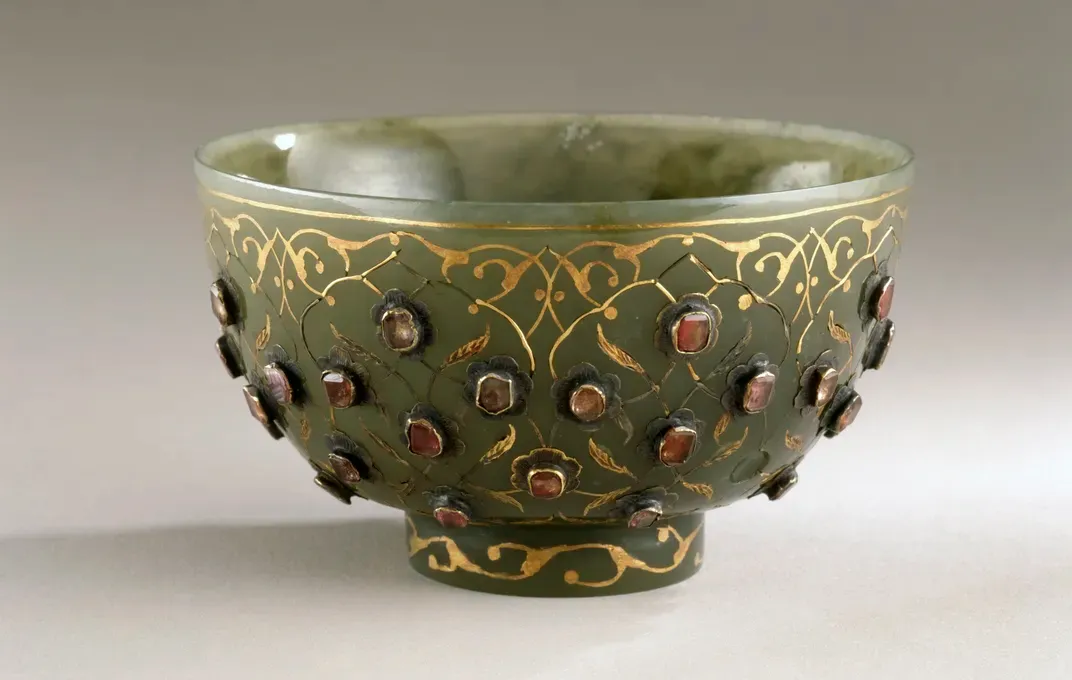
The Smithsonian’s National Museum of Asian Art will host a new exhibition featuring 26 Islamic artworks from the Louvre in Paris. The show, called "From the Louvre: Masterpieces of Islamic Art," opens on September 26 and runs until January 18, 2027. It will display objects made between the 7th and 19th centuries, from places like Spain and India.
This is the first time these 26 pieces will be shown together in the United States.
A Collection of Masterpieces
The exhibition is curated by Simon Rettig from the Asian Art museum and Souraya Noujaim from the Louvre. It highlights various artifacts from the Islamic world, crafted from materials like bronze, wood, and ceramics.
We're a new kind of news feed.
Regular news is designed to drain you. We're a non-profit built to restore you. Every story we publish is scored for impact, progress, and hope.
Start Your News DetoxVisitors can see the Baptistery of Saint Louis basin, a stunning 14th-century piece from Syro-Egypt. Another highlight is an 18th-century Mughal dagger. It features Damascus steel, gold inlay, and a horse head handle.
Rettig, a curator of Islamic art, described the basin as "an astonishing object, which is in pristine condition."
Rettig explained that objects become masterpieces over time, often through public and museum recognition.
Uncovering Hidden Histories
Many of the artworks have unknown histories. The exhibition encourages visitors to explore the journeys these objects took before reaching the museum.
For instance, the Saint Louis basin was named after Louis IX and used for French royal baptisms. However, the king was born more than a century before the basin was made. In the 18th century, the French created a "forged identity" for the basin, claiming it as part of their culture. Its Islamic origins were not widely recognized until the 20th century.
Rettig noted that this shows history is not always straightforward. Objects can have multiple identities, making them even more extraordinary.
The National Museum of Asian Art has a long history of working with the Louvre. This connection began with its founder, Charles Lang Freer, who was friends with French curator Gaston Migeon. Freer's visit to a major Islamic art exhibition in Paris in 1903 inspired him to collect Islamic art. He donated his collection to the nation in 1906, leading to the opening of the Freer Gallery of Art in 1923.
The museum has always displayed Islamic artworks, each with its own story. This new exhibition will help visitors understand what truly makes an artwork a masterpiece.