
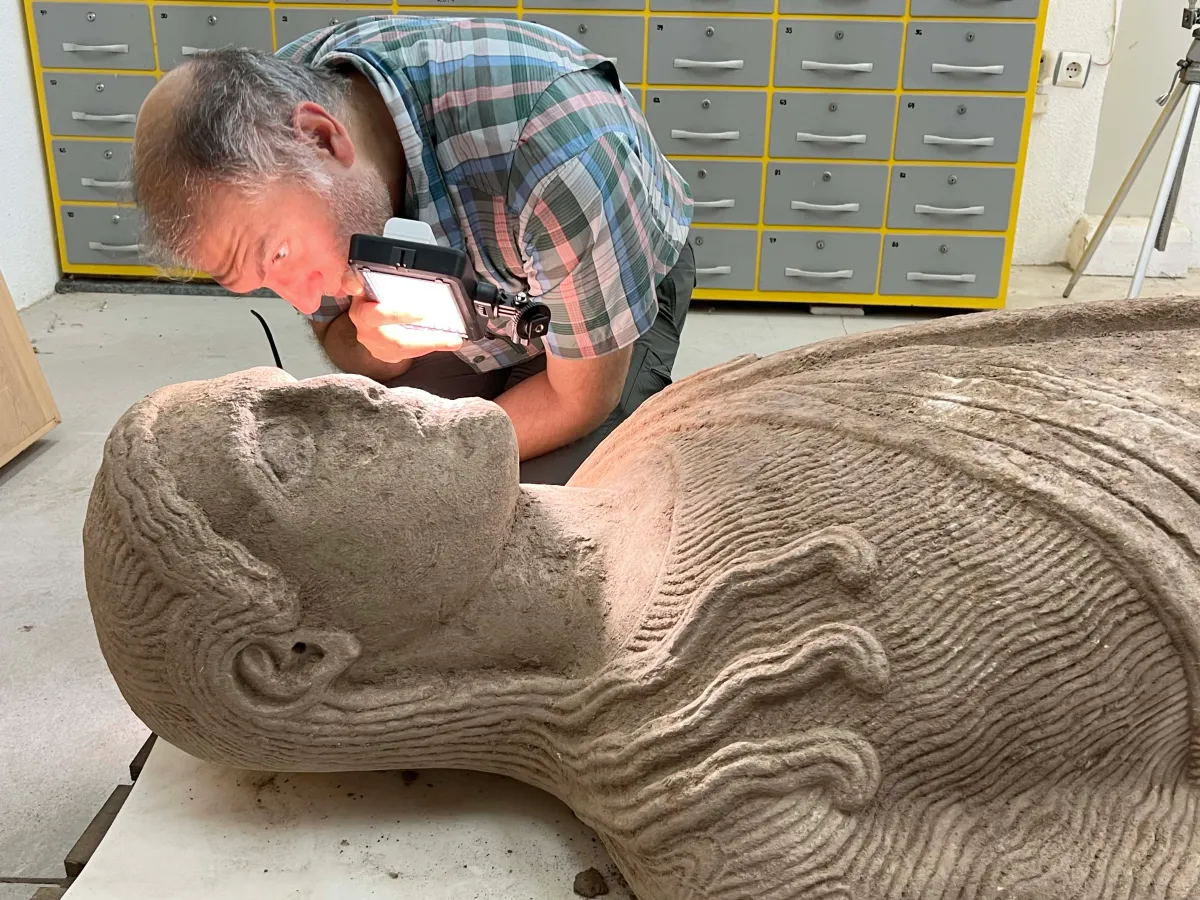
Imagine you're an archaeologist, painstakingly sifting through dirt, dreaming of a big find. Then, one late May afternoon, you unearth a 2,500-year-old marble statue of a young man, broken into two pieces, face down, and recycled as a paving stone on a Roman road. Because apparently, that's where we are now.
That's exactly what happened at the Harvard-Cornell Archaeological Exploration of Sardis, where researchers hit the jackpot. This isn't just any old chunk of marble; it's a massive sculpture that stands over seven feet tall, offering a rare peek into the Lydian people who once called western Türkiye home. Nicholas Cahill, who leads the dig, put it best: it felt like "whole worlds opening up."

The Mystery Man's Wardrobe
When they first found it, the team at Sardis (which, incidentally, became a UNESCO World Heritage Site last year) wasn't even sure if their discovery was male or female, archaic or later. But then, after a meticulous cleaning, the sideburns appeared. Case closed: definitely a dude.
We're a new kind of news feed.
Regular news is designed to drain you. We're a non-profit built to restore you. Every story we publish is scored for impact, progress, and hope.
Start Your News DetoxWhat makes this guy so fascinating isn't just his age, but his style. He's rocking a thin tunic, a wrapped mantle, and a unique garment with fine horizontal folds that expedition assistant director Bahadir Yildirim says are pretty unusual in ancient sculpture. It's a fashion statement that blends archaic Greek vibes (think long hair and upright pose from the 6th century B.C.) with subtle hints of a later era, probably somewhere between 470s and 450s B.C.
This is particularly intriguing because, at the time, Sardis was under Persian rule. Yet, the statue shows zero Persian influence. Instead, it seems the sculptor was a cultural chameleon, choosing to dress the young man in clothes that were a century out of date, a deliberate nod to Lydian history. And unlike the Greeks, Lydians preferred their young men clothed, thank you very much.

So, who was this fashion-forward (or backward, depending on your perspective) young man? And where did he originally stand? The jury's still out, but one theory places him near the sanctuary of Cybele, the native mother goddess. Apparently, if you were a wealthy citizen or leader back then, placing your statue next to a deity was the ultimate power move to show piety and legitimize your status.
Conservators are now carefully cleaning the statue, hoping to find tiny flecks of paint for color analysis, because yes, most ancient marble statues were painted. Once reassembled, this stylish Lydian will take pride of place in a Turkish archaeological museum. Which, if you think about it, is a pretty good upgrade from being a paving stone.