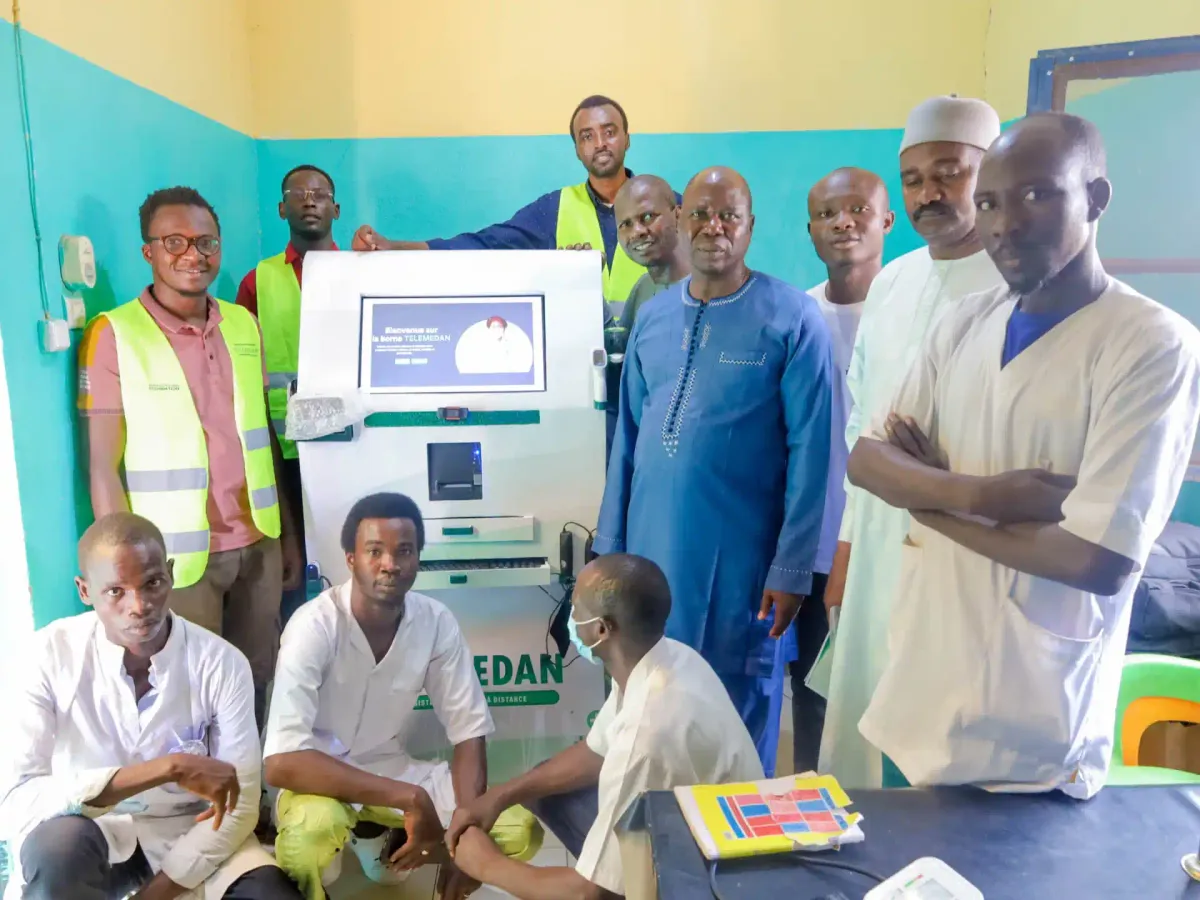
For Ache Kodo, seeing a doctor in rural Chad used to mean saving money for a long journey. She lives in Bitkine, where medical visits often involve travel costs to a larger town. Now, she can see a doctor remotely through a Telemedan kiosk near her home.
Ache said Telemedan has changed how her family gets healthcare. It used to be hard and costly to travel. Now, she can get care on time with fewer expenses. This has also improved her financial situation.
In rural Chad, distance is a big problem for healthcare, along with a shortage of doctors. Most medical facilities are in cities, leaving many communities without basic services.
We're a new kind of news feed.
Regular news is designed to drain you. We're a non-profit built to restore you. Every story we publish is scored for impact, progress, and hope.
Start Your News DetoxAbakar Mahamat grew up knowing this reality.
He noted that the issue was not just a lack of doctors, but also the distance between doctors and the communities needing them. In 2021, Abakar started Telemedan. This telemedicine project aims to bring consultations closer to communities. These areas often have limited electricity, internet, and medical buildings.
Abakar explained that he wanted to use technology to bring doctors to people. This way, people would not have to travel hundreds of kilometers to find care.
Solar-Powered Healthcare
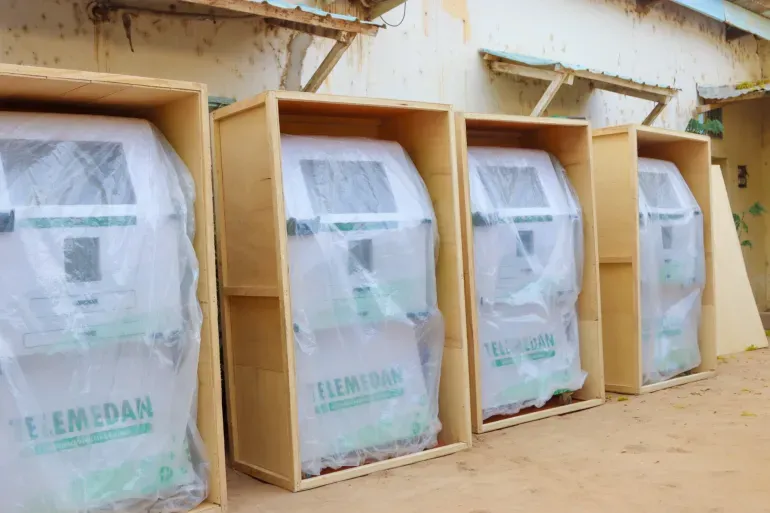
The Telemedan kiosks use solar panels and batteries. This allows them to work even without reliable electricity from the grid.
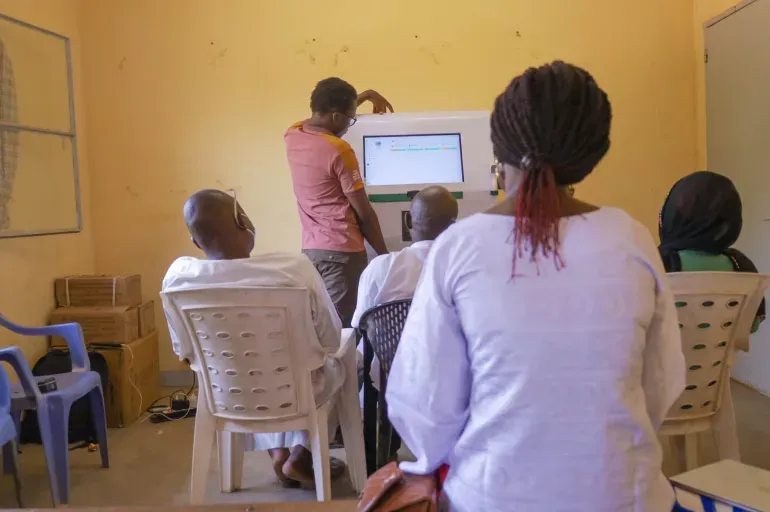
A local operator registers patients and takes basic health readings. They use tools like blood-pressure monitors, glucometers, thermometers, pulse oximeters, and ECG machines. A doctor then joins remotely on a screen, while the operator helps with the examination.
Telemedan states its kiosks can also have stethoscopes, temperature sensors, and sometimes ultrasound equipment. A trained local operator helps patients use these devices.
The system works even when internet access is not steady. Patient information can be saved on the device and sent later when the internet is back. There is also a service called USSD. It lets people without internet book appointments and get health information.
![A Telemedan solar-powered kiosk helps patients in rural Chad access doctors remotely, reducing the need to travel long distances for medical care [Yahuza Bawage/ Al Jazeera]](https://www.aljazeera.com/wp-content/uploads/2026/08/IMG_2955-1787278824.jpg?w=770&resize=770%2C512&quality=80)
Depending on the area, the kiosks can connect using mobile networks or satellite. Abakar emphasized that a lack of electricity or internet should not mean a lack of healthcare.
Reducing Healthcare Costs
Abakar mentioned that some medical journeys can cost $200 or more. This includes transport, lodging, and consultations. Telemedan consultations cost between $2 and $15, depending on the service.
For Abakar, it is also about what families can afford to lose to get care. He believes patients should not have to choose between medical care and feeding their families.
Expanding the Network
Telemedan started as a trial project. It has grown with grants and partnerships, including Chad’s Ministry of Public Health and Prevention. Abakar reported that the initiative now has 37 kiosks in 11 provinces. It has helped about 143,000 people.
Telemedan also uses artificial intelligence to screen for diabetic retinopathy. This is a diabetes complication that can harm vision. The technology is meant to help health professionals, not replace them.
However, remote consultations have limits. A kiosk cannot provide emergency treatment or all types of exams. Patients needing specialist care, lab tests, medicines, or hospital treatment still need to access higher levels of the health system.
Ensuring Long-Term Success
Telemedan's growth comes as Chad develops its broader digital health system. Youssouf Silay, an assistant for Chad’s National Digital Health Programme, noted that the country's health plan for 2022–2030 sees digital health as a way to increase access to care.
Chad started its National Telemedicine Programme in 2021 and its National Digital Health Programme in 2023. The Ministry of Health is also creating rules for digital health services. Youssouf stated that the goal is to promote new solutions that improve healthcare access. This is especially true in areas with limited medical and energy infrastructure. Solar-powered telemedicine kiosks can help bring healthcare closer to underserved people.
But placing a kiosk in a village is just the first step. The equipment must keep working, and connectivity must be available. Local operators need training, and doctors must be ready for patient calls. Also, people needing care beyond the kiosk need ways to get it.
Each kiosk costs about $10,000, according to Abakar. Telemedan sells these units to governments, public health programs, and partner organizations. These groups then operate the kiosks, so patients do not pay for the infrastructure itself.
Telemedan aims to reach one million people in rural communities across sub-Saharan Africa. A solar-powered kiosk cannot replace a hospital or a doctor in every situation. However, it can shorten the distance between a patient and the health system.
Abakar hopes Telemedan will become a lasting part of healthcare infrastructure, not just a series of technology projects.