Christopher Lynch broke over 100 bones in his lifetime. Living with osteogenesis imperfecta—a genetic condition that affects bone density—he couldn't support his own body weight, let alone operate the heavy camera rigs that are standard in professional filmmaking. For 20 years, the Irish filmmaker watched from the sidelines as his disability locked him out of one of the roles he most wanted: Director of Photography.
Then he built his way in.
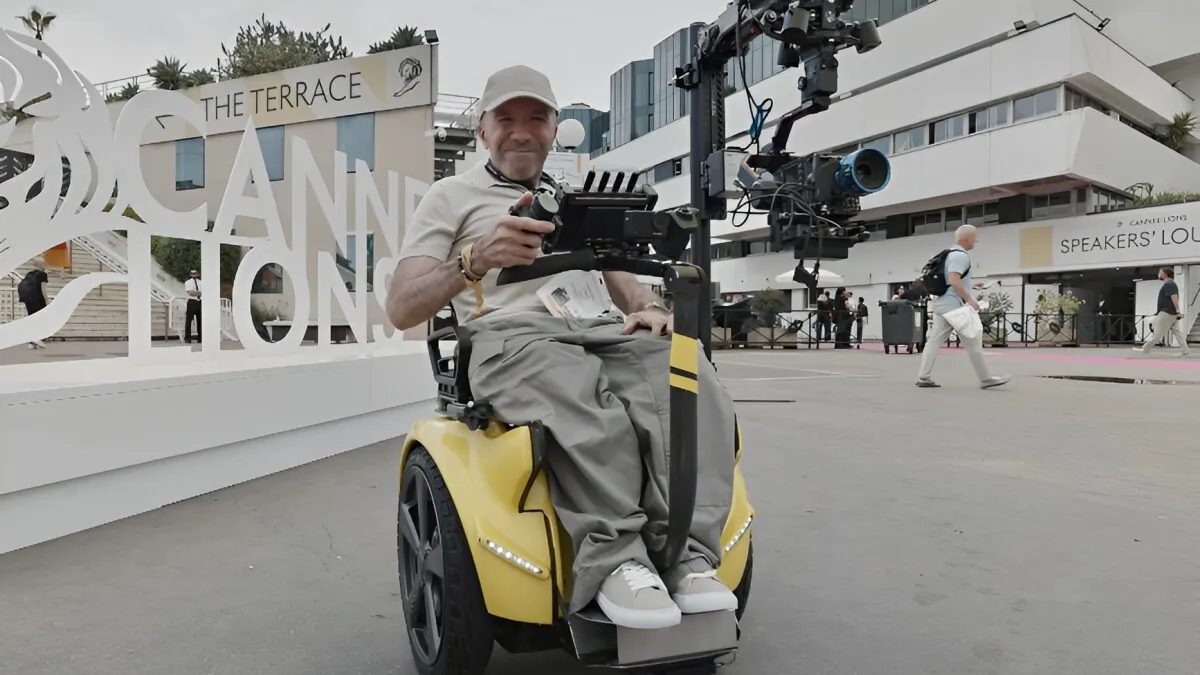
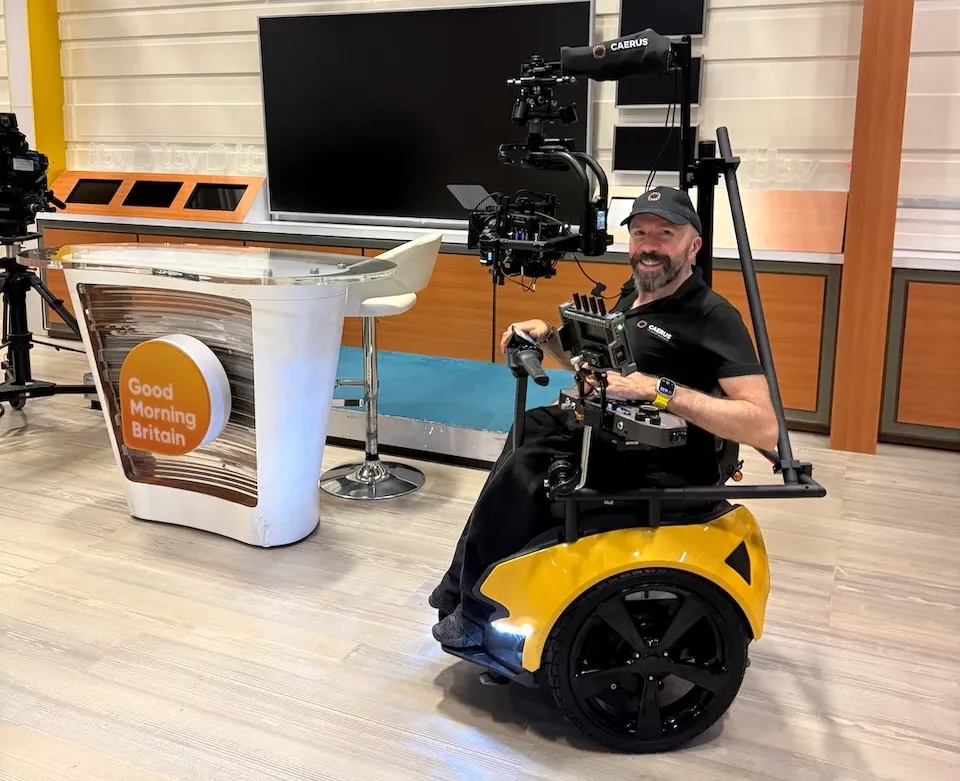
Lynch co-created the Caerus Steadicam, a camera mount that attaches to the Genny Zero, a self-balancing wheelchair designed in Italy and manufactured in Switzerland. The system is claimed to be the world's first wheelchair-mounted Steadicam—and it's already reshaping who can work behind the camera on professional productions.
How it works
The Genny Zero's design is crucial to the system's capability. Its two rugged wheels let it pivot into tight spaces that standard electric wheelchairs can't navigate, enabling smooth dolly shots, orbiting movements, and tracking sequences without laying down physical tracks. At 12 mph with a 15.5-mile range per battery charge, it transitions seamlessly between indoor and outdoor work.
We're a new kind of news feed.
Regular news is designed to drain you. We're a non-profit built to restore you. Every story we publish is scored for impact, progress, and hope.
Start Your News DetoxBut the real innovation is solving a problem Lynch identified early: "You need four arms—two to push yourself and two to hold the camera." The Caerus mount sits at chest level, controlled via a panel that lets wheelchair users operate broadcast-quality cameras without the physical strain of carrying an 88-pound rig. The mount can also detach for remote operation by other crew members if a production needs that flexibility.
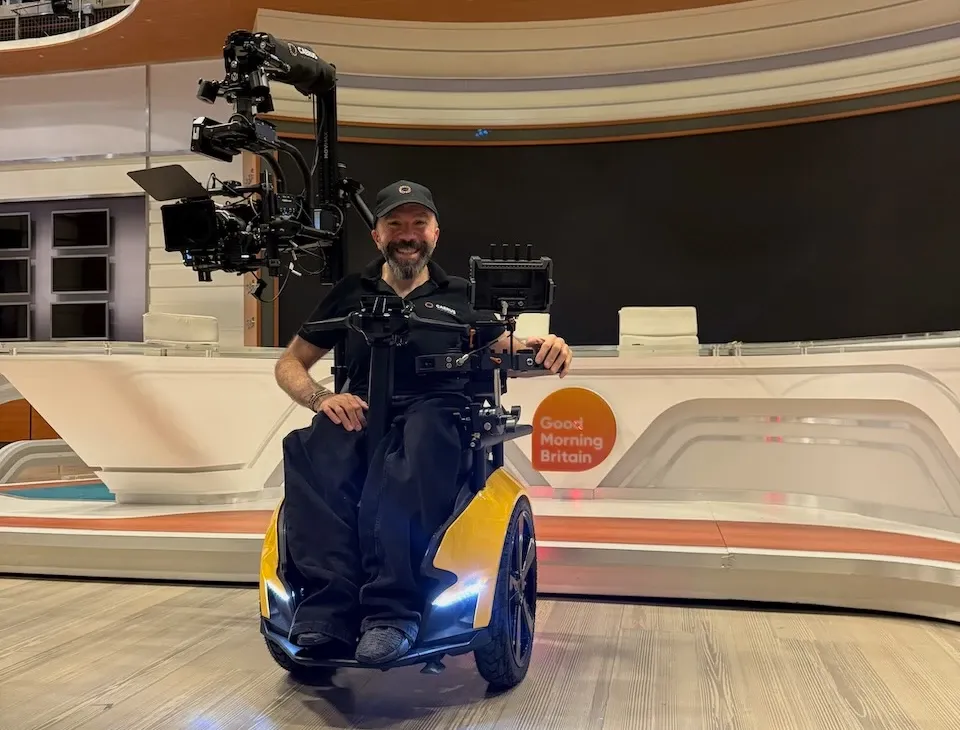
What's striking is that the system benefits able-bodied operators too. Traditional Steadicam work is brutal on the body—the weighted vest causes fatigue so severe that industry standards mandate 20- to 30-minute breaks to prevent injury and costly production delays. Mounting the camera on a wheelchair distributes that weight entirely, eliminating operator fatigue. In a physically demanding industry already struggling with retention, this matters.
From invention to industry shift
Five years in development, the Caerus system arrived with backing from major brands—RED, DJI, CVP, and Ronford Baker all contributed expertise. Lynch also founded Diverse Made Media, a disability-led production company with over 500 members across every department. The company's approach is deliberate: hire based on capability and production requirements, not optics or diversity targets.
The industry response has been immediate. Diverse Made Media has already shot high-profile work for the International Paralympic Committee, BBC productions, and major brands. The Caerus Vista model (the all-purpose indoor/outdoor version) costs £65,000—roughly $88,000—and currently has a waiting list. Training is mandatory and comprehensive: two days covering setup, rigging, operating fundamentals, and health and safety, with lifetime access to materials.
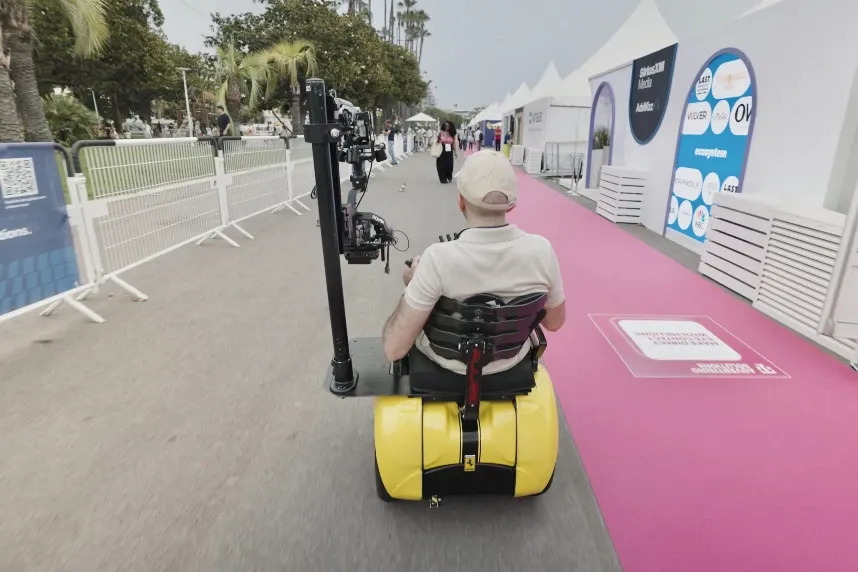
What Lynch's invention reveals is how many barriers in creative industries aren't actually technical—they're assumed. Filmmaking was never impossible for wheelchair users. It was just designed by people who never had to solve for it. The Caerus Steadicam doesn't lower standards. It removes the assumption that one body type is the only one capable of doing the work. That distinction matters. It opens not just jobs but entire creative roles that didn't exist before—and it does so in a way that makes the work itself better.
Lynch has already said his next goal is landing a major Hollywood blockbuster. Given the trajectory so far, it's not a question of if, but when.