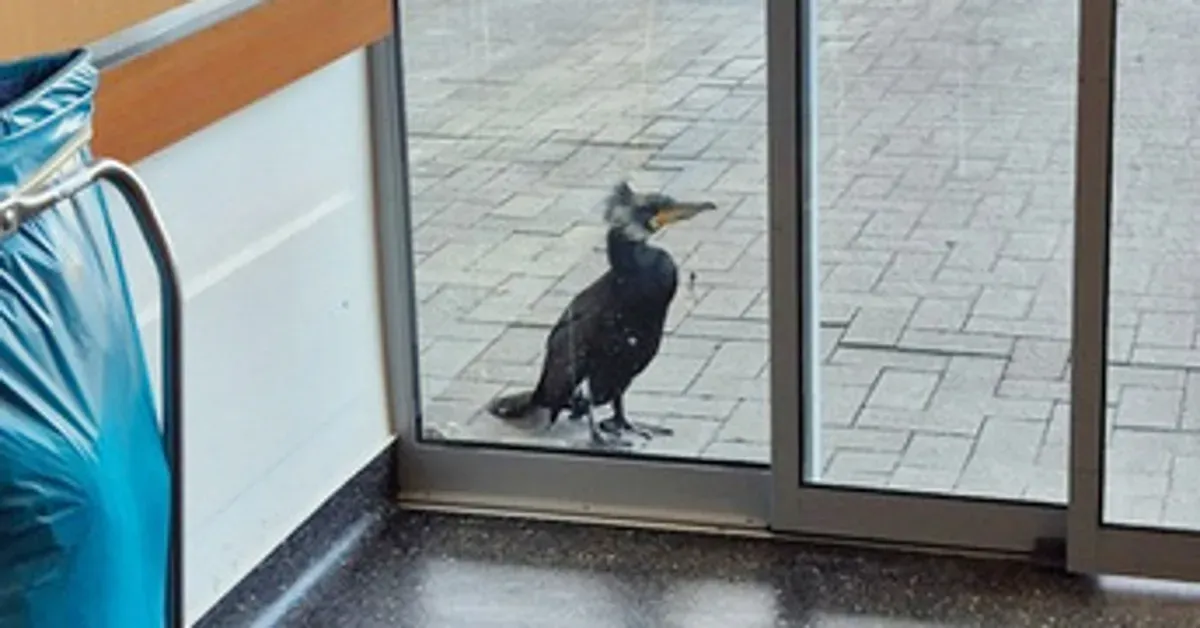
A black cormorant, desperate and in pain, did something wild animals almost never do: it approached humans. The bird landed at the glass door of the emergency room at Klinikum Links der Weser hospital in Bremen, Germany, and began pecking.
Staff inside quickly realized why. A triple fishing hook was lodged deep in the bird's beak.
What happened next shows something worth noticing about how we respond when an animal reaches out. The hospital didn't turn it away. Medical staff and firefighters worked together to carefully remove the hook and treat the wound. Within hours, the cormorant was released back into the hospital's park grounds, able to dive and feed again.
We're a new kind of news feed.
Regular news is designed to drain you. We're a non-profit built to restore you. Every story we publish is scored for impact, progress, and hope.
Start Your News DetoxWhen desperation overrides instinct
The Bremen firefighter department later explained what this moment really meant: "When an injured cormorant does approach humans, it is usually an animal in extreme distress that has lost its natural shyness."
That's the key detail. Cormorants are wild birds with sharp beaks and sharper instincts to avoid people. They have the tools to be dangerous and the wisdom to stay away. But a triple fishhook changes the calculation. The pain, the inability to eat, the slow suffocation of infection — these override every survival instinct the bird has.
A fishhook lodged in a cormorant's beak isn't a minor injury. The bird's distinctive hooked tip is designed for gripping slippery fish underwater. With metal through it, the bird can't close its beak properly, can't feed, can't survive the infection that inevitably follows. Left alone, this cormorant would have starved or succumbed to sepsis within days.
What this tells us
This story matters less because it's heartwarming (though it is) and more because it's a small window into a larger problem. Fishing gear — hooks, lines, nets — kills thousands of seabirds every year. Most don't make it to a hospital door. Most simply disappear.
But this cormorant did something remarkable: it crossed the gap between wild and human, between survival instinct and desperation, and asked for help in the only way it knew how. And the people who found it at that glass door chose to answer.
The bird was released back into the water, healed. It's a small victory in a much larger struggle — but it's a victory nonetheless.