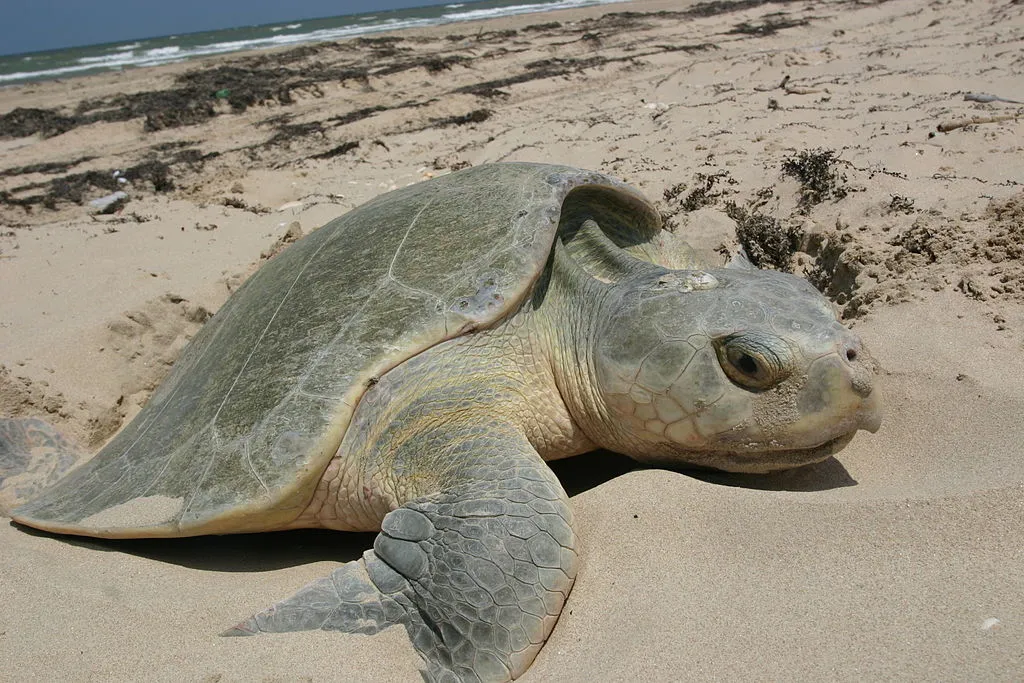
Carole Allen died at 90, leaving behind a species saved from the brink. For five decades, she refused to accept that the Kemp's ridley sea turtle was a lost cause.
When Allen founded HEART (Help Endangered Animals Ridley Turtles) in Texas, the species was nearly gone—fewer than 500 nests remained along the Gulf Coast. By the time she stepped back from daily work, that number had climbed into the thousands. The difference, those who knew her say, was Carole's refusal to separate caring from doing.
She started where most conservation work begins: in classrooms. Allen taught Texas schoolchildren about the Kemp's ridley, but she understood early that education without action is just information. So she built HEART around a different model. Hand-sewn heart-shaped stuffed turtles became fundraisers. Sea turtle cookie cutters spread the message while supporting the work. These weren't gimmicks—they were bridges between emotion and engagement, the kind of thing that made a child's parent suddenly care about a turtle they'd never heard of.
We're a new kind of news feed.
Regular news is designed to drain you. We're a non-profit built to restore you. Every story we publish is scored for impact, progress, and hope.
Start Your News DetoxWhat set Allen apart was her ability to move between worlds. She could sit with fishermen whose livelihoods depended on coastal waters and find common ground. She could face down politicians and corporate interests without flinching. In 1990, she stood with Mexico's President as the country announced the closure of its sea turtle slaughterhouse and a permanent ban on sea turtle hunting—a moment that marked a turning point for the species.
Her work didn't stop there. Allen became the first director of the Turtle Island Restoration Network's Gulf of Mexico office, extending her reach across borders and bureaucracies. Colleagues remember her warmth alongside her steel—the ability to inspire people to care deeply, then move them to act.
The Kemp's ridley remains endangered, but it's no longer racing toward extinction. That shift from hopelessness to recovery is Carole Allen's actual legacy—not the memorial kind, but the living one. Every turtle nest that succeeds along the Texas coast now carries the imprint of someone who refused to accept the worst outcome.