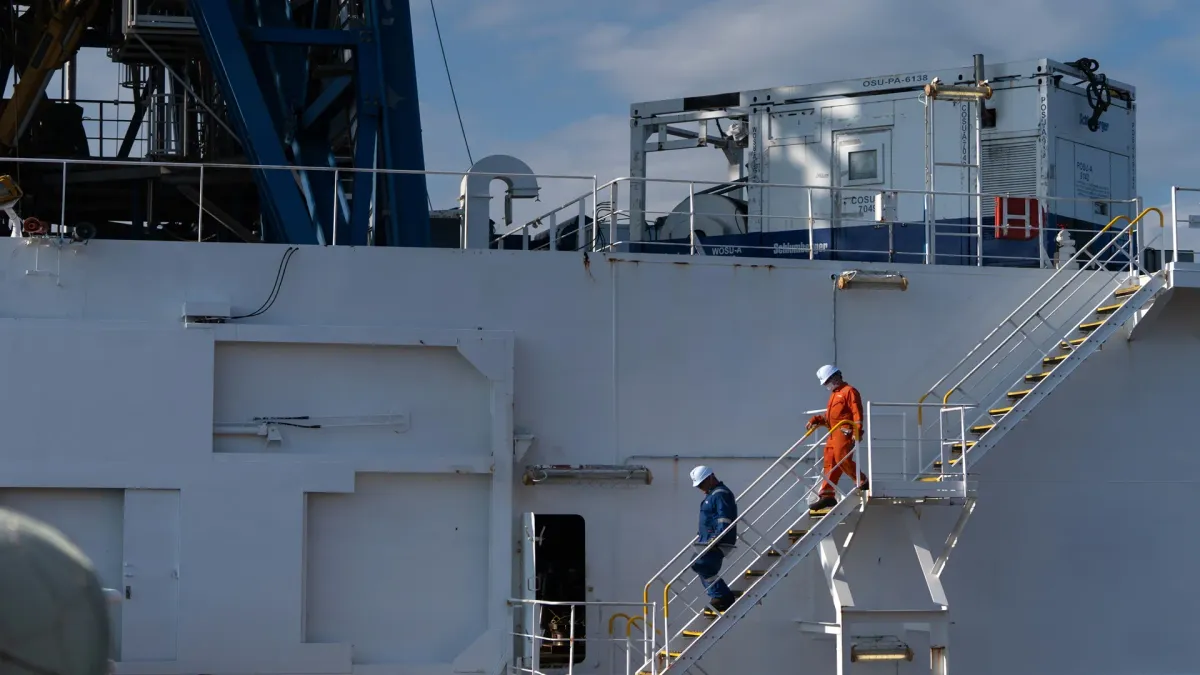
Japan just attempted something no one has done before: pulling rare earth mud from six kilometers below the ocean surface and bringing it directly onto a ship. The research vessel Chikyu departed from Shizuoka last week bound for waters near Minamitori Island, a remote coral atoll 1,900 kilometers southeast of Tokyo, to spend a month testing whether this deep-sea extraction actually works at scale.
Why this matters comes down to leverage. China controls roughly 70% of the global rare earth supply—the elements that power electric vehicle motors, smartphone screens, and military systems. Japan currently imports about 60% of its rare earths from China, down from 90% a decade ago, but that's still a precarious dependency. When a maritime dispute flared up in the East China Sea years ago, China restricted exports as a pressure tactic. The message was clear: rely on us, or lose access.
The Minamitori Island deposits are believed to hold significant concentrations of rare earths, particularly the heavy elements Japan needs most. These heavy rare earths are crucial for the powerful magnets in electric and hybrid vehicle motors—the kind of supply disruption that could ripple through Japan's entire automotive and high-tech manufacturing base within weeks.
We're a new kind of news feed.
Regular news is designed to drain you. We're a non-profit built to restore you. Every story we publish is scored for impact, progress, and hope.
Start Your News DetoxShoichi Ishii, who heads the government-backed project, described the moment the Chikyu set sail as "deeply moving" after seven years of preparation. The technical challenge is genuine: lifting mud-rich sediment from 6 kilometers down without losing it to the ocean pressure and currents on the way up requires engineering that hasn't been proven at this depth. If the month-long tests show the process works, Japan plans to move toward a full-scale mining trial in February 2027.
The investment reflects how seriously Japan takes this. The government has already committed around 250 million dollars to the project since 2018. That's not venture capital optimism—that's a country betting on its own supply chain independence.
Takahide Kiuchi, an economist at Nomura Research Institute, offers a realistic note: even if Japan succeeds here, replacing Chinese supply entirely would be difficult if export controls tighten further. But the deeper point is that Japan is no longer waiting passively. A successful extraction would prove that rare earth independence isn't a fantasy—it's an engineering problem with a solution.