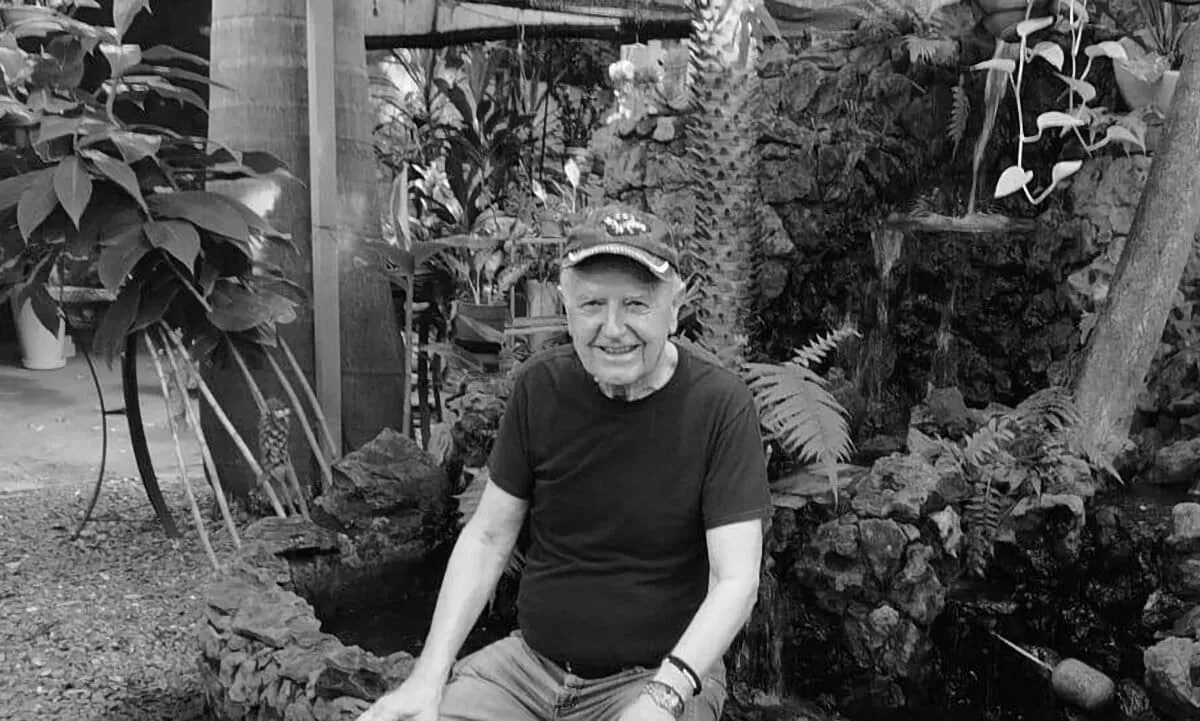
Father José Zanardini arrived in Paraguay's Gran Chaco in 1978 with an unusual combination of credentials: a Salesian priest, an engineer-turned-theologian, and a trained anthropologist. Over nearly five decades, he would navigate a tension that has defined missionary work in South America since colonization—the pull between offering aid and imposing change.
The arrival of a missionary in Indigenous communities has always carried two stories at once. One is material: medicine, schooling, infrastructure that often arrives where governments don't. The other is cultural: conversion, resettlement, the slow erasure of languages and ways of seeing the world. In Paraguay's Gran Chaco, where some Ayoreo communities chose isolation and others accepted contact, that line between accompaniment and intrusion remained blurred.
Zanardini, born in Brescia, Italy in 1942, seemed an unlikely candidate for this work. He studied engineering in Milan, then shifted to philosophy and theology. When the Salesians assigned him to Paraguay, he made his own choice: to study anthropology rigorously. He completed a doctorate in social anthropology in England, then returned to the Chaco with both a priest's collar and a scholar's skepticism.
We're a new kind of news feed.
Regular news is designed to drain you. We're a non-profit built to restore you. Every story we publish is scored for impact, progress, and hope.
Start Your News DetoxA Different Kind of Witness
For decades, he published extensively on Ayoreo language, history, and culture—work that treated Indigenous knowledge systems as worthy of preservation, not obstacles to progress. He also served as an advocate for Ayoreo rights, a position that sometimes put him at odds with the church hierarchy and state interests in land development.
The tension Zanardini embodied reflects a broader shift in how some missionaries and anthropologists approach Indigenous communities. The most careful scholars learn to doubt their own categories. They understand that a field notebook—a record of languages, stories, and ways of seeing—can outlast a sermon. They recognize that respect sometimes means stepping back.
Zanardini died on January 19th, 2026, at 83. He left behind decades of documentation of Ayoreo culture and a model, however imperfect, of how faith and Indigenous autonomy might coexist. In a region still shaped by the legacies of colonization, that work matters.