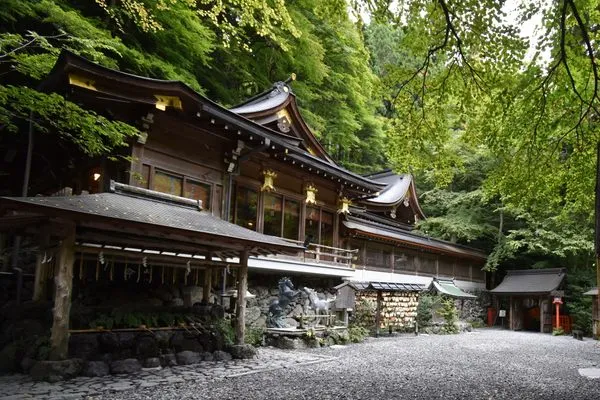
Deep in a wooded gorge between two mountains in Kyoto sits Kifune Shrine, a place where people have come for over a thousand years to make wishes. The shrine is dedicated to Taka-okami-no-kami, a water god, and it's become famous for its photogenic lantern-lined stairway glowing against autumn leaves. But beneath the picturesque postcard image is a more complex history—one that shaped how Japanese spirituality works today.
Walk through almost any Shinto shrine in Japan and you'll see wooden prayer boards hanging on walls and trees. These are ema, and Kifune is where they started. The origin story is practical, even poignant: emperors once offered live horses to the shrine as offerings to pray for rain during droughts. Over centuries, the living animal became a wooden horse, then a wooden board with a horse painted on it. Eventually people stopped needing to depict horses at all—they just wrote their wishes on blank boards. What began as a costly imperial ritual transformed into something accessible to everyone. Today, millions of ema hang in shrines across Japan, each one a small, anonymous prayer.
From Rain Prayers to Darker Requests
But Kifune's story isn't purely about gentle wishes. In the medieval period, the shrine gained a different kind of reputation. A famous 14th-century play called Kanawa features the shrine as a place where a vengeful woman seeks supernatural help. The play describes a ritual—dressing in red, painting the face with cinnabar, wearing an iron crown, lighting a candle—to transform into a demoness. This fictional account had real consequences: Kifune became known as a place where people came not to pray for good fortune, but to curse others. The ritual became known as Ushi-no-toki-mairi, the Hour of the Ox ritual, and it attracted those seeking vengeance.
We're a new kind of news feed.
Regular news is designed to drain you. We're a non-profit built to restore you. Every story we publish is scored for impact, progress, and hope.
Start Your News DetoxYet even this darker chapter connects to something older and more ambiguous. The ritual's name references a myth about Kifune's god manifesting at a very specific moment: the Hour of the Ox, on the Day of the Ox, in the Year of the Ox. This wasn't inherently about curses—it was about the god's particular power appearing at that precise time. Wish-making and curse-making, in this context, were two sides of the same practice: asking for something to change.
The shrine also honors an ox demon called Ushioni, who once accompanied the god but talked so much that his tongue was cut out and he was exiled for three years. According to legend, his descendants took monstrous forms for generations before eventually becoming human again. Remarkably, a family claiming descent from this demon—the Zetsu family—has served as priests at Kifune Shrine for centuries, their presence a living link to folklore that refuses to fade.
Today, Kifune Shrine draws visitors seeking both beauty and blessing, the lantern-lit pathways framing a place where the sacred and the strange have always coexisted.