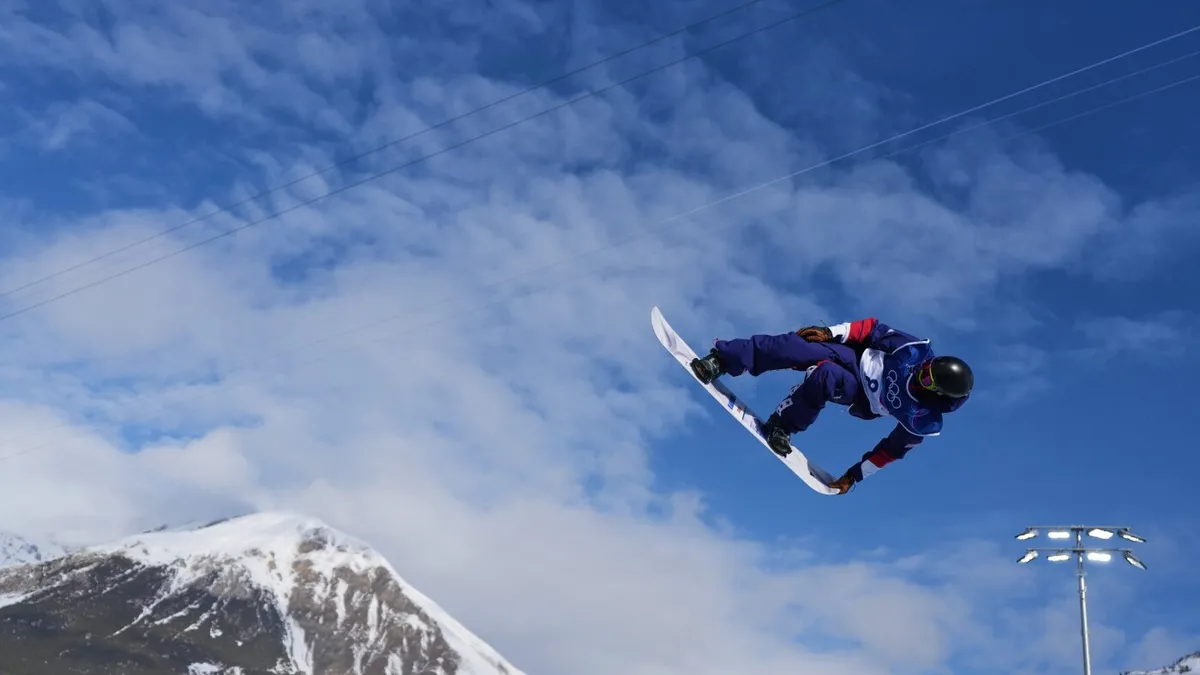
Before dropping into a halfpipe at 40 miles per hour, U.S. Olympic snowboarders need more than technical skill. They need a way to quiet the noise in their heads — and they've found it in surprisingly varied places: a Spotify playlist, a Maine coon cat, and a 2,000-year-old Chinese practice.
Sean FitzSimons starts with Metallica. "'For Whom the Bell Tolls' is usually my go-to," he says, "then Metallica radio on Spotify, and then it goes to some Alice in Chains. That whole genre just gets me psyched." It's the kind of ritual that seems random until you realize it's doing exactly what he needs: anchoring him in something familiar before he commits to something extreme.
Maddie Mastro, a halfpipe snowboarder from Wrightwood, California, takes a different route. She leans on pop — Doja Cat, Natasha Bedingfield — and pep talks from her coaches, though she admits the words mostly blur together. "I feel like I black out from the moment I walk up 'til the run's over," she says. "But I'm sure it's just these words of motivation that help me." What matters isn't whether she consciously hears them. It's that the ritual itself does the work.
We're a new kind of news feed.
Regular news is designed to drain you. We're a non-profit built to restore you. Every story we publish is scored for impact, progress, and hope.
Start Your News DetoxThe Unexpected Anchors
Then there's 17-year-old Alessandro Barbieri from Portland, Oregon, who brings his silver tabby Maine coon named Bella into his pre-run routine. Three claps, a small ollie, and a moment with the cat — it keeps him grounded. His teammates have noticed. "Kitty Kitty Meow Meow," they call him now, a nickname that somehow captures both the absurdity and the sincerity of what he's doing.
But perhaps the most striking shift is happening with the men's halfpipe team, who've started practicing qigong — an ancient Chinese form of meditation in motion. Chase Blackwell from Longmont, Colorado, describes it simply: "It gets me in the zone, calms the nerves a little bit and gets me fired up to go send." Chase Josey frames it more poetically: "collecting the energy, harnessing that universal power" to push their bodies to extreme limits.
The coaches have joined in too, practicing "cloud hands" — the flowing arm movements central to qigong — right there in the high-pressure moments before competition. It's a small act that signals something important: that keeping calm isn't weakness, and that the path to peak performance sometimes runs through stillness, not just intensity.
What these athletes are doing, each in their own way, is creating permission to be human before they're asked to be superhuman. Whether it's a cat, a song, or a breathing practice, they're building a bridge between the nervous system and the moment. The halfpipe doesn't care which bridge you choose.