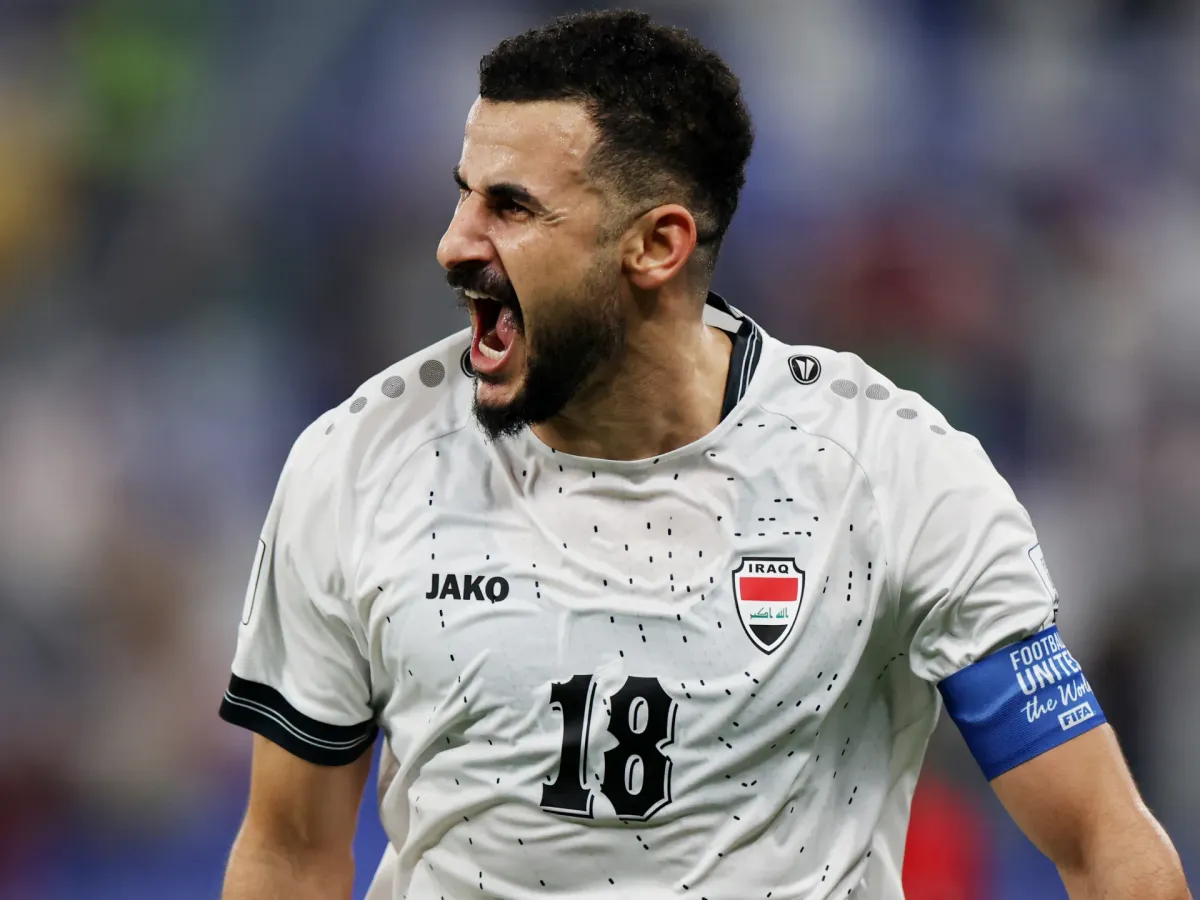
Aymen Hussein, Iraq's center-forward, has made a remarkable journey to the World Cup. He helped his country qualify for the first time in 40 years by scoring a winning goal against Bolivia in Mexico.
Hussein faced immense personal tragedy from a young age. When he was twelve, his father was murdered while buying materials for their family home. A few years later, his older brother was kidnapped and has not been seen since.
"I decided to quit playing football to take care of my family, but my mother refused," Hussein said. "She asked me to continue playing." His mother told him it was his dream and he had to achieve it. He has held onto that dream ever since.
We're a new kind of news feed.
Regular news is designed to drain you. We're a non-profit built to restore you. Every story we publish is scored for impact, progress, and hope.
Start Your News DetoxOvercoming a Violent Past
Born in 1996 in al-Safra, a village in north-central Iraq, Hussein grew up in a farming family. In 2008, his father, an Iraqi army soldier, was killed by al-Qaeda, which controlled the Kirkuk area.
Hussein's father was shot in the heart while buying building materials. "We didn't believe it at first," Hussein recalled. "But then we went to the hospital to find my father's dead body lying there. It was a disaster to all of us."
Hussein urged his family to leave the village. However, his older brother, who joined the Iraqi army, refused. Instead of fleeing, Hussein joined the Iraqi Youth football team. After returning from a training camp, he learned his brother had been kidnapped by ISIL (ISIS). "We have heard nothing about him since," he said.
A Rising Football Star
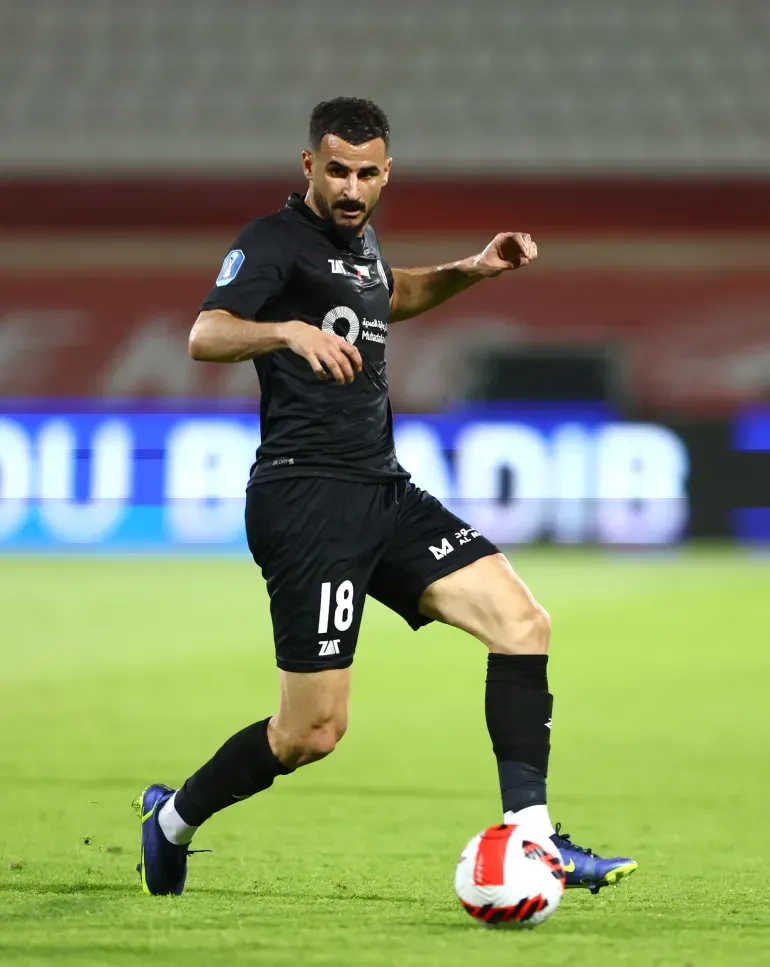
Despite the tragedies, Hussein's football career began to flourish. In 2012, he was scouted by Dohuk football club in Iraq's Kurdistan region. He signed a contract for 18 million Iraqi dinar ($14,000) and a monthly salary of 1.2 million Iraqi dinar ($920).
"Honestly, I was ready to play for free," Hussein said. "You may not imagine what it meant to me to play with players from the Iraqi national team at that time. Playing with Dohuk was the dream of my life."
Eighteen months later, he moved to Baghdad, playing for teams like Al-Shorta, Al-Talaba, and Al-Zawraa, becoming the league's top scorer. He later played for Qatar's Al Khor club before returning to Iraq to join Al Karma. With a reported $1 million contract, he is now Iraq's most expensive footballer.
Hussein always remembers his father and brother. "I have always wished that my father and brother were still alive to see what I have achieved and share the moments of happiness."
He has achieved many proud moments. In 2016, he scored a goal that helped Iraq beat Qatar to qualify for the Rio de Janeiro Olympics. In 2023, he was the top scorer in the 25th Arabian Gulf Cup, leading his team to victory. In 2024, Hussein scored a goal that helped Iraq qualify for the Paris Olympics.
The Lions Roar Again
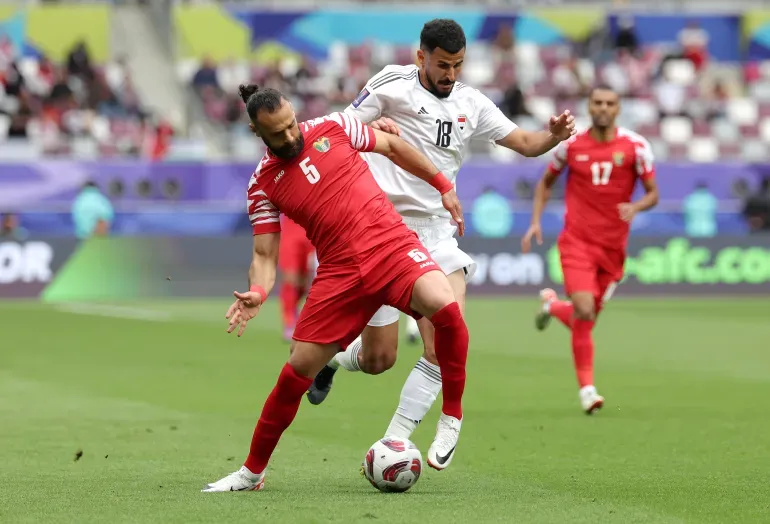
Iraq's national team, known as the Lions of Mesopotamia, last qualified for a World Cup in 1986. Now, fans are hopeful that Hussein will lead the team far in the tournament.
Jalal Hassan, Iraqi goalkeeper and vice-captain, praised Hussein. "Aymen is a name that needs no introduction. His performance speaks for him not only in Iraq, but in the region and Arab football," Hassan told Al Jazeera. "He is a high-quality striker. The team will absolutely need him, and his presence will make the difference in the World Cup. We are expecting a lot from him."
Iraq is in Group 9 with France, Senegal, and Norway, facing tough competition. Former Iraq captain Hussein Saeed is optimistic. "Aymen’s influence is clear on the team and all players. He, as a person, has a lovely and humble personality," Saeed told Al Jazeera. "I hope he can use this positive trait to the benefit of the team in the coming World Cup, taking the team to the post-group stage."
Iraqi football journalist Zaid Alsaraj hopes the team, especially Hussein, is fully prepared. Hussein himself hopes some fans can attend, though it will be difficult. Iraqi football fan Saif Al-Bayati noted the challenges. "It is not easy to get a US visa. Actually, it is almost impossible for Iraqis," Al-Bayati told Al Jazeera. He added that ticket prices and travel costs would be very high, making it difficult for ordinary Iraqi fans to attend.