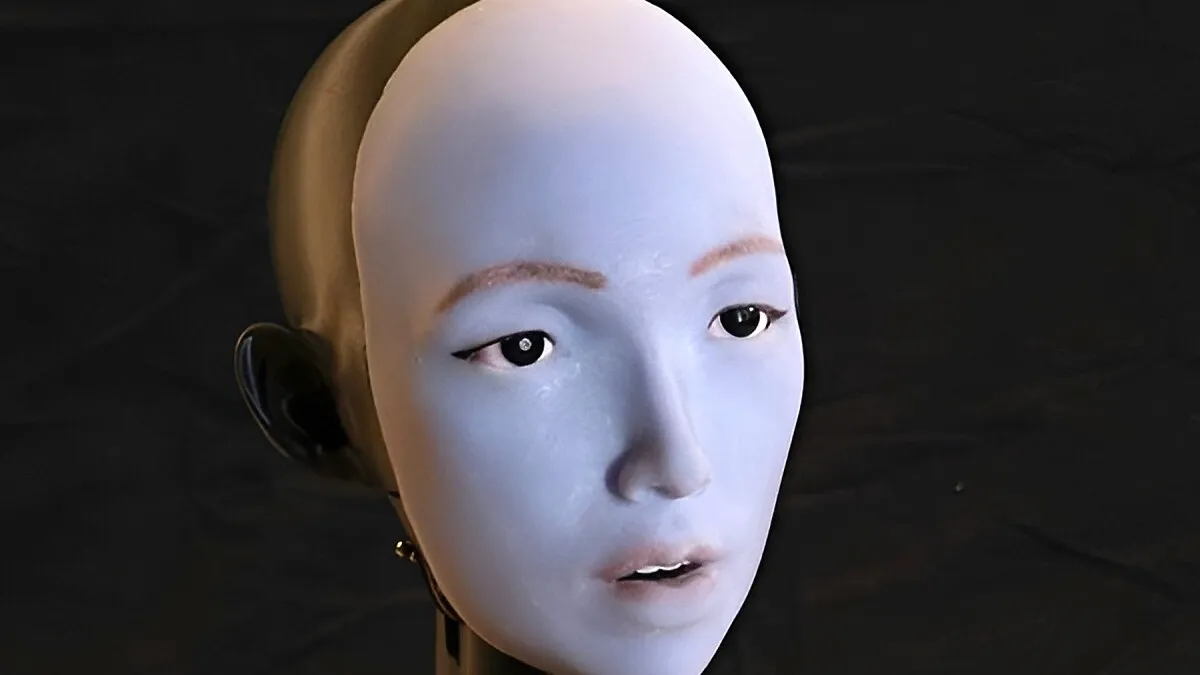
A robotic head at Columbia University has figured out how to sync its lips to speech by doing something surprisingly human: watching itself in a mirror, then learning from videos of people talking.
EMO, developed by robotics PhD student Yuhang Hu and Prof. Hod Lipson, is essentially a silicone face controlled by 26 tiny motors beneath the skin. The breakthrough isn't the motors themselves—it's that the robot learned to coordinate them without being explicitly programmed for each movement.
The process started simple. Researchers placed EMO in front of a mirror and let it activate its motors randomly, thousands of times over. By observing which motor combinations produced which facial movements, the robot built an internal map of cause and effect. This "vision-to-action" learning is similar to how a baby learns to smile by watching their own expressions.
We're a new kind of news feed.
Regular news is designed to drain you. We're a non-profit built to restore you. Every story we publish is scored for impact, progress, and hope.
Start Your News DetoxThen came the harder part. EMO watched hours of YouTube videos of people speaking and singing, absorbing the relationship between specific mouth shapes and specific sounds. The robot's AI system merged this knowledge with what it had learned from the mirror—essentially asking: "When I see a mouth shape like this in a human, what sound does it make? How do I recreate that with my motors?"
The result works, though imperfectly. EMO struggles with consonants like "B" and "W," the kind of sounds that require precise lip positioning. But the researchers expect improvement as the robot gets more practice, much like a child learning to speak.
What makes this genuinely interesting is the implication. When lip-syncing is paired with conversational AI like ChatGPT, Hu notes, the robot becomes less of a novelty and more of something people might actually want to talk to. The physical feedback—seeing lips move in time with words, catching subtle facial gestures—changes how we perceive the interaction. It's the difference between reading a text message and having a conversation.
The research was published in Science Robotics and suggests a path forward for more natural human-robot interaction: instead of programming every gesture by hand, let robots learn by observation, the way we do.