Turns out, medieval chess was way more progressive than the world around it. For centuries, while societies were busy calling each other barbarians, people from wildly different cultures were sitting down to play chess as equals. All that mattered was who was smarter, not who was more powerful.


New research looking at medieval artwork shows that chess helped bridge huge cultural divides. We're talking 13th-century Europe and the Middle East. Krisztina Ilko, a historian at Cambridge University, found that players knew the game had this unique power to make everyone human, no matter their background.

Medieval writings even called chess "war without bloodshed" and a picture of a "just world." It was a seriously cool way for people from different civilizations to connect intellectually. This was happening when most other art showed non-white people in super simple, often negative, ways.
We're a new kind of news feed.
Regular news is designed to drain you. We're a non-profit built to restore you. Every story we publish is scored for impact, progress, and hope.
Start Your News Detox
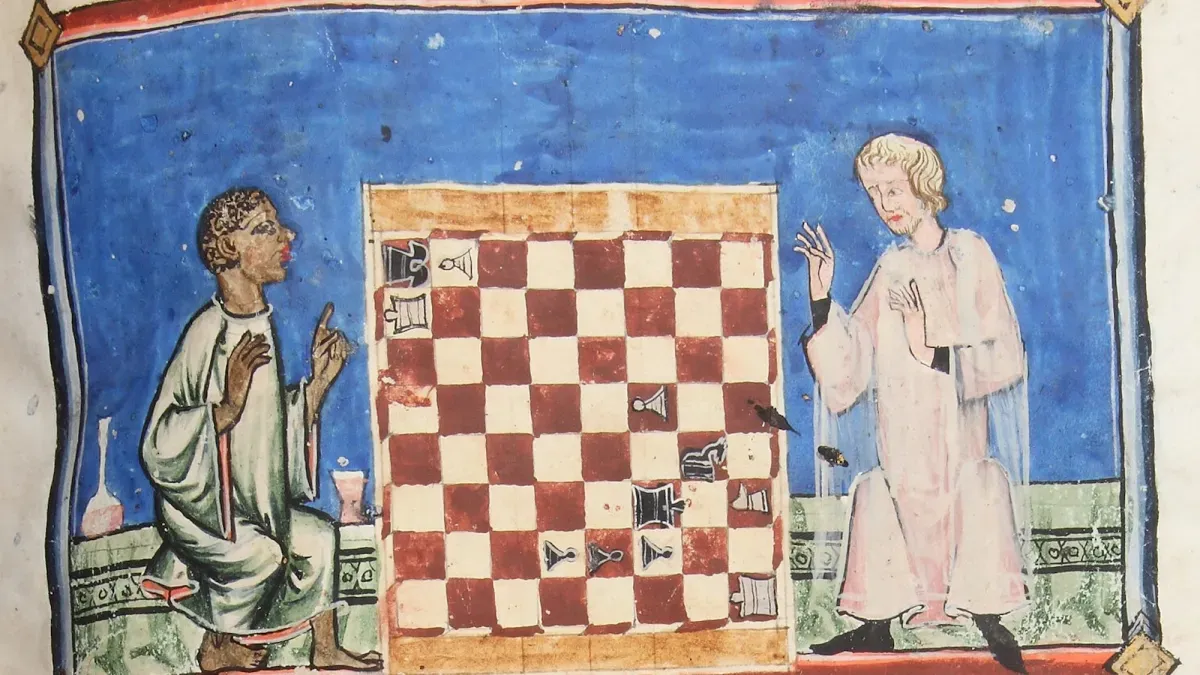
Take the Libro de axedrez, or Book of Games, from 1283 CE. Spain's King Alfonso X commissioned it. Its illustrations are pretty wild. They show players from Asia, Africa, and the Middle East playing against Europeans. You see a Muslim and a Jewish player in a match, and four Mongols calmly enjoying a game. This is a huge contrast to how these groups were usually shown in European art.

King Alfonso probably saw the problems these simple stereotypes caused. Europe was actually behind in science back then. His court was actively translating Islamic knowledge in math, astronomy, and medicine. These interactions often led to chess games. Spanish diplomats likely lost a lot of them, too.

Get this: 88 out of 103 chess problems in the Libro de axedrez are based on Muslim playing styles. That tells you who was really dominating the board.

Another example is a Spanish altarpiece from the late 1300s. It shows a dark-skinned king playing chess with a light-skinned thief in a Muslim court. Ilko points out that these different skin tones challenged the European idea that whiteness was superior. These images show how chess has been breaking down societal walls for generations.
On the chessboard, your skin color or social standing didn't matter. It was all about your brainpower. That's a lesson we could still use today, honestly.