Your brain has its own immune system, separate from the rest of your body. These specialized guardians are called microglia — cells that hunt down infections, clear away toxic protein buildup, and even sculpt the brain's wiring as you learn and age. But sometimes they break down, especially when genetic mutations damage them. For decades, there wasn't much doctors could do about it.
That's changing. This year, researchers moved microglia replacement therapy from mouse studies into human trials, and the early results suggest we might finally have a way to repair brains damaged by genetic disease.
How the brain's cleanup crew works
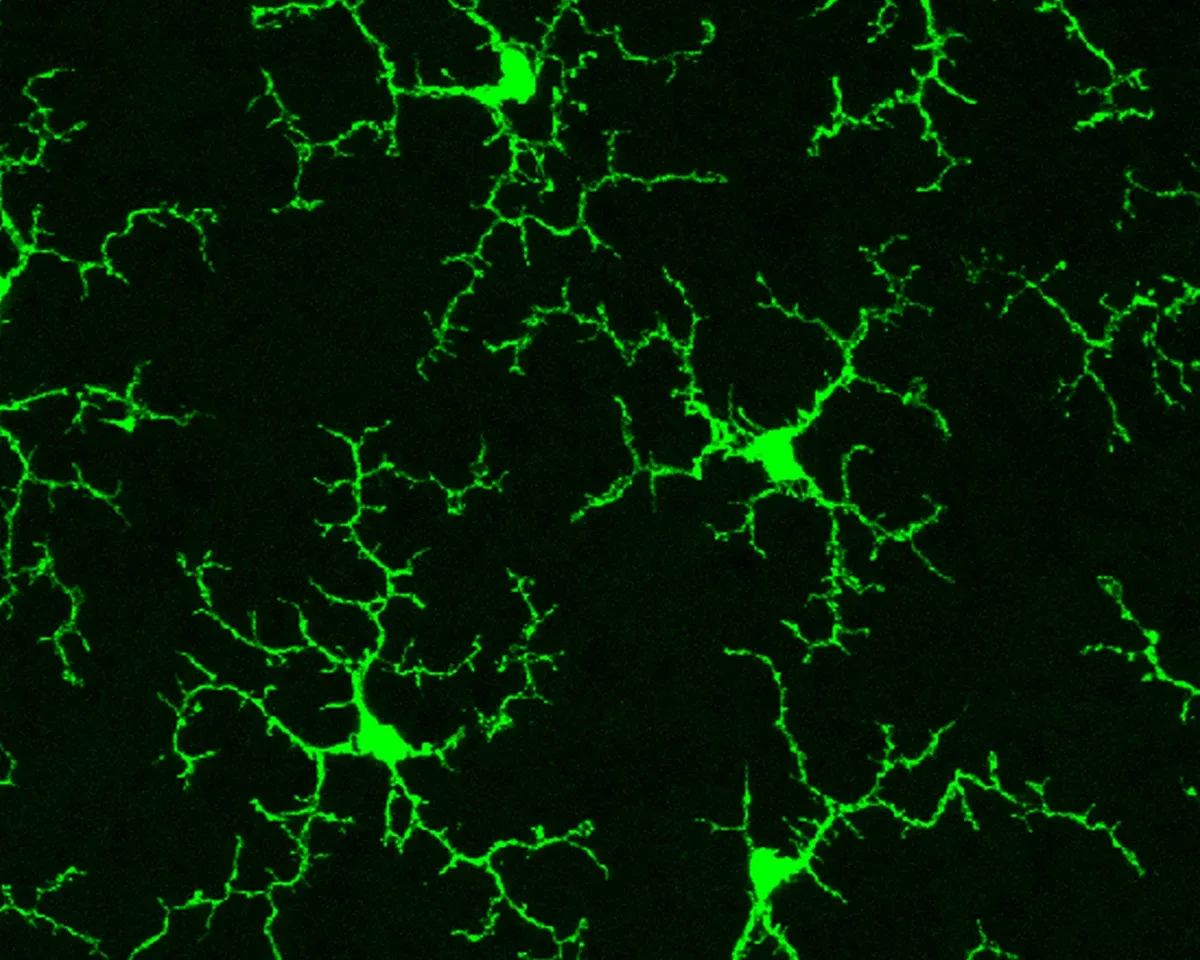
Microglia start their lives as blood stem cells in your bone marrow, then migrate into the brain where they settle in for life. When everything's working, they look like tiny shrubs, quietly monitoring for trouble. The moment they detect a problem — an infection, a toxic protein, a synapse that needs pruning — they transform into puffballs, shrink down, and get to work.
We're a new kind of news feed.
Regular news is designed to drain you. We're a non-profit built to restore you. Every story we publish is scored for impact, progress, and hope.
Start Your News DetoxWhen microglia malfunction, the consequences ripple through the entire brain. Neurodegenerative diseases like Alzheimer's often involve microglia that have gone haywire. Sometimes genetic mutations cripple them from birth. In either case, the brain loses its cleanup crew, and damage accumulates.
For years, researchers tried gene therapy to fix broken microglia. The problem: the brain's blood barrier is famously difficult to cross, and microglia are especially stubborn targets. Viral carriers designed to deliver corrected genes simply couldn't reach them.
A radical solution: replacing the cells entirely
Instead of fixing broken microglia, what if you just replaced them with healthy ones?
The challenge was that existing microglia in the brain treat newcomers as invaders. But researchers realized that because microglia originate as bone marrow stem cells, a bone marrow transplant from a healthy donor could work. The new stem cells would travel through the bloodstream, cross into the brain, and become fresh microglia.
There was one problem: the new cells needed room to settle. In 2020, a team developed a drug that temporarily depleted existing microglia in mice, clearing space for the healthy replacements. This July, they used this approach in a clinical trial for CAMP, a rare fatal brain disease where microglia mutations destroy the brain's structure.
Eight patients received the treatment. For at least two years afterward, their disease stopped progressing — a dramatic shift for a condition that normally causes rapid decline. No serious side effects emerged. Researchers have also seen early success in Sandhoff disease, another microglia-linked condition.
What comes next
The therapy still faces hurdles. The transplant process requires radiation or chemotherapy to make room for new cells, which carries its own risks. Immune rejection remains a concern, though researchers are exploring induced pluripotent stem cells — where a patient's own skin cells are reprogrammed into microglia — to sidestep the problem.
Doctors will need to study longer-term effects and test the approach across a wider range of neurological diseases. But the trajectory is striking: five years ago, microglia replacement existed only in animal studies. Now it's halting disease progression in human patients. If the pattern holds, this could eventually become a platform for treating dozens of brain conditions where microglia dysfunction plays a role.