The Evergreen isn't trying to fit your life into a box on wheels. Instead, Vagabond Haven designed it to do something simpler: actually feel like home.
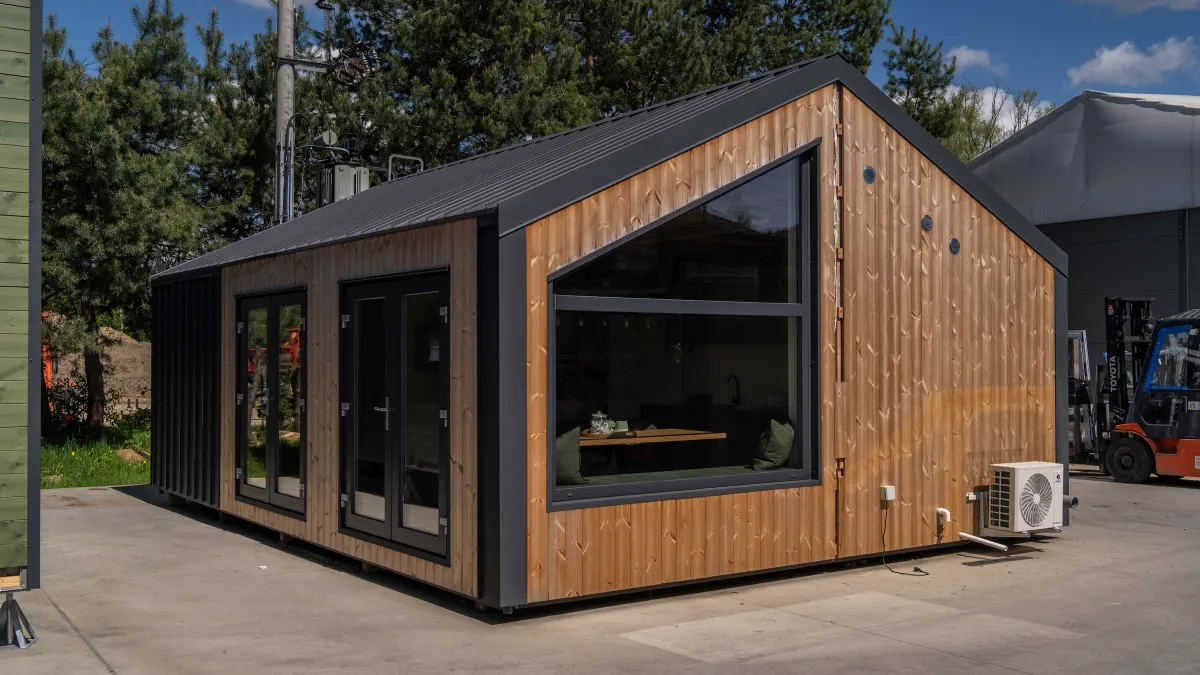
At 441 square feet across two connected modules, it's larger than most tiny houses—and that extra space changes everything. The 27-by-20-foot footprint means you're not choosing between a kitchen and a sofa. You get both, plus room to breathe.
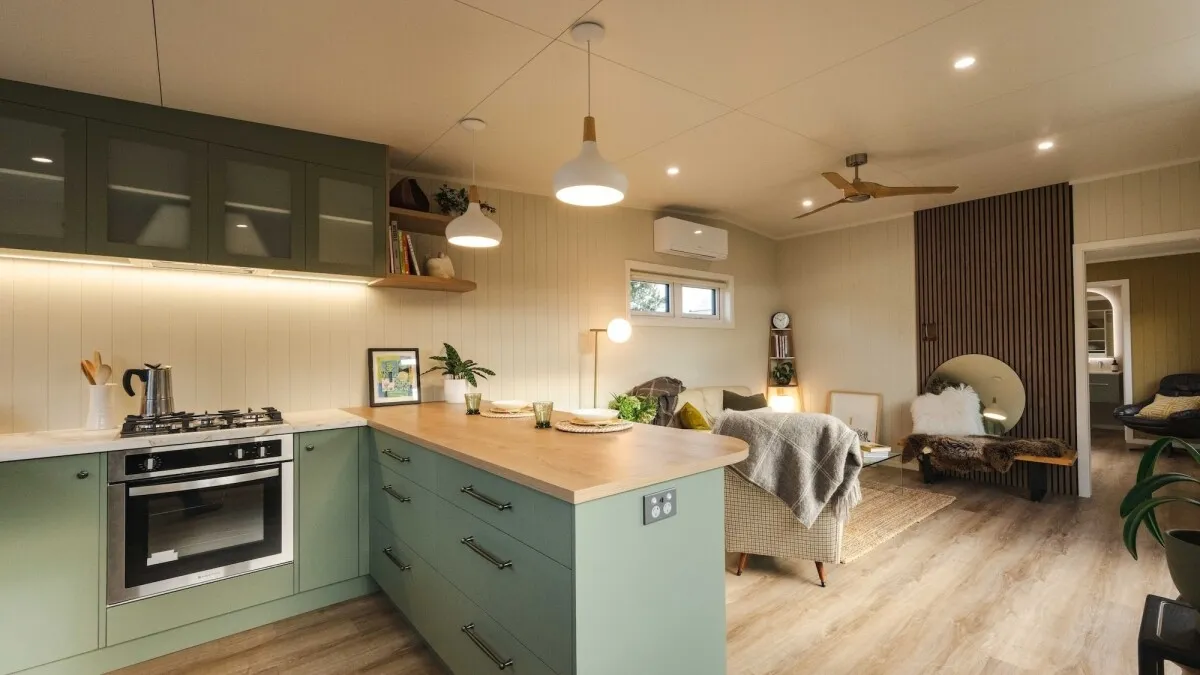
Walk in and the first thing you notice is light. The open-plan layout flows from a full kitchen with proper cabinetry and counter space into a dining area that doubles as a workspace, then into a living room that can hold an actual L-shaped sofa without feeling cramped. Two bedrooms sit at opposite ends—a master with a double bed and built-in wardrobe, and a secondary room that works as a bedroom, office, or guest space depending on what you need that week.
We're a new kind of news feed.
Regular news is designed to drain you. We're a non-profit built to restore you. Every story we publish is scored for impact, progress, and hope.
Start Your News DetoxThe trade-off is deliberate: no wheels means no weight restrictions, so the design prioritizes comfort over portability. If you're looking to settle somewhere—whether that's a rural plot, a family property, or a permanent community—this shifts the calculation. You're not paying for mobility you won't use.
At around €90,000 (roughly $105,000 USD), the Evergreen sits at the upper end of tiny house pricing, but you're getting something that doesn't ask you to compromise on basics. The modular construction means it can be customized for off-grid living—solar panels, composting toilets, water storage—or connected to conventional utilities. The furnishings and layout are flexible too, so a family with kids can configure it differently than a couple working from home.
This represents a quiet shift in how people think about small-space living. The tiny house movement started as a rebellion against sprawl and excess, but early models often felt like an exercise in constraint. The Evergreen suggests another path: smaller doesn't have to mean cramped, and staying put doesn't have to mean giving up on intentional living.