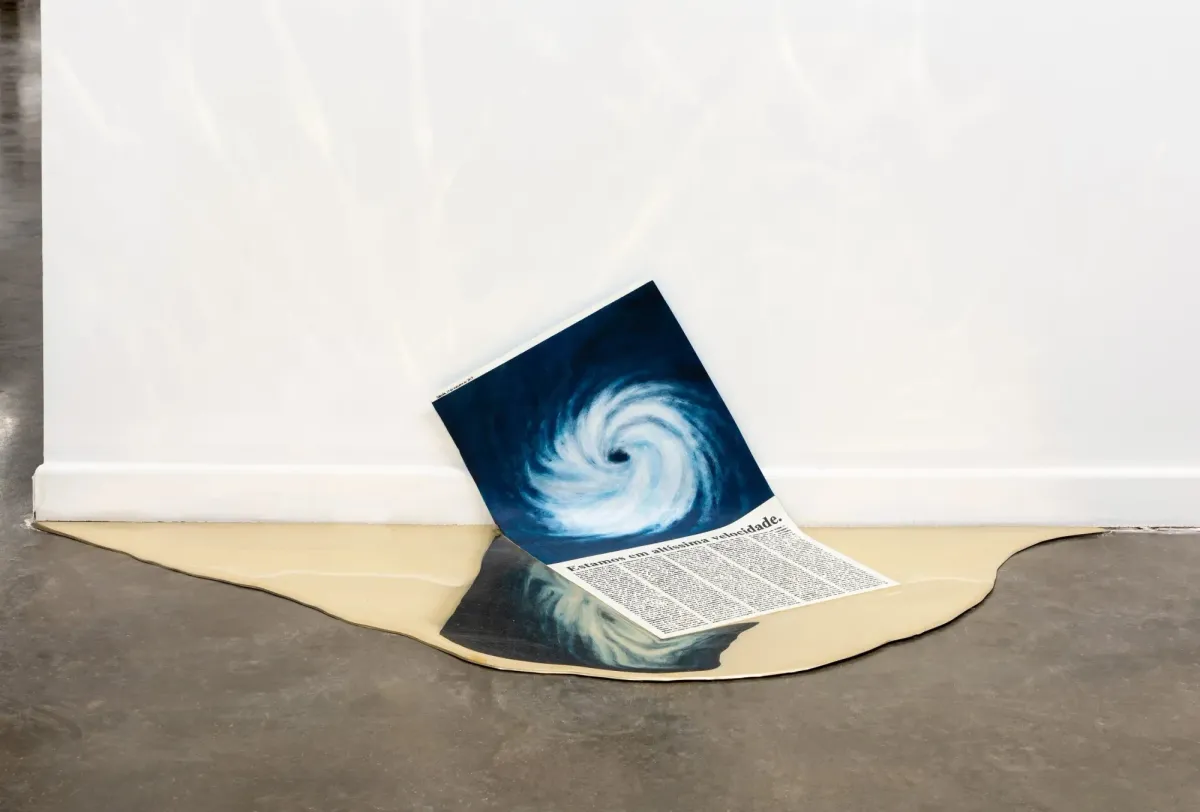
Brazilian artist Vanderlei Lopes poured molten aluminum through a hole in a gallery wall, letting it pool across the concrete floor like a frozen disaster. Nestled in the metallic flow were smaller sculptures painted to look like Coca-Cola cans, Styrofoam cups, and crumpled paper—consumer detritus caught mid-collapse.
This was the centerpiece of Este Arte, Uruguay's 12th annual fair, held last week in the coastal resort town of José Ignacio. Lopes's nine new works weren't subtle. They spoke directly to the tensions that shape South America right now: the weight of consumerism, the cost of ecological waste, the violence of extracting mineral resources from land. The fair's location—a wealthy seaside enclave downstream from the United States, within earshot of Venezuela's ongoing crisis—sharpened the message. Beauty and complicity sitting in the same room.
Art as Mirror
Over four days, 5,000 visitors moved through the fair encountering this kind of conceptual friction. Chilean artist Germán Tagle presented liquid-looking landscape paintings rendered through stencils, evoking the region's long history of environmental intervention. He also showed altered reproductions of New York Times front pages, their headlines disrupted by wavering brushstrokes—the historical record itself made unstable, unreliable.
We're a new kind of news feed.
Regular news is designed to drain you. We're a non-profit built to restore you. Every story we publish is scored for impact, progress, and hope.
Start Your News Detox
Diego Bianchi's "New Cement Bodies" sculptures extended this sense of distortion—chimeric figures sprouting metal pipes, bending beyond what bodies should hold. The fair leaned toward abstraction overall, a lineage that runs deep in South American art history. Emil Lukas's concentric, spidery weavings held their own. Francisca Maya's Bauhaus-inspired "Dance of the Circle" project showed restraint and precision.
But the work that broke from that abstraction—Argentine artist Trinidad Metz Brea's "Technorganic Bodies"—may have resonated most sharply. Across sculptures and a monumental drawing, bats, insects, and other creatures the world calls "unloved" staged a violent revenge on humankind. The fair's affluent audience, surrounded by paradise and their own consumption habits, bought it. One of Brea's pieces was acquired by a major regional collector.
There's something honest about that transaction. The art didn't let anyone off easy.