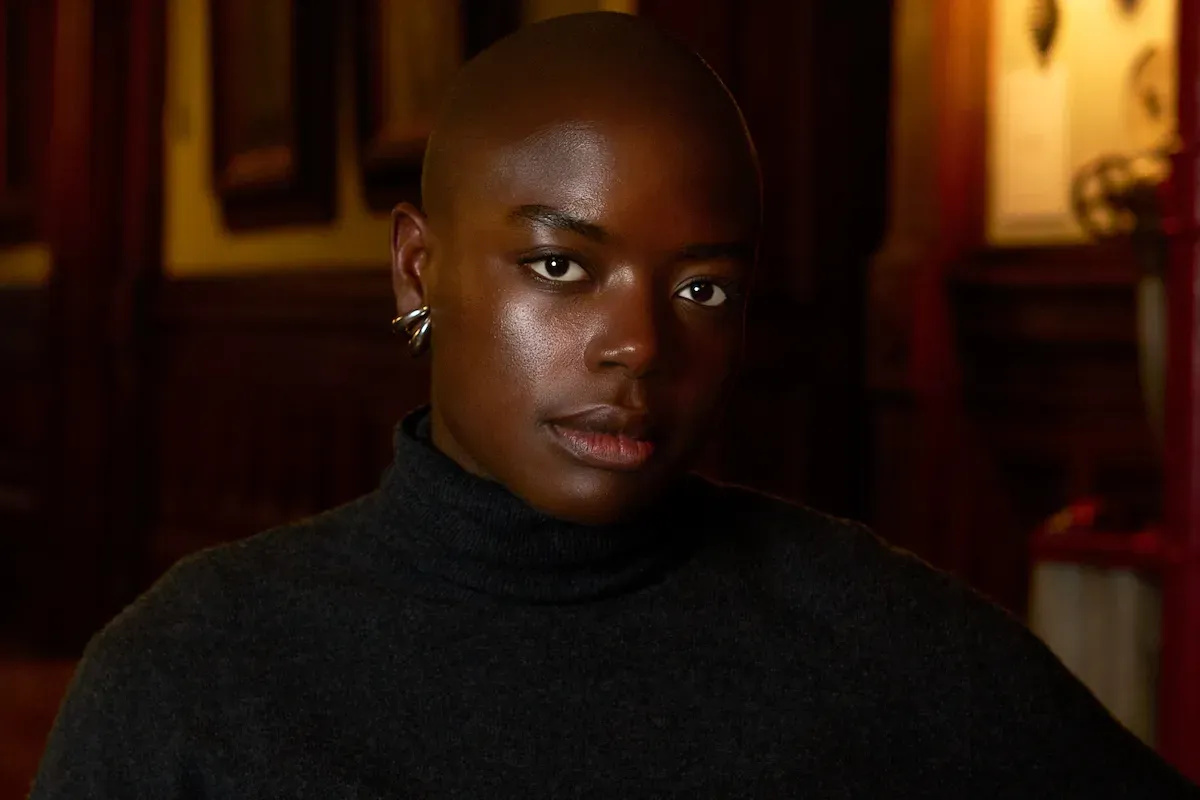
Sandra Mujinga was people-watching in Kinshasa a decade ago when she noticed something that stuck with her: the deliberate care locals took in dressing themselves. "There's an innate, underlying agreement that we all have to create beauty when we are in the streets through what we wear and the colors we wear," she'd later reflect. That observation—that clothing is a form of communication, not decoration—has become the backbone of her artistic practice.
Now based between Berlin and Oslo, Mujinga thinks of fashion as data, as storytelling. But instead of dressing people, she dresses sculptures. Her monumental fabric-wrapped figures have appeared in biennials and museum shows across Europe over the past five years, often rendered in an unsettling green that evokes both alien worlds and the glow of screens. They're tall, tentacular, deliberately obscured—beings that refuse to be fully seen.
The Art of Not Being Seen
Take Skin to Skin, her vast installation currently finishing at Amsterdam's Stedelijk Museum before traveling to Vienna's Belvedere. Fifty-five figures rise nine and a half feet into the air, wrapped in textiles Mujinga made herself. Curator Melanie Bühler called it "a green universe with a light structure that changes over time"—a work that moves fluidly across sculpture, sound, and light to create something immersive and deliberately hard to pin down.
We're a new kind of news feed.
Regular news is designed to drain you. We're a non-profit built to restore you. Every story we publish is scored for impact, progress, and hope.
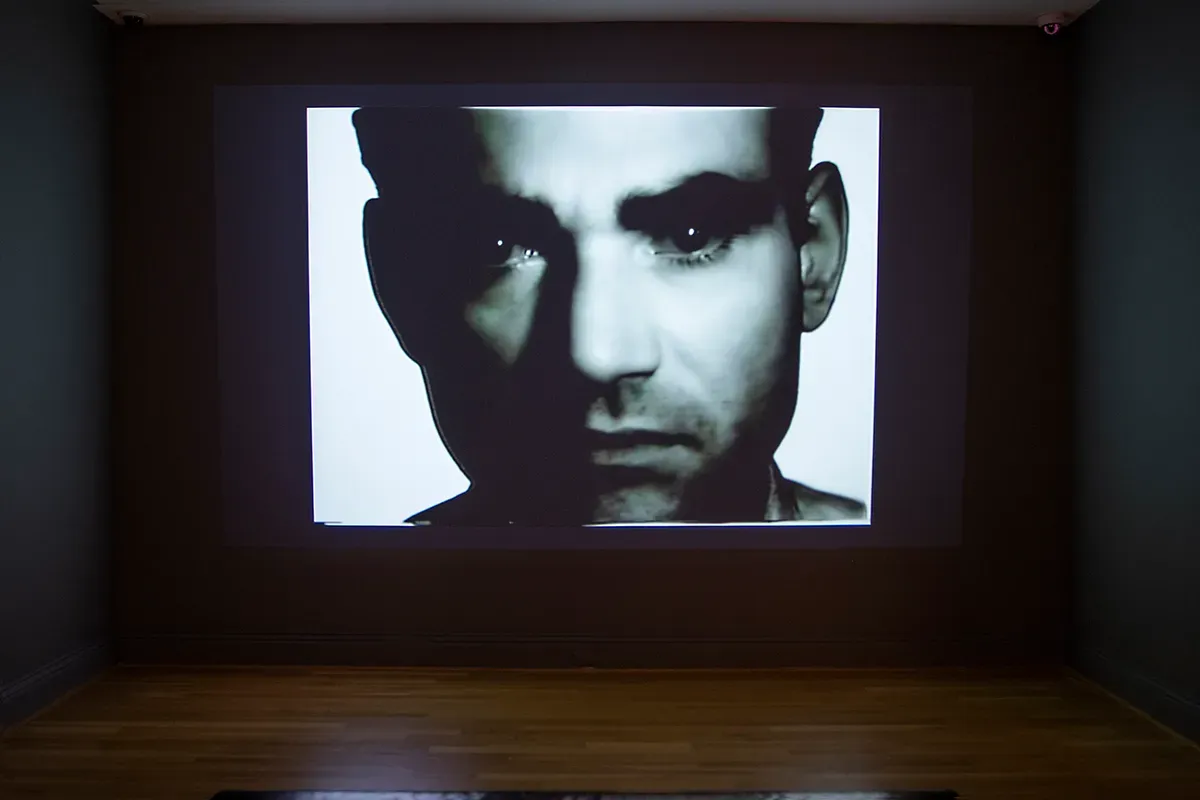
Start Your News DetoxOr Pervasive Light, a 16-minute video from 2021 where musician Mariama Ndure emerges from and recedes into darkness. Mujinga altered the footage in post-production, layering green fabrics over Ndure's skin to make her difficult for the camera to capture. It's a deliberate act of obscuring, and curator Ashley James sees the point clearly: "Sandra is particularly keyed into the understanding that technology, and particularly surveillance, is the next frontier that we're facing, in terms of the danger of sight and the kind of domination that stems from it." Mujinga uses her own technological tools to counteract that domination—to render visible bodies unseeable, to reclaim opacity as a form of resistance.
Her upbringing—moving between the Democratic Republic of the Congo, Oslo, and Nairobi—gave her an early sense of how place shapes perspective. She's drawn to science fiction writers like Octavia Butler and artists like Zach Blas, who used digital surveillance against itself. More recently, she's been inspired by deep sea creatures that exist primarily in darkness, creatures that don't need to be seen to exist.
In her performance Sunless Mouths at the Park Avenue Armory, a group of siblings with godlike powers moved slowly through frosted Plexiglas panels, dressed in black garments similar to those in her sculptures. "They're not really humans," Mujinga explained. "I was thinking a lot about: how one can be in the same space, in the same room, the same house, and then have different experiences? You remember different things."
There's something quietly radical in that idea—that shared space doesn't mean shared experience, that visibility doesn't guarantee understanding. Through her fabric beings and obscured figures, Mujinga seems to be remaking her own history and identity, finding in art what she's found in moving between continents: the possibility of starting from scratch, of becoming something new.