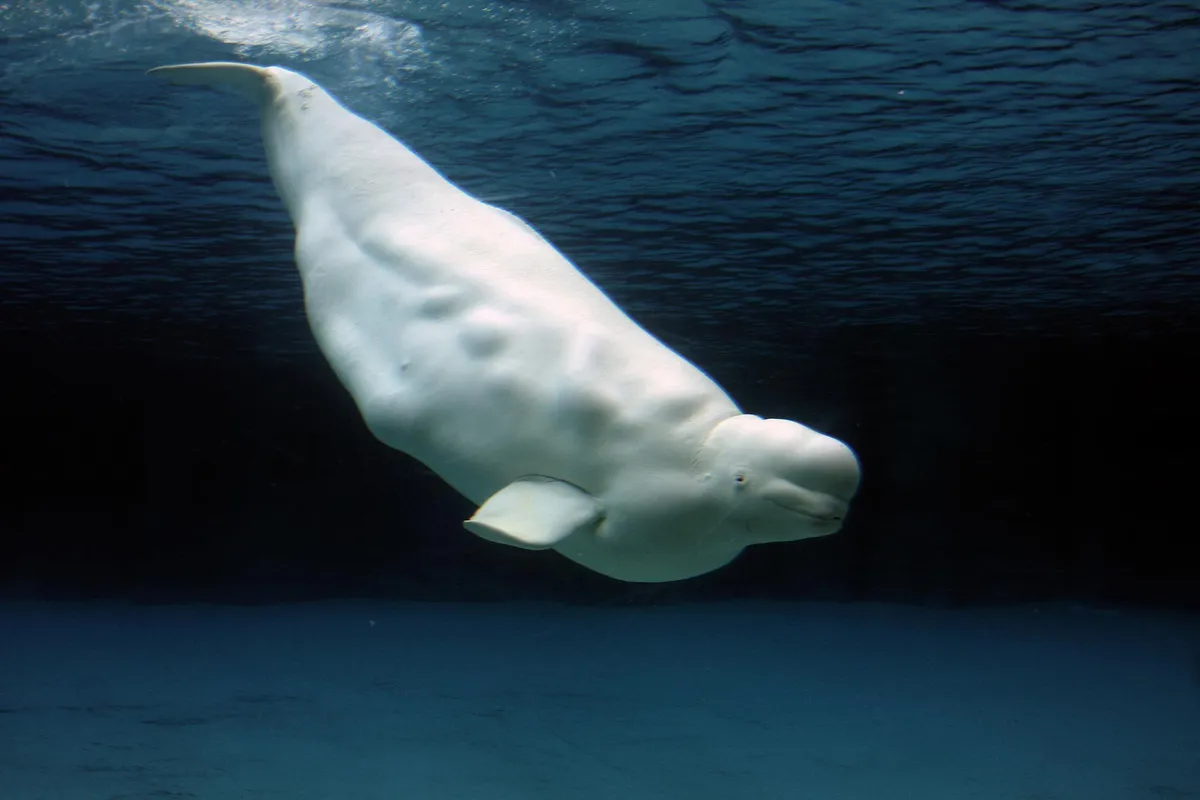
DNA evidence is offering rare insight into the hidden social lives of beluga whales beneath the Arctic ice. Researchers studying a population of 2,000 belugas in Bristol Bay, Alaska, have discovered something unexpected: these whales aren't following the mating playbook scientists predicted.
Belugas spend long stretches beneath Arctic sea ice, making them far tougher to follow than many other whale species. So scientists from Florida Atlantic University and the Alaska Department of Fish and Game took a different approach. Over 13 years, they worked with Alaska Native subsistence hunters to collect small tissue samples from 623 whales, then used DNA analysis to reconstruct decades of mating patterns and family relationships.
The Long Game
What they found challenges assumptions about how these whales reproduce. Male belugas did show some preference for multiple partners—what scientists call a polygynous mating system—but the pattern was surprisingly moderate. More striking was the female behavior: genetic analysis revealed that female belugas regularly switch mates across breeding seasons, potentially as a way to avoid mating with low-quality males. "The female story is just as fascinating," said Dr Greg O'Corry-Crowe, lead author of the study published in Frontiers in Marine Science. "Genetic profiling revealed that female belugas regularly switch mates across breeding seasons, also over a long reproductive life."
We're a new kind of news feed.
Regular news is designed to drain you. We're a non-profit built to restore you. Every story we publish is scored for impact, progress, and hope.
Start Your News Detox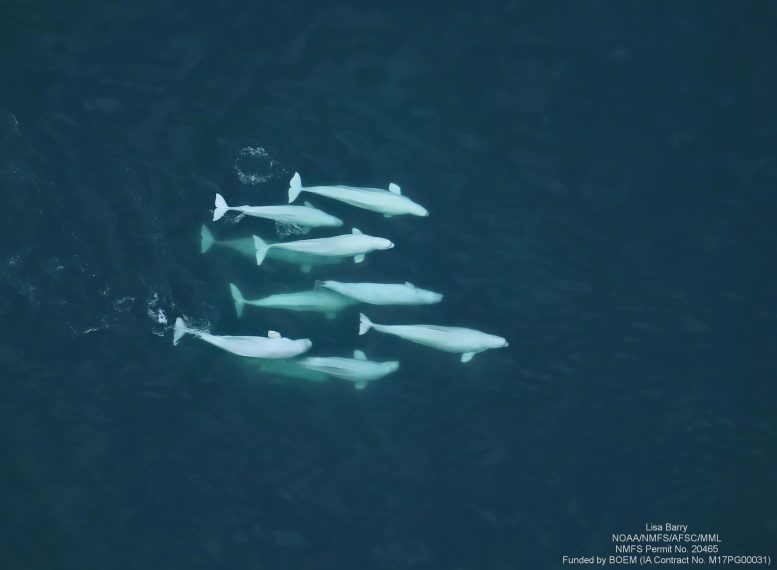
The three-dimensional underwater environment likely limits how many females a male can successfully court at once. But there's another factor: belugas live up to 90 years or more. That means males may play a different kind of game—securing a few matings each year over an extraordinarily long reproductive life, rather than dominating a single breeding season.
Resilience Against the Odds
The most surprising finding emerged when researchers examined genetic diversity. Despite numbering just 2,000 individuals, the Bristol Bay population showed unexpectedly high genetic diversity and low levels of inbreeding. Comparing their results to historical samples from the same population indicated that genetic diversity has remained stable over time—roughly equivalent to much larger whale populations.
This runs counter to what conservation biology predicts. Small populations typically lose genetic diversity faster than large ones, and inbreeding risk climbs as numbers drop. Yet the beluga mating system seems to protect against this. By switching partners frequently, both males and females limit the number of closely related offspring in the population.
"We expected to find low diversity and high inbreeding, but we found something quite different," O'Corry-Crowe explained. The findings matter beyond Bristol Bay: they suggest that understanding mating behavior—something nearly impossible to observe directly in these ice-dwelling whales—can reveal how small populations survive and adapt.
Researchers caution that other beluga populations may behave differently. The Bristol Bay group shows relatively low sexual dimorphism (size difference between males and females), which may indicate that mating depends less on brute strength than in other populations. Scientists are now using drones at other locations to observe mating behaviors directly and test whether these patterns hold across the Arctic.