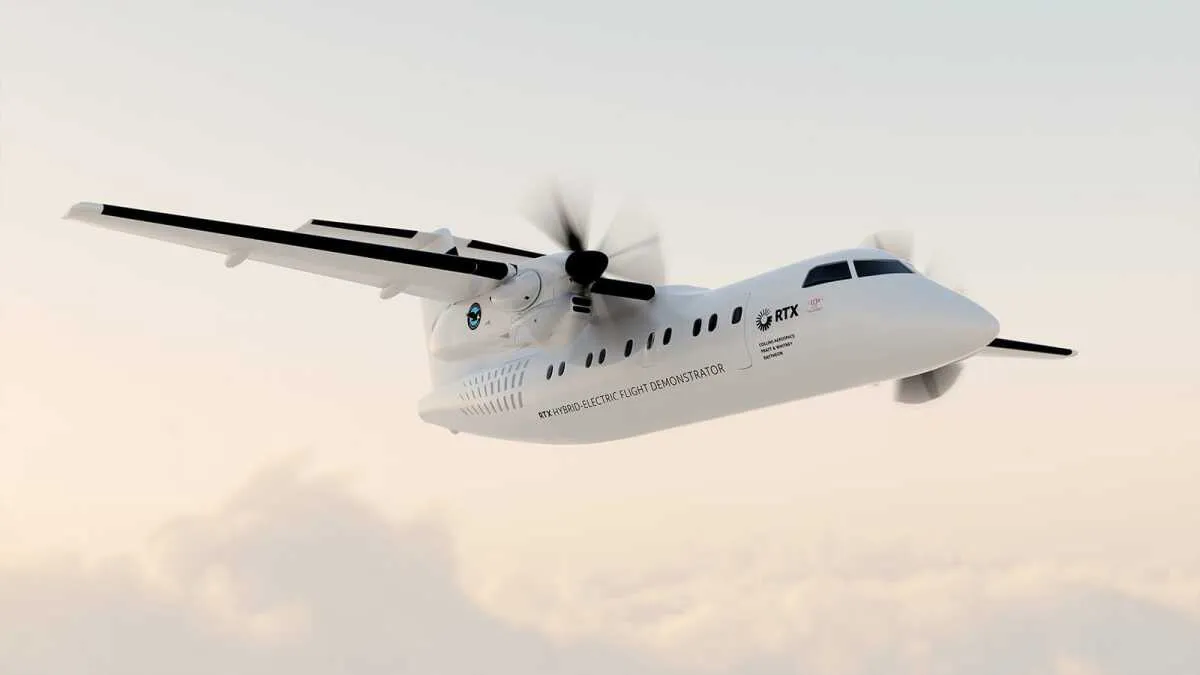
A test cell in Quebec just proved something aviation has been chasing for years: you can bolt electric motors onto existing turboprop engines and actually make them work better. RTX's new hybrid system hit full power for the first time in March, and it's not vaporware—it's built to retrofit into planes already flying regional routes today.
The problem electric aviation keeps running into is brutally simple: batteries weigh a lot, and they don't get lighter as you fly. A conventional plane burns fuel and gets lighter with every mile, improving efficiency. An electric plane carries the same dead weight from takeoff to landing, which means you're spending energy just hauling the batteries themselves. For regional aircraft, this means all-electric options max out around 150 nautical miles—fine for a hop between nearby cities, useless for actual regional networks.
RTX's answer sidesteps the either-or trap. Instead of replacing the turboprop engine with batteries, they've paired a 1-MW Pratt & Whitney turboprop with a 1-MW electric motor from Collins Aerospace. Both drive the propeller at the same time through a shared gearbox, splitting the workload. The turboprop runs at a steady, efficient throttle while the electric motor handles the peaks—takeoff, climbing, sudden power demands. During descent, the electric motor reverses and acts as a generator, charging the 200-kWh battery pack back up.
We're a new kind of news feed.
Regular news is designed to drain you. We're a non-profit built to restore you. Every story we publish is scored for impact, progress, and hope.
Start Your News DetoxThis is fundamentally different from how a Toyota Prius works. In a car, the engine charges the batteries which then power the motor. Here, both are always engaged, optimizing the entire flight profile instead of switching between power sources.
The practical payoff is substantial: 30 percent less fuel consumption, 20 percent lower maintenance costs, and the ability to run on 100 percent sustainable aviation fuel. But the real innovation is that operators don't need to retire their existing fleets. A regional airline can install this hybrid system into planes already in service, improving environmental performance without the capital hit of buying new aircraft. That's the difference between a lab curiosity and something that actually gets deployed.
Rémi Robache, a Pratt & Whitney program manager, captured the philosophy driving this: "People don't want to fly an empty plane filled with batteries. What we're interested in is reducing the energy per passenger-mile." That's the insight that reframes the whole challenge. The goal isn't maximum electric range or zero emissions in isolation. It's minimum energy to move one person from point A to point B—and a hybrid that lets you run the thermal engine efficiently while the electric motor handles the rest actually achieves that.
Ground testing continues through 2026, with flight tests scheduled to begin later this year using a modified De Havilland Dash 8-100 in Moses Lake, Washington. If those flights go as planned, regional airlines could start seeing retrofit kits available within a few years. The broader implication is that aviation's decarbonization won't wait for the perfect battery technology—it's already adapting with the tools available now.