For two years, residents of Mile Four in Bamenda have watched the national grid fail them. Lights flicker off for days. Refrigerators thaw. Students can't study. So they've started building their own power system, one rooftop at a time.
The electricity crisis isn't mysterious. Cameroon's hydroelectric plants—Songloulou, Edea, Memve'ele—are running below capacity. Thermal plants have shut down. The national utility, Eneo Cameroon, rations power across the grid. Officials blame technical and hydrological factors. Residents blame the grid itself, and they're moving on.
When the grid fails, communities build their own
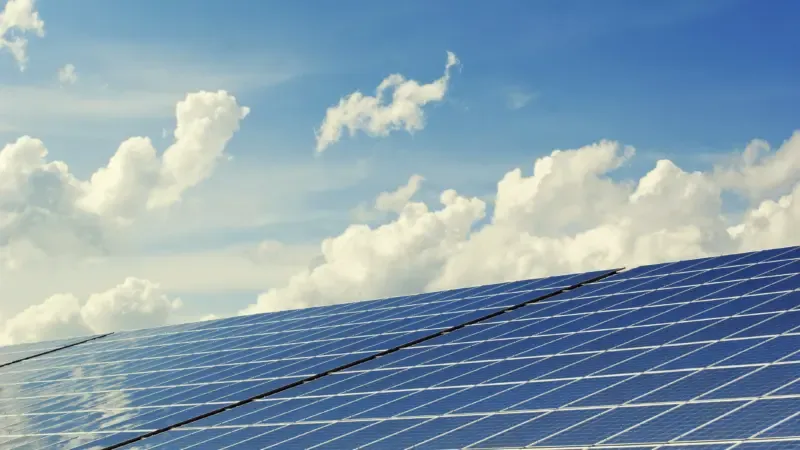
In mid-January 2026, frustrated households pooled money to buy a community transformer, hoping it would stabilize supply during outages. It didn't work. So they shifted strategy: solar panels on every roof.
We're a new kind of news feed.
Regular news is designed to drain you. We're a non-profit built to restore you. Every story we publish is scored for impact, progress, and hope.
Start Your News DetoxGodwin Benyella installed his first system in 2020—six panels and two batteries, about 2,705 USD total. It powers his TV, refrigerator, and blender. His neighbors noticed. Then they bought their own. Now, walking through Mile Four, you see solar panels on most houses, sometimes two or six per roof. The local market reflects the shift: a 100-watt panel that cost 120,000 CFA francs five years ago now sells for 20,000 CFA francs. Prices have collapsed as demand exploded.
This matters because it reveals something about how infrastructure actually gets built in places where governments can't keep up. When the state fails, people don't wait for permission or a five-year plan. They buy panels and wire them up. A vendor named Martin has watched his business transform as larger suppliers flood the market, squeezing small retailers but driving prices down for everyone else. That trade-off—consolidation in exchange for affordability—is playing out across the northwest region.
Nelson, an electrician installing systems throughout Bamenda, explains the mechanics matter less than the outcome: panels capture sunlight, an inverter converts it to usable current, batteries store the excess. It's simple enough that neighborhood technicians can install it. Bamenda's intense, consistent sunlight makes it ideal for solar. The real constraint isn't technology—it's money upfront and access to reliable vendors. A licensed installer costs extra. An informal one might cut corners. Kigha Paul Tabo, a solar engineer, notes that households increasingly compare solar to diesel generators and realize the math works: expensive to install, cheap to run, versus cheap to buy but expensive to fuel every day.
The limits of decentralized power
But here's what solar doesn't do: it doesn't power an iron or washing machine without a much larger battery bank. It doesn't replace the grid for heavy industrial use. It provides light, refrigeration, phone charging—the basics. For a student like Munaseh Courage at the University of Bamenda, that's the difference between being able to study and not. For the Luc Menora Rehabilitation Foundation, which cares for disabled children, it's the difference between operating and closing. Both are now installing solar systems because waiting for Eneo isn't an option.
At the national level, the government acknowledges the problem. It's acquired a majority stake in Eneo with stated goals of improving reliability and reducing fraud. But that's a slow process. Meanwhile, households in Bamenda have already solved their own problem, one panel at a time.
The expansion of solar in Mile Four isn't a feel-good story about renewable energy. It's a story about what happens when infrastructure fails: communities don't collapse, they adapt. They build decentralized systems that work around the broken center. Whether the government can eventually fix the grid fast enough to matter is still an open question.