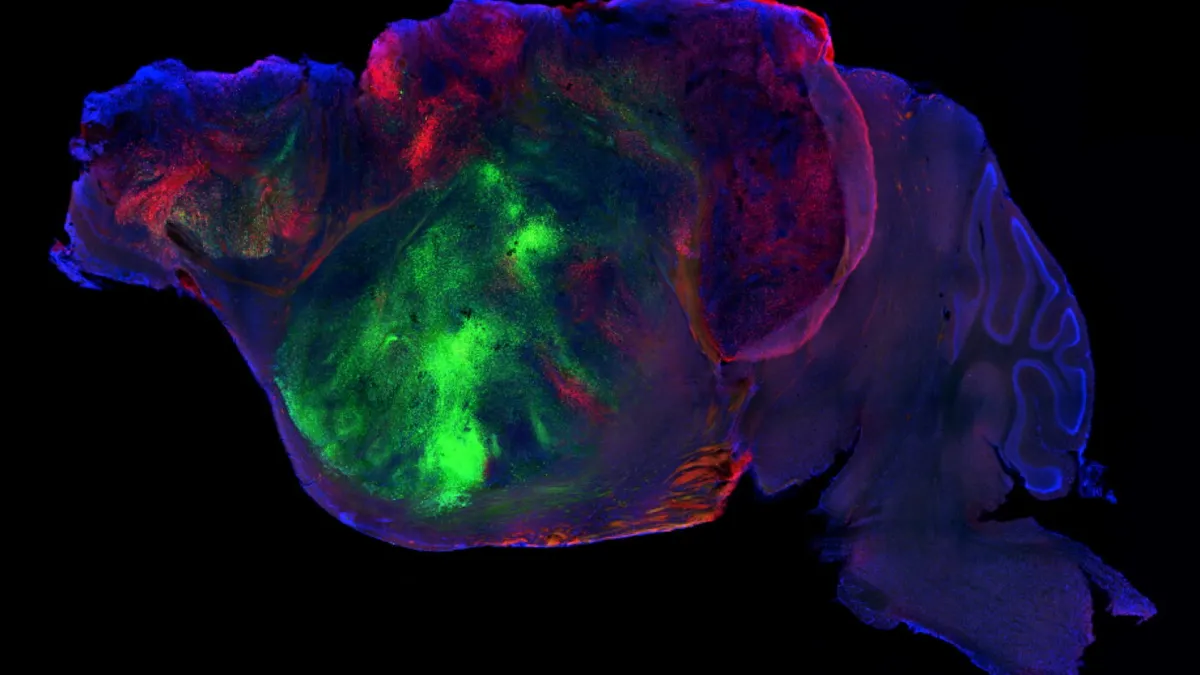
Imagine a tiny, invasive lung tumor trying to hide. Now imagine a new MRI contrast agent, made from protein, that basically has a microscopic GPS for it. Researchers have developed just that: a protein-based MRI agent that can sniff out aggressive lung cancer and its sneaky spread — metastases — as small as one millimeter. That's like finding a grain of sand in a desert, but with far higher stakes.
Lung cancer, as Georgia State University's professor emerita Jenny J. Yang points out, often gets caught when it’s already made itself at home in other parts of the body. At that point, treatment options are about as limited as a phone with 1% battery. This new tech, however, could change that, spotting those minuscule tumors and hidden metastases without zapping patients with radiation. Bonus: it also gives doctors a heads-up on how aggressive a cancer might be, potentially saving patients from unnecessary biopsies.
The Collagen Connection
The secret sauce is called hProCA32.Collagen. It's an MRI contrast agent that specifically targets collagen type I. Why collagen type I? Because aggressive lung tumors and their metastatic buddies are absolutely swimming in the stuff. Think of it as their favorite hangout spot, and this agent is designed to light it up like a neon sign.
We're a new kind of news feed.
Regular news is designed to drain you. We're a non-profit built to restore you. Every story we publish is scored for impact, progress, and hope.
Start Your News DetoxEarly studies have been promising, with the agent successfully highlighting small lung tumors and metastases in the lungs, adrenal glands, and kidneys. It even mapped out features related to how tumors invade and grow, giving doctors a clearer picture of the enemy's playbook.
This precision approach is a big step up from traditional imaging. It's all about targeting specific markers to catch those rogue cells earlier. The researchers found it particularly effective against aggressive lung adenocarcinomas, which are notoriously resistant to current treatments and love to spread far and wide. The collaborative effort involved teams from Georgia State, Emory, and The University of Alabama at Birmingham, proving that when it comes to fighting cancer, more brains are definitely better.
A “Game Changer” for Treatment
This isn't just about earlier diagnosis; it's about fundamentally changing how personalized cancer treatment works. Doctors could potentially see collagen changes in tumors, identifying high-risk patients, guiding treatment decisions, and tracking treatment effectiveness in real-time. Yang herself calls it a “game changer” for cancer diagnosis and precision medicine, noting it’s the first time precision MRI has shown it can find tiny tumors and metastases throughout the body without harmful radiation, all while offering clues about a cancer's aggressiveness.
Now, a company Yang founded, InLighta Biosciences, is working to bring this technology to clinical use, with an application for FDA approval already in the pipeline. Because the sooner we can spot these unwelcome guests, the sooner we can show them the door.