In an era where your phone knows your deepest fears and global crises feel like daily news, it’s easy to feel, well, overwhelmed. Psychologists, bless their hearts, have a solution: stop doomscrolling and remember you have a body.
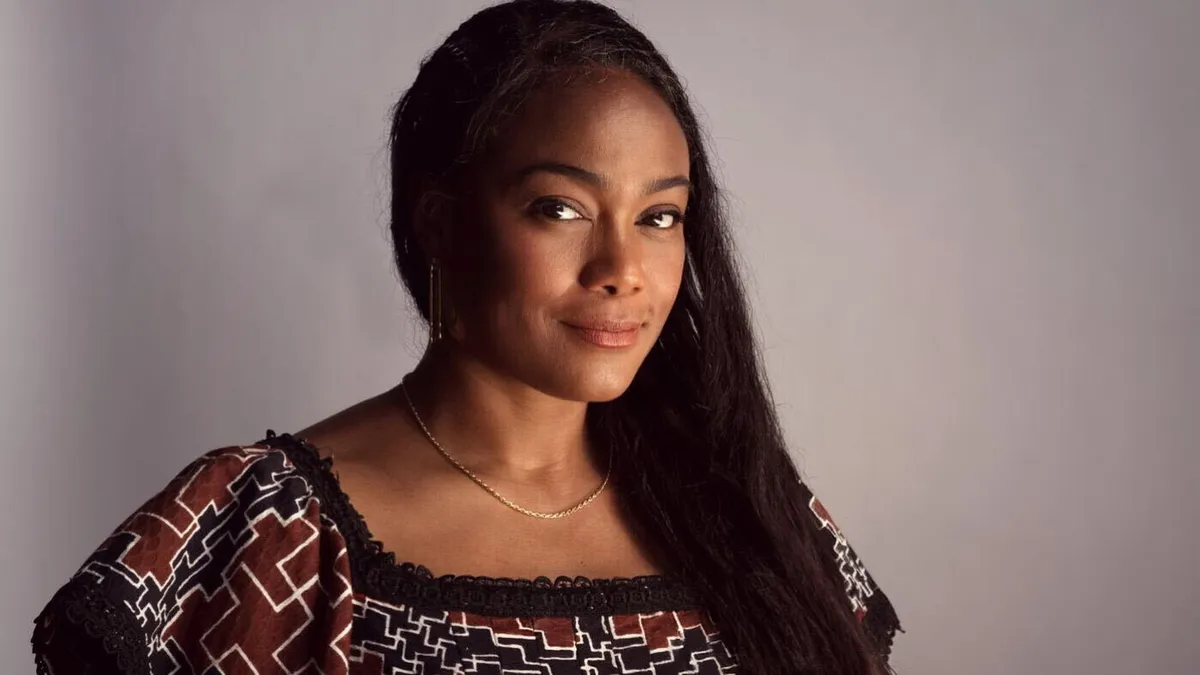
Joy D. Calloway, who heads the Black Women’s Health Imperative, recently dropped a truth bomb at the American Psychological Association convention: just because you’re functioning doesn’t mean you’re flourishing. Apparently, chronic stress isn't just a vibe; it's doing actual biological damage. Who knew your constant low-level panic had a physical address?

Calloway argues that psychology needs to do more than just measure how we adapt. It needs to figure out what actually creates wellness, not just how we bounce back. Because, let’s be real, sometimes 'resilience' just means 'really good at pretending everything's fine while internally screaming.'
We're a new kind of news feed.
Regular news is designed to drain you. We're a non-profit built to restore you. Every story we publish is scored for impact, progress, and hope.
Start Your News DetoxTrue wellness, she says, starts with you, but it's built by everyone — families, communities, supportive systems, and policies. It’s not a solo sport; it’s a full-on construction project.
The Overwhelm Epidemic (and how to fight it)
Psychologist Ali Mattu noted a trend: clients used to want stress relief, then connection, and now? Now they want meaning and a map out of the overwhelm ocean. Apparently, the current state of humanity feels like being lost at sea, which, if you think about it, is both impressive and slightly terrifying.

Thomas Curran, a social psychology professor, points the finger at perfectionism and an absurd number of choices. We're not just worried about what we are doing; we're agonizing over what we could be doing. His advice? "Microdose bits of discomfort into daily life." Which sounds less like therapy and more like a punk rock album title, but hey, we're listening.
Then there’s Nikki Iyer, a college student who articulated the modern paradox: her generation is the most connected and also the loneliest. They crave real social connection but are often too busy staring at their screens, even when they're with people. The good news? She sees young people pushing back, embracing 'weird' hobbies and in-person hangouts. Because apparently, pottery is the new TikTok.
Brendesha Tynes, a professor of education and psychology, urged caution with AI, noting its models are often trained on data that's, shall we say, a bit homogenous. Her mic-drop quote: "Anti-Blackness is the default setting in AI." Young people, she stressed, need to be fluent in algorithmic bias and, ideally, build better AI themselves. Because apparently that’s where we are now.

Connect, Advocate, and Be a Villager
The conference wasn't all doom and gloom. Researchers shared strategies for building resilience in marginalized communities, from LGBTQ+ youth to disabled people. Joshua Parmenter highlighted models for sexual and gender-diverse people of color to reclaim power, and Jules Soper explored resistance strategies for trans and gender-diverse individuals facing anti-trans laws. Because sometimes, just existing is an act of rebellion.
Alvin Thomas, an associate professor and self-described "father" figure to many young mentees, reminded everyone that you don't need a degree to support others. And Clare M. Mehta, a psychology professor, encouraged us all to be a "villager." This means reaching out in "third spaces" like pubs. She pointed out that not connecting socially is worse for your health than drinking alcohol. So, go to the pub, have a non-alcoholic drink, and save yourself from… social isolation. The irony is not lost on us.
Eva Telzer, a professor of psychology and neuroscience, offered a dose of optimism: young people are naturally wired for positive change. Their brains are literally set up to take risks and care about others. So, if you're looking for someone to make a difference, apparently, the kids are alright.
Even AI can help, according to Ali Mattu, provided it enhances what humans aren't good at. His criteria for what humans should keep doing? What you love, what you're good at, and what you hold high standards for. Which, if you think about it, is a pretty solid life philosophy.
Jacqueline S. Mattis, a psychologist and dean, wrapped things up by reminding us of the sheer wonder of human experience — our ability to feel affection and sacrifice for others. Because in the end, that's what defines us, and frankly, makes all this overwhelm worth pushing through.