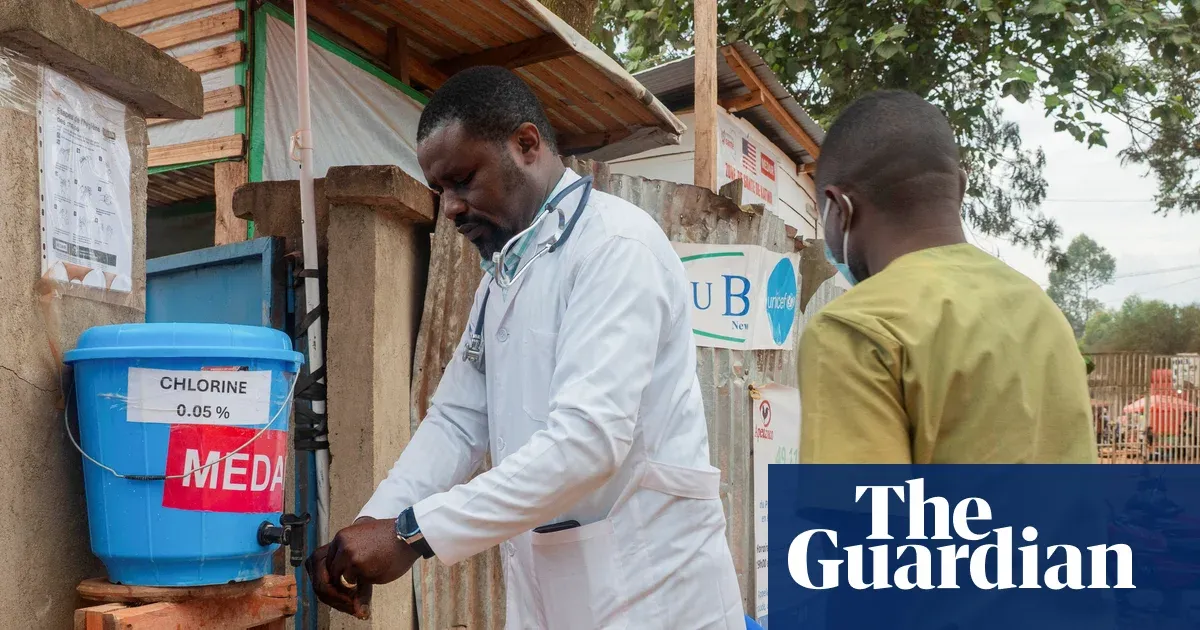
Good news, for once, out of the Democratic Republic of Congo (DRC): authorities are cautiously optimistic that the current Ebola outbreak has peaked. After months of grim numbers, infection rates are finally showing signs of slowing down.
Samuel Roger Kamba, the Congolese health minister, noted a decline in the Bundibugyo variant of Ebola. He also, quite rightly, stressed that everyone needs to keep up the preventive measures. Because apparently, that's how these things work.
A Glimmer of Hope
Kamba announced that the outbreak is now considered "under control," with daily cases dropping from around 120 to a slightly less terrifying 80. Ten of 62 health zones haven't reported new cases in over 22 days, and six zones are officially clear after 42 days without a single new infection. Four more are in the clear after 21 days. Let that satisfying number sink in.
We're a new kind of news feed.
Regular news is designed to drain you. We're a non-profit built to restore you. Every story we publish is scored for impact, progress, and hope.
Start Your News DetoxThis particular Bundibugyo virus outbreak, declared on May 15, has largely been confined to Ituri province — an area where ongoing conflict makes, shall we say, anything difficult, let alone a public health response. This is the DRC's 17th Ebola outbreak since 1976, which is a number that should probably make everyone pause.
Adding to the challenge, there's no effective treatment for the Bundibugyo variant yet, though clinical trials are underway. The DRC did receive over 70,000 doses of the Ervebo vaccine last month, which is great for the more common Zaire Ebola virus, but not quite the silver bullet needed here. As of mid-September, the outbreak had seen over 7,200 confirmed cases and more than 3,475 deaths.
The View From the Ground
While the news is welcome, not everyone is popping champagne. Iracan Gratien de Saint-Nicolas, an MP for Bunia, applauded the progress but warned against "triumphalism." He wants to see more transparency and objective data to truly convince the public that the disease is on the ropes. He pointed out that some key indicators, like a sustained decline in deaths and fewer active transmission areas, still need to be solid.
Earlier this month, Jean Kaseya, director general of the African Centres for Disease Control and Prevention, visited Bunia and noted that 60-70% of deaths were still happening in the community. Epidemiologists, apparently, only consider an outbreak truly peaked when all new cases come from known contacts. So, still some work to do.
But for people like Léa Munyere, a 36-year-old mother of four in Rwampara, Ituri, who lost two close friends to the disease, any news of a slowdown is a relief. She just wants life to return to normal, and frankly, who can blame her?