A retrofitted oil exploration vessel is changing how marine science gets done—and how the world sees it.
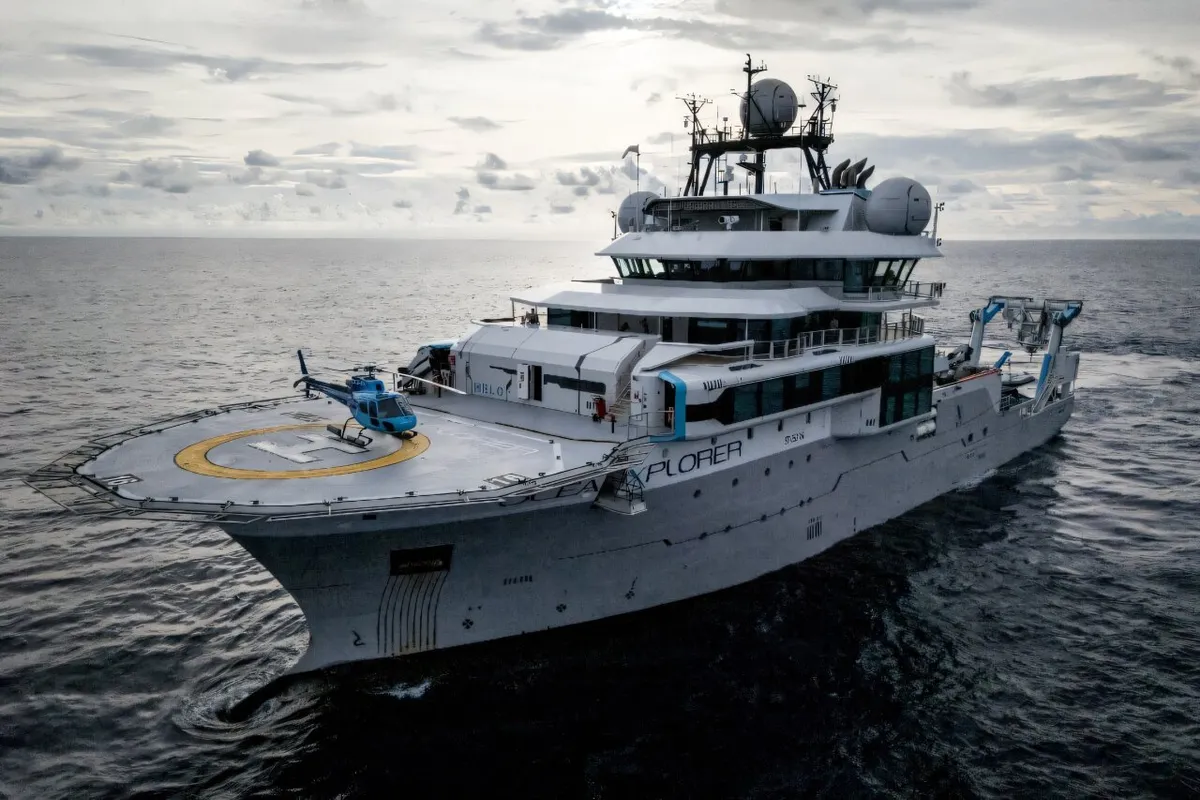
OceanXplorer looks like something from a sci-fi film. It has two submersibles (one equipped with 8K cameras), a remotely-operated vehicle that can dive to 6,000 meters, genetic sequencing labs, mapping radar, and specialized nets for capturing plankton. But what makes it unusual isn't just the hardware. It's that the ship has been almost continuously at sea since 2021, rotating in local research teams from around the world.
"It is essentially a one-stop shop for ocean science," says mission lead Andrew Craig. "There's nothing else like it in the world."
We're a new kind of news feed.
Regular news is designed to drain you. We're a non-profit built to restore you. Every story we publish is scored for impact, progress, and hope.
Start Your News DetoxThe vessel has become a magnet for scientists who otherwise lack access to deep-sea research infrastructure. On a recent mission off Indonesia, the ship hosted Sekar Mira, a cetacean specialist from the National Research and Innovation Agency (BRIN), who was researching whales and dolphins. Alongside him were Husna Nugrahapraja, exploring marine compounds that could yield new medicines, and Nur Fitriah Afianti, examining plastic waste from thousands of meters down for useful microbes.
Every organism is releasing their DNA into their respective environment -- filtering those paints a picture of what has passed through.
How it works
One of the ship's most powerful tools is environmental DNA (eDNA) analysis. Every organism—whale, fish, microbe—sheds DNA into the water through skin, scales, mucus, and waste. By filtering and sequencing these traces, researchers can detect species long after they've moved on, painting a picture of what lives in waters that are otherwise invisible to us. OceanXplorer can run the entire process on board, from sampling to analysis.
The ship's research is designed for public reach as much as scientific rigor. OceanX brought in Hollywood designers to make it telegenic, with a futuristic mission control center and lighting optimized for filming. The strategy works: OceanX has four million TikTok followers, and the ship's expeditions have generated dozens of peer-reviewed papers alongside rare footage—including the first filmed observations of groups of coelacanths near Indonesia and newly discovered brine pools in the Red Sea.
Operating costs run to millions annually (the parent organization reported over $44 million in 2024 expenses, largely funded by the Dalio family), but OceanX makes all research publicly accessible and partners with institutions that lack resources for independent deep-sea work. The ship also brings students on board as part of its education program.
What's emerging is a model where cutting-edge science, public engagement, and institutional access converge. The next phase isn't just deeper dives or better cameras—it's scaling this approach so that marine research isn't locked behind institutional gatekeeping or equipment budgets.