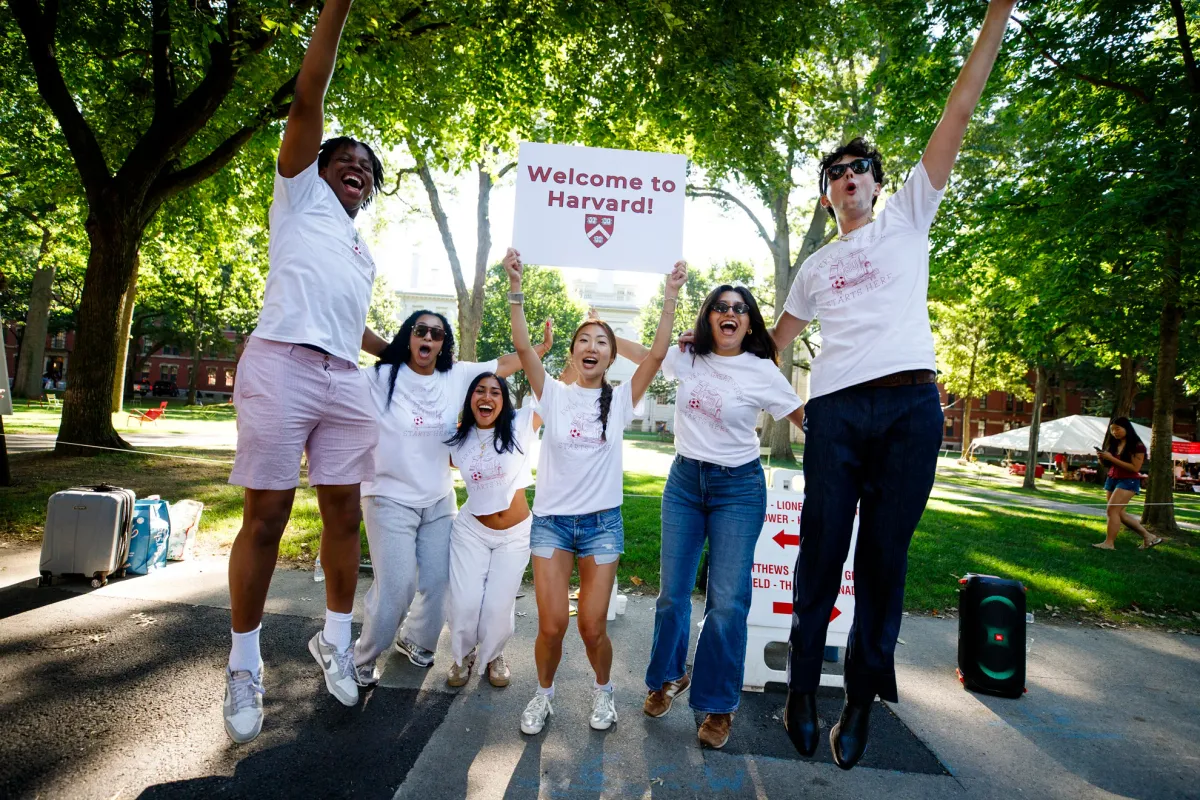
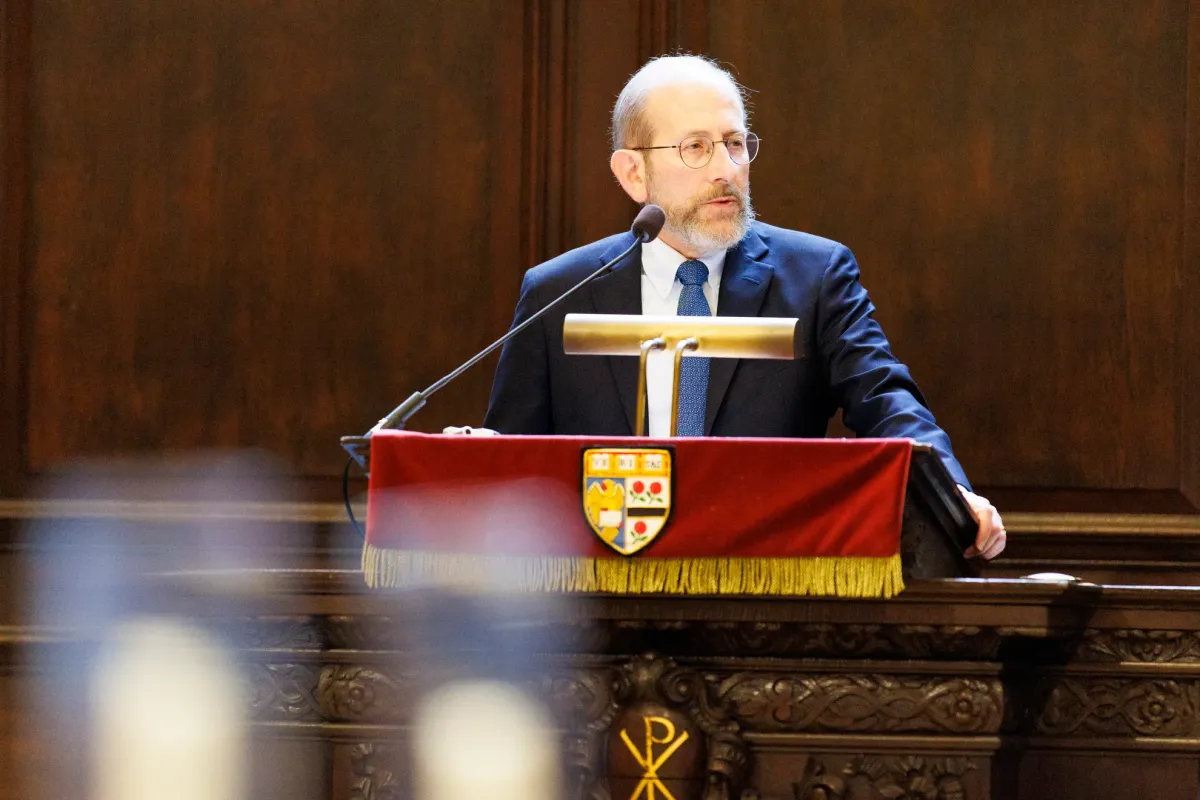
Harvard's new president, Alan Garber, recently kicked off the academic year with a rather timely question: What exactly is human intelligence good for in an age when AI can probably write your term paper (don't do it)?
Speaking at the first Morning Prayers ceremony, Garber made it clear that while tech is a shiny new hammer, human intellect is still the architect. Apparently, Harvard isn't planning on outsourcing its soul to a chatbot just yet.
The Squishy Bits: Grief, Joy, and Other Non-Binary Concepts
Garber urged the Harvard community to remember the point of all that brainpower: pushing boundaries to solve the big, messy global challenges. Think climate change, curing cancer, figuring out what's going on with degenerative neurological diseases. You know, the stuff that actually matters.
We're a new kind of news feed.
Regular news is designed to drain you. We're a non-profit built to restore you. Every story we publish is scored for impact, progress, and hope.
Start Your News DetoxHe also gave a shout-out to the arts and humanities, because apparently, understanding complex human experiences like grief, joy, and love is still on the syllabus. Which, if you think about it, is both impressive and slightly terrifying for an algorithm.
AI, he conceded, is a speed demon for research. He shared a story about a faculty member who used AI to condense a decade's worth of work into a mere six months. "Advances in knowledge... will soon be made more rapidly than at any other time in human existence," Garber predicted, which sounds both exciting and like a potential recipe for a robot uprising. He did, however, encourage everyone to weigh the costs, risks, and benefits – and to dream big about the future they're building. Because dreams are still human-exclusive, for now.
Why Your Brain Beats an Algorithm Every Time
Garber leaned into Jewish tradition, where human creativity, curiosity, judgment, and reason are considered uniquely precious. He reminded the crowd that, per Genesis, humanity wasn't just made but created in His image. Which means, among other things, that human life is sacred, everyone's unique, and we get free choice – unlike, say, a particularly efficient sorting algorithm.
He quoted Rabbi Akiva on the importance of self-knowledge, effectively saying that no matter how many impressive things tech can do, human intelligence remains distinct. Because a machine might learn, but does it know itself? Probably not, which is a relief.
Garber wrapped up by stating that learning isn't just a path to greatness; it's the preservation of human life itself. Harvard, he concluded, is fundamentally an affirmation of humanity. So, next time you're scrolling through TikTok, remember: your unique, wondrous capacity for care and skill is still unmatched. Even if a robot can now fold your laundry faster.