Every year, people use over 500 billion disposable coffee cups. These "paper" cups have plastic linings, which makes them hard to recycle. These linings can also release tiny plastic pieces into hot drinks.
This is bad for both people and the planet.
A Seaweed Solution
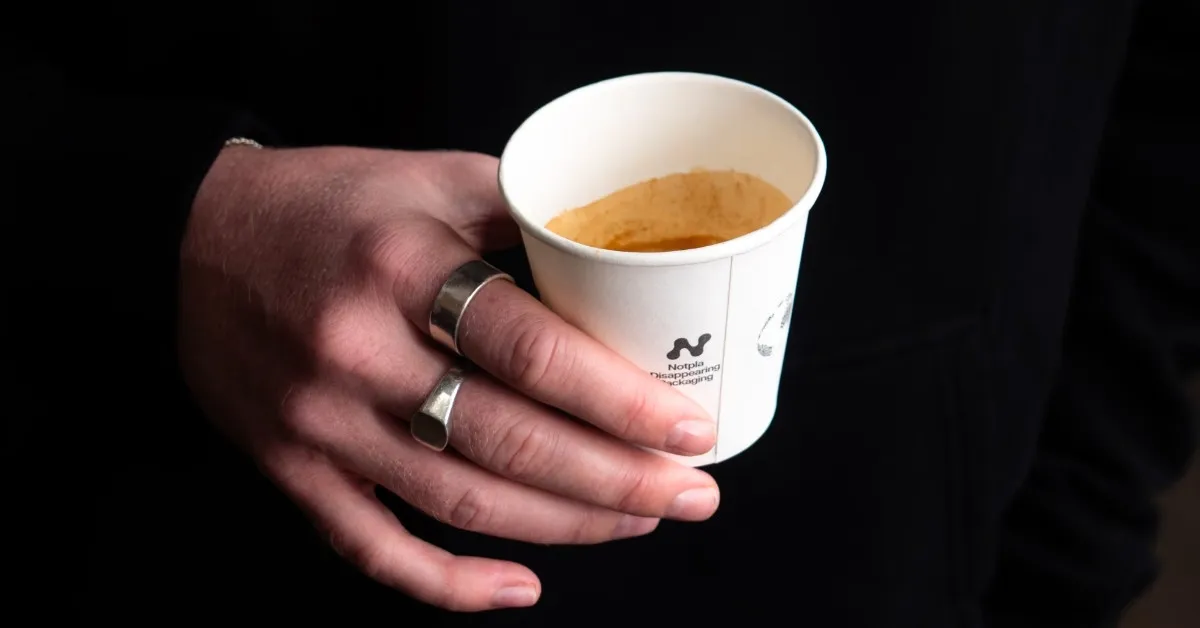
Notpla, a company whose name means "not plastic," wants to make coffee runs less wasteful. They tested the first sustainable espresso cups coated with seaweed during the Earthshot Prize in Rio in 2025.
Now, Notpla has received a €4 million grant (about $5.4 million USD). This money will help them create a coffee cup that people can compost at home.
We're a new kind of news feed.
Regular news is designed to drain you. We're a non-profit built to restore you. Every story we publish is scored for impact, progress, and hope.
Start Your News DetoxPierre-Yves Paslier, co-founder of Notpla, explained that seaweed is a fast-growing resource. Notpla uses it to create plastic-like materials, replacing millions of single-use plastic items.
Paslier added that seaweed has many benefits. It doesn't need land for crops, it captures carbon dioxide, and it helps reduce ocean acidity. Seaweed also boosts ocean diversity and supports coastal communities. Plus, it's biodegradable.
"The disposable coffee cup looks like a simple invention, but it hides a complex problem," Paslier said. "This project gives us the chance to tackle that issue at its source."
Nature's Blueprint
Karlijn Sibbel, Notpla's Chief Innovation Officer, noted that nature has already perfected packaging that doesn't last forever, like fruit.

"That's the blueprint we follow at Notpla," she said. With their natural solution, European funding, and a team covering everything from raw materials to testing, they are ready to replace plastic-coated coffee cups.