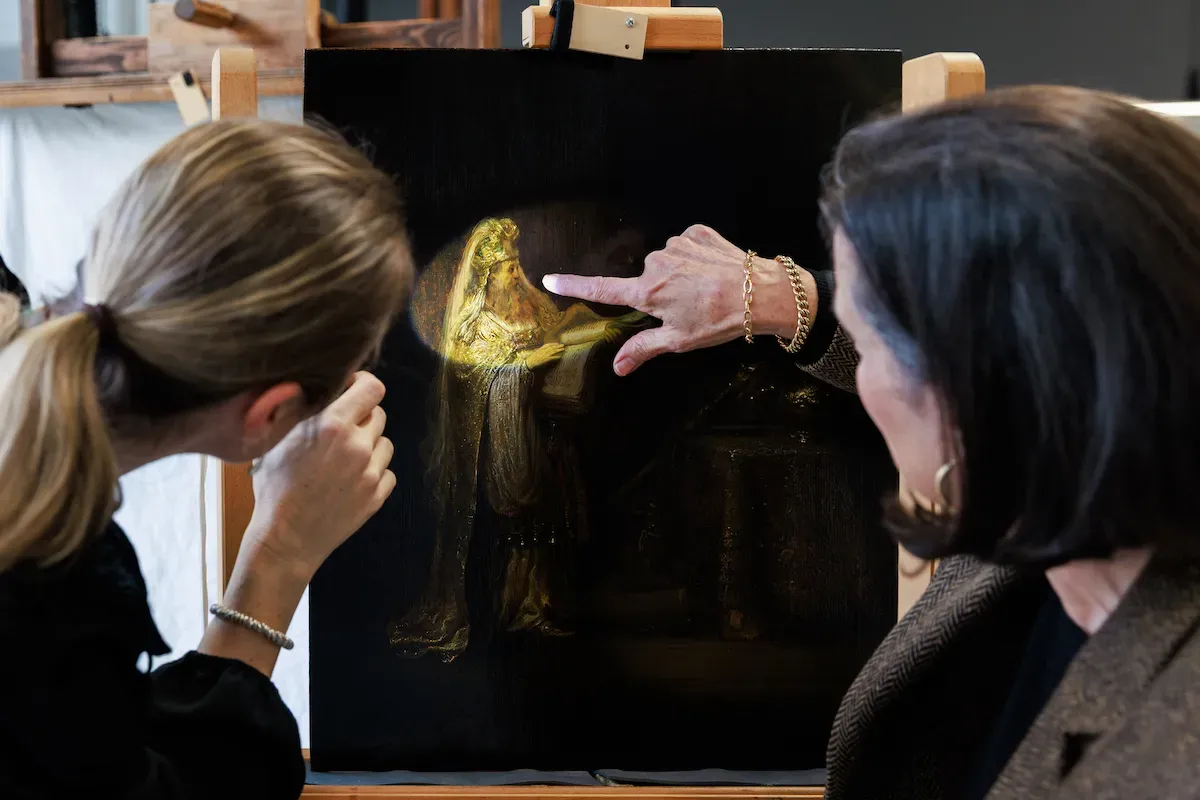
A painting that vanished from public view in the 1960s has been confirmed as a genuine Rembrandt—one that scholars had actually dismissed as a fake. The Vision of Zacharias in the Temple, created in 1633, spent decades in private hands before the Rijksmuseum in Amsterdam announced its authentication this week.
The story of how it got here is as interesting as the painting itself. A collector bought the work in 1961, just a year after art experts had officially rejected it as not being by Rembrandt's hand. For the next 65 years, it stayed hidden. Then the owner decided to have it properly examined.
Using the same forensic techniques the museum recently applied to The Night Watch—Rembrandt's most famous work—researchers analyzed the paint composition, verified the signature, and confirmed the 1633 date. The materials matched other authenticated Rembrandts from the same period. The painting was genuine all along.
We're a new kind of news feed.
Regular news is designed to drain you. We're a non-profit built to restore you. Every story we publish is scored for impact, progress, and hope.
Start Your News DetoxWhat makes this significant
This isn't just about correcting a mistake. The Vision of Zacharias in the Temple dates from early in Rembrandt's career, about nine years before The Night Watch. It shows him working through themes he'd return to throughout his life: biblical narrative, dramatic use of light and shadow, spiritual intensity captured in a single moment.
The painting depicts the priest Zacharias in the temple when the Archangel Gabriel appears to announce he will have a son. Rembrandt doesn't show Gabriel as a figure—instead, he's pure light, a golden emanation pouring from the upper right corner of the canvas, catching the yellow of Zacharias's robes and leaving the rest in darkness. It's quintessential Rembrandt: a story told through chiaroscuro, the interplay of light and shadow that became his signature language.
What's striking is that this work disappeared not because it was lost, but because it was misunderstood. Mid-20th-century scholars, working with the tools and knowledge they had, decided it wasn't authentic. A collector trusted their judgment enough to buy it cheaply, then kept it private for decades. Only now, with modern analysis of paint composition and pigments, could the truth emerge.
The Rijksmuseum director Taco Dibbits noted the significance: "It's wonderful that people can now learn more about the young Rembrandt—he created this very poignant work shortly after moving from Leiden to Amsterdam." The painting is now on long-term loan and on public display.
2024 has been an unexpectedly rich year for Rembrandt scholarship. In February, a Dutch woman revealed she'd been holding 35 Rembrandt etchings—works that had been essentially invisible to the art world. Both discoveries suggest that authentication technology and patient scholarship can still overturn old verdicts, and that masterworks sometimes hide in plain sight, waiting for the right moment and the right tools to be recognized.