A simple shift in how parents deliver encouragement is gaining traction online—and child development research backs it up. Instead of telling a child directly how proud you are, you let them overhear you saying it to your partner. The difference is subtle but profound.
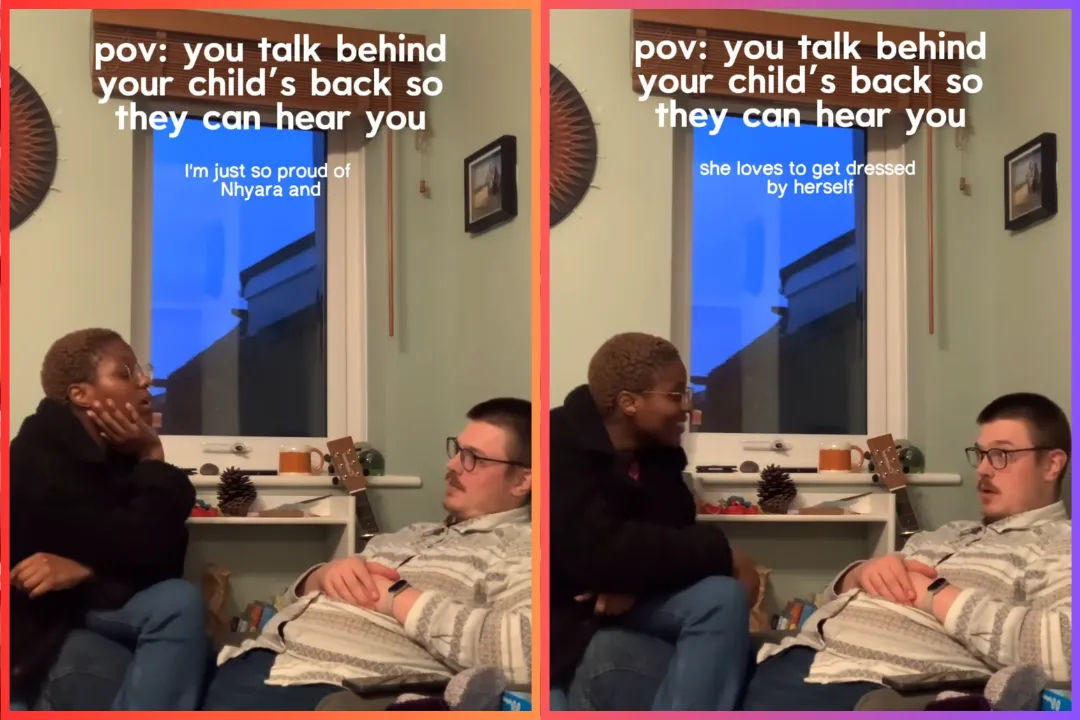
Namewila Mulwanda and her partner Zephi started practicing this with their daughter Nhyara after noticing something: children believe what adults say to each other more than what adults say directly to them. In a video that's now passed one million likes on Instagram, they sit within earshot of their daughter and talk about her achievements—how she sounds out difficult words, how she insists on brushing her own teeth, how brave she's being. Nhyara listens, absorbs the words, and internalizes them as truth.
Why Overheard Praise Lands Differently
The psychology here is straightforward: children recognize that conversations between adults are less likely to be performance-driven. When a parent looks you in the eye and says "I'm proud of you," a child's brain registers it as intentional—something designed to shape behavior or mood. But when they catch their parents talking about them in a moment that wasn't meant for their ears, it feels genuine. Unfiltered. Real.
We're a new kind of news feed.
Regular news is designed to drain you. We're a non-profit built to restore you. Every story we publish is scored for impact, progress, and hope.
Start Your News DetoxResearch in child development confirms this intuition. Indirect praise has a stronger psychological impact than direct praise, particularly for young children. The specificity matters too. Zephi doesn't just say Nhyara is smart—he mentions the exact difficult word she sounded out. That precision shows the child exactly which behavior you're celebrating, making the praise feel earned rather than generic.
The comments on Mulwanda's post reveal how hungry parents are for this approach. One solo mother wrote that she pretends to make phone calls to family members just to have these "overheard" conversations. Another shared a story: her son was afraid of climbing stairs until her husband loudly remarked on his courage. The next day, the boy said confidently, "I have a lot of courage in me." He'd internalized the words he'd overheard.
Several commenters reflected on what they didn't receive as children. "No exaggeration, I'd be an entirely different person had my parents been like this with me," one wrote. For many adults who grew up hearing criticism instead of affirmation, watching this technique play out online felt like witnessing the childhood they wish they'd had.
The Trap to Avoid
There's a critical caveat: the praise has to be honest. Children have finely tuned sensors for insincerity. If you overstate achievements—calling average effort "incredible" or making sweeping claims about future success—children sense the exaggeration and it can backfire, eroding trust in your words.
The most effective praise is measured and grounded in reality. "I noticed how carefully Maya put away her toys without being asked. That really helped keep the house clean," carries more weight than dramatic declarations. The specificity, the restraint, the focus on effort rather than innate ability—these elements work together to make the praise feel credible.
What makes Mulwanda's approach resonate is that it's not a parenting hack designed to manipulate behavior. It's an intentional practice of celebrating your child's genuine efforts, just not to their face. In doing so, it creates a feedback loop: children overhear authentic affirmation, believe it because it feels unguarded, and internalize it as part of their self-image. Over time, that shapes how they see themselves—not because you told them to, but because they overheard you believing it first.