You pull into a garage, step out, and your car drives itself into a spot you couldn't have squeezed into alone. A robot takes the wheel.
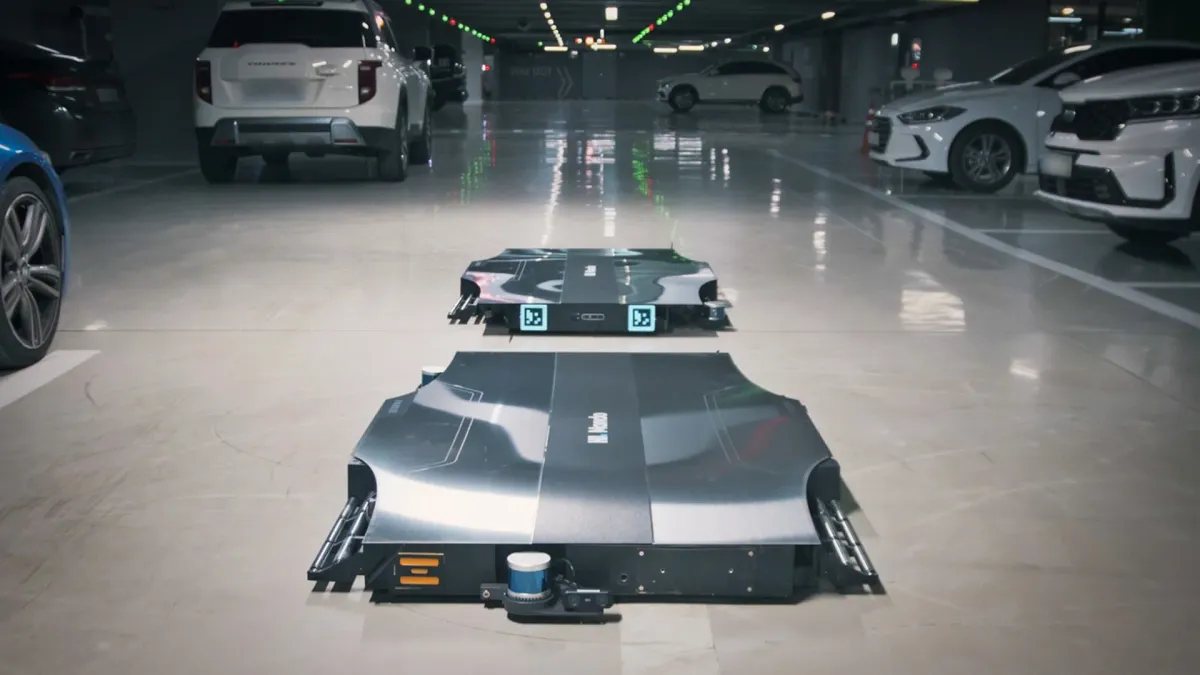
This isn't a concept video anymore. HL Robotics' system, called Parkie, is already operating in real parking facilities across South Korea, moving multiple vehicles simultaneously into tight spaces that would normally require three-point turns and muttered frustration.
The engineering challenge isn't flashy—it's invisible. Inside a concrete garage with multiple levels and steel reinforcements, radio signals get messy. A robot can't afford to lose its connection for even a second. If communication drops while a vehicle is mid-maneuver, you've got either a stalled car or a safety problem. So HL Robotics built Parkie's nervous system around industrial-grade wireless networking that maintains near-zero latency and lossless communication between every robot and the system controlling them.
We're a new kind of news feed.
Regular news is designed to drain you. We're a non-profit built to restore you. Every story we publish is scored for impact, progress, and hope.
Start Your News DetoxThey're using Cisco's Ultra-Reliable Wireless Backhaul—technology designed for environments where a dropped signal isn't an inconvenience, it's a liability. The system lets robots know their exact position at all times, coordinate movements with other units operating nearby, and adjust instantly if something changes. When one robot hands off to the next access point as it moves through the garage, there's no stutter, no packet loss.
Why this matters beyond parking
The real story here is that Parkie works because the connectivity underneath it is bulletproof. A few robots in one garage is nice. But the system scales—facilities can run fleets of ten or more simultaneously, packing cars closer together and recovering parking capacity without expanding the physical structure. In cities where land is expensive and parking is scarce, that's meaningful.
More broadly, this reflects where robotics is heading. As robots move out of controlled factory floors and into public infrastructure—warehouses, logistics hubs, outdoor industrial sites—the wireless backbone becomes as critical as the mechanical design. A robot arm in a factory can afford to be tethered. A vehicle moving through a garage cannot.
Parkie is already operating in South Korean facilities. The next step is scaling to other cities and climates, which means proving the system works reliably when conditions aren't ideal. That's where the infrastructure work—the invisible networking layer—becomes the actual innovation.