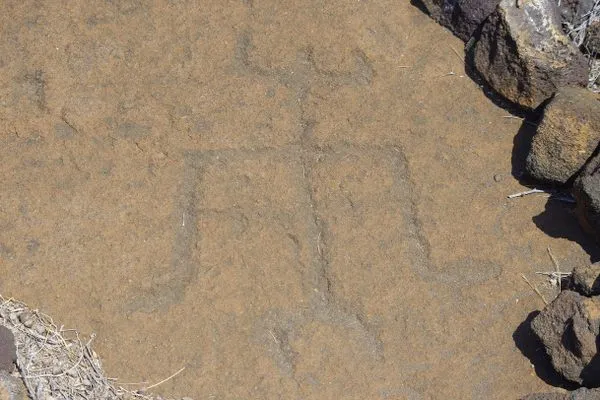
On Hawaii's Big Island, a stretch of volcanic rock holds 3,000 carved figures—stick people, animals, abstract shapes—etched into smooth orange-brown stone by hands that touched this same surface centuries ago. The Puako Petroglyph Archaeological Preserve sits on the Kona Coast, one of the Pacific's densest concentrations of these carvings, and it's still there, largely untouched, despite the resorts and roads that have transformed much of the coastline around it.
Ancient Hawaiians chose this particular site deliberately. The smooth pahoehoe lava rock provided the perfect surface for carving—easier to work than rougher stone, and visible enough to be noticed. Location mattered too. The preserve sits at the boundary between two ancient land divisions, Kohala and Kona, areas that seem to have held cultural significance for petroglyph creation. Nearby ran an old coastal trail, a natural gathering point where travelers would have passed these carved figures regularly, making the site both practical and meaningful.
What makes Puako unusual isn't just the number of petroglyphs—it's that they've survived at all. The Kona Coast has seen massive development over recent decades: resorts, roads, commercial expansion. Yet the area immediately around the preserve has remained largely undeveloped, creating a pocket where you can still walk among these carvings without the visual noise of modern construction. Anthropologists and archaeologists see this as a small but genuine win for preservation. The site exists now as both a record of Hawaiian culture and evidence that not every corner of Hawaii's coast has been claimed by development.
We're a new kind of news feed.
Regular news is designed to drain you. We're a non-profit built to restore you. Every story we publish is scored for impact, progress, and hope.
Start Your News DetoxVisitors who make the trip find themselves in a quiet place—a chance to see how ancient Hawaiians marked their landscape, and a reminder that some things, with protection, can endure.