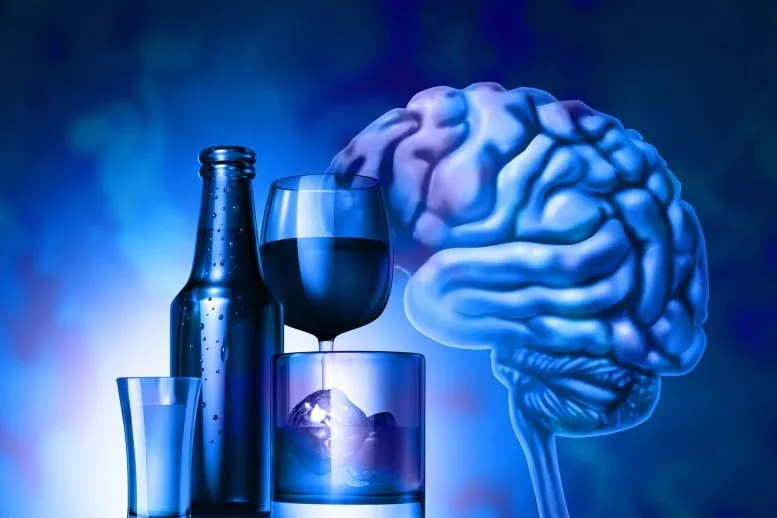
Quitting alcohol is generally a good life choice, but for some, it’s a setup for a tougher battle later. Turns out, the brain might be changing its mind even before you do. A new mouse study points to a specific brain region that kicks into overdrive before compulsive drinking behaviors even start. Which, if you think about it, is both impressive and slightly terrifying.
The idea here is that while abstinence is noble, the brain itself might be laying traps. Researchers gave mice long-term access to alcohol (because, science), then made them stop. After a dry spell, some of these mice started hitting the bottle again, even when the alcohol was made super bitter with quinine. Imagine being so thirsty for a drink you’d chug something that tastes like a bad science experiment. That’s commitment.
Even more telling: these abstinent mice drank more of the bitter stuff than mice who hadn't taken a break. It seems the challenges of sobriety might actually contribute to a stronger pull later on.
We're a new kind of news feed.
Regular news is designed to drain you. We're a non-profit built to restore you. Every story we publish is scored for impact, progress, and hope.
Start Your News DetoxThe Brain's Sneaky Signals
The team then zeroed in on a group of cells in a brain region called the bed nucleus of the stria terminalis. Or, for those of us who prefer not to mangle Latin, the BNST. This area is already known to be involved in the less-than-pleasant side effects of alcohol use disorder, like anxiety and depression.
When the abstinent mice were put back in an alcohol-available environment, they tried to drink even if only water was offered. This eager beaver behavior was directly linked to activity in the BNST. Mice who’d developed a taste for bitter alcohol showed more than double the BNST activity compared to mice who hadn't stopped drinking. Let that satisfying number sink in.
Crucially, this BNST spike happened before the mice even had access to the bitter alcohol. This suggests that checking BNST activity could be a sneaky way to identify people at high risk of relapse when they’re exposed to alcohol. It’s like a neurological smoke detector, but for cravings.
Alcohol misuse, it turns out, is a bigger problem than many realize. In fact, alcohol-related deaths in 2024 were significantly higher than those from opioids. While we talk a lot about harm reduction these days, for alcohol use disorder, stopping completely is still a primary goal. The problem? Predicting who will struggle with that goal is incredibly difficult.
Over 80% of Americans aged 12 and older drink alcohol at some point. Of those, nearly 30 million develop alcohol use disorder. That’s a lot of people needing help, and the number has actually doubled in the U.S. since 1999. Clearly, our current crystal balls aren't cutting it.
While the exact role of the BNST is still being ironed out—what causes the activity, which specific cells are involved—this research opens up some intriguing possibilities. If we can understand these brain changes better, we might just get a head start on helping people before they even realize they need it. Another researcher, Jennifer Blackford, is already looking for similar BNST activity in humans. Because apparently, that’s where we are now: using mouse brains to understand our own complex, sometimes self-sabotaging, tendencies.