Turns out, if you clean up the air, children's lungs actually remember how to grow properly. Who knew? Scientists, apparently, are a bit floored by how quickly this can happen.
New research from London shows that young children, whose lung development was literally being choked by city pollution, started catching up remarkably fast after the Ultra Low Emission Zone (Ulez) rolled out in 2019. It's the kind of good news that makes you want to take a deep, satisfying breath.
The Great Lung Catch-Up
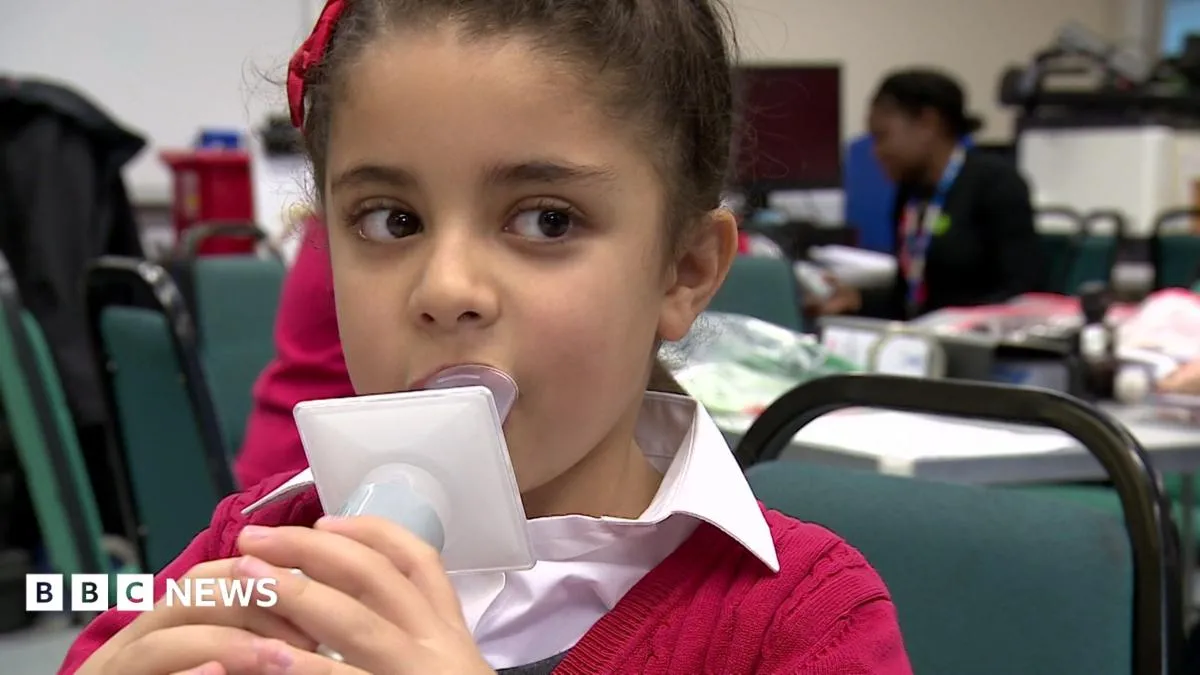
The study, published in The Lancet Public Health, tracked over 3,400 primary school children in London and Luton for five years. They started measuring lung function a year before Ulez began and continued for four years after. The London kids, initially, had smaller lung capacities than their counterparts in less-polluted Luton.
We're a new kind of news feed.
Regular news is designed to drain you. We're a non-profit built to restore you. Every story we publish is scored for impact, progress, and hope.
Start Your News DetoxBut then Ulez kicked in, cleaning up vehicle emissions, and something genuinely surprising happened. Professor Chris Griffiths, a senior author from Queen Mary University of London, put it bluntly: "I was absolutely stunned when I first saw the results." The London children's lung growth sped up, almost entirely catching up to the Luton group by the study's end. This meant the percentage of London kids with "clinically impaired" lung capacity dropped from 14% to 9%. That's a lot of little lungs working better.
If you're wondering what "improved lung function" actually means for a kid, Professor Griffiths explained it simply: "They could run as fast as Luton children without getting out of breath." Which, if you think about it, is both impressive and a pretty fundamental part of being a kid.
The Zone That Made a Difference
London's Ulez, first introduced in 2019 by Mayor Sadiq Khan, charges older, more polluting vehicles a daily fee to drive within the zone. It's a policy that's faced its share of political drama and protests, because apparently, breathing clean air is controversial to some.
But the data speaks volumes. Nitrogen dioxide levels, a nasty pollutant primarily from vehicles, fell faster in London than in Luton. This strongly suggests that Ulez wasn't just making the air look cleaner, it was genuinely improving air quality and, in turn, children's health.
While some researchers suggest considering other factors like the pandemic or encouraging kids to walk more, the core message is clear: clean air policies have a tangible, rapid impact on public health. Professor Anna Hansell from the University of Leicester noted these improvements will likely have "lifelong benefits." Because apparently, not having stunted lungs is generally a good thing for your entire life.
Dr. Helen Wood, the lead author, cautioned against complacency, pointing out that air pollution in both cities still exceeds WHO guidelines. So, while we can celebrate this win, it's less a finish line and more a really encouraging lap time. It's also a global message: "There are more than a billion kids living in cities around the world, most of them in polluted environments, getting a really bad start in life," said Professor Griffiths. Imagine what a few more clean air zones could do for them.