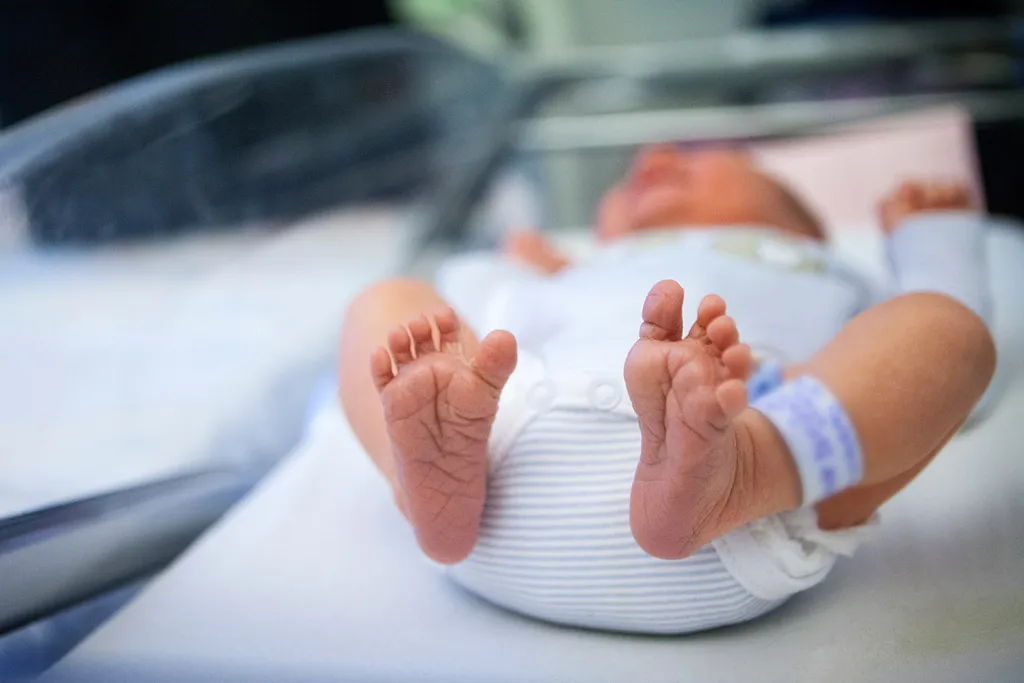
Imagine a world where a baby's first check-up includes a sneak peek into their future cancer risk. That world just got a lot closer, thanks to new research suggesting a simple genetic test could be added to routine newborn screenings.
Currently, those few drops of blood taken from a baby's heel about 24 hours after birth are used to screen for a host of rare, treatable disorders. But they don't look for cancer risk. Yet. Researchers from Dana-Farber/Boston Children’s Cancer and Blood Disorders Center and Mass General Brigham think they should, and their findings, published in Nature Communications, are pretty compelling.

The Future of Newborn Screening
The idea is to use those very same blood samples to find inherited or new gene changes that could make a child more susceptible to cancer. Think of it like a souped-up genetic test, but for tiny humans. The kind that could spot a problem before symptoms even think about showing up.
We're a new kind of news feed.
Regular news is designed to drain you. We're a non-profit built to restore you. Every story we publish is scored for impact, progress, and hope.
Start Your News DetoxRichard B. Parad, a professor at Harvard Medical School, highlights the potential: identifying high-risk kids allows for tailored monitoring plans. This means doctors could provide preventive care, catching potential tumors early when treatments are less invasive and outcomes are much, much better. Lisa Diller, another professor at Dana-Farber, already does this with families who have known cancer-linked genes. Her goal? Catching pre-tumors and tumors early to save kids from more harmful treatments.
So, what did the study actually find? Diller, Parad, and Arindam Bhattacharjee dove into archived blood samples from nearly 2,000 Michigan children who later developed solid or brain tumors by age eight. They zeroed in on 11 genes known to be linked to childhood cancer syndromes.
The results were striking: harmful gene changes were found in 132 children, almost 7% of the group. This is big, because it's one of the first and largest studies to show that predicting cancer risk at birth using DNA sequencing is not just a pipe dream. If implemented, this program could identify roughly 1,000 children in the U.S. each year who would benefit from early detection.
Why This Matters So Much
Children with these cancer-predisposing mutations tended to develop cancer significantly earlier. We're talking an average diagnosis age of 14 months for those with a detected mutation, compared to 32 months for those without. That's a huge window of opportunity.
Take retinoblastoma, a common eye tumor, for example. The study found RB1 mutations in 69 children, 68 of whom later developed the condition. These kids were diagnosed at an average age of nine months, versus 23 months for others. Imagine catching that at birth, allowing for regular eye exams and potentially saving a child's vision and avoiding intense treatments like eye removal. That's a game-changer.

Researchers estimate that about 1 in 27,000 newborns would develop an early-onset cancer that could be predicted this way. That frequency is on par with some conditions already screened for. Which, if you think about it, makes a pretty strong case for adding this to the current lineup.
The Mass General Brigham team is now working on the how-to, aiming to connect identified newborns with clinical monitoring plans at Dana-Farber. Because finding an early tumor, or even a pre-tumor, can quite literally save a child from a far more difficult — and sometimes fatal — diagnosis. And that's a future we can all get behind.