A robotics company just launched an app store for robots — and it's about to change how machines learn.
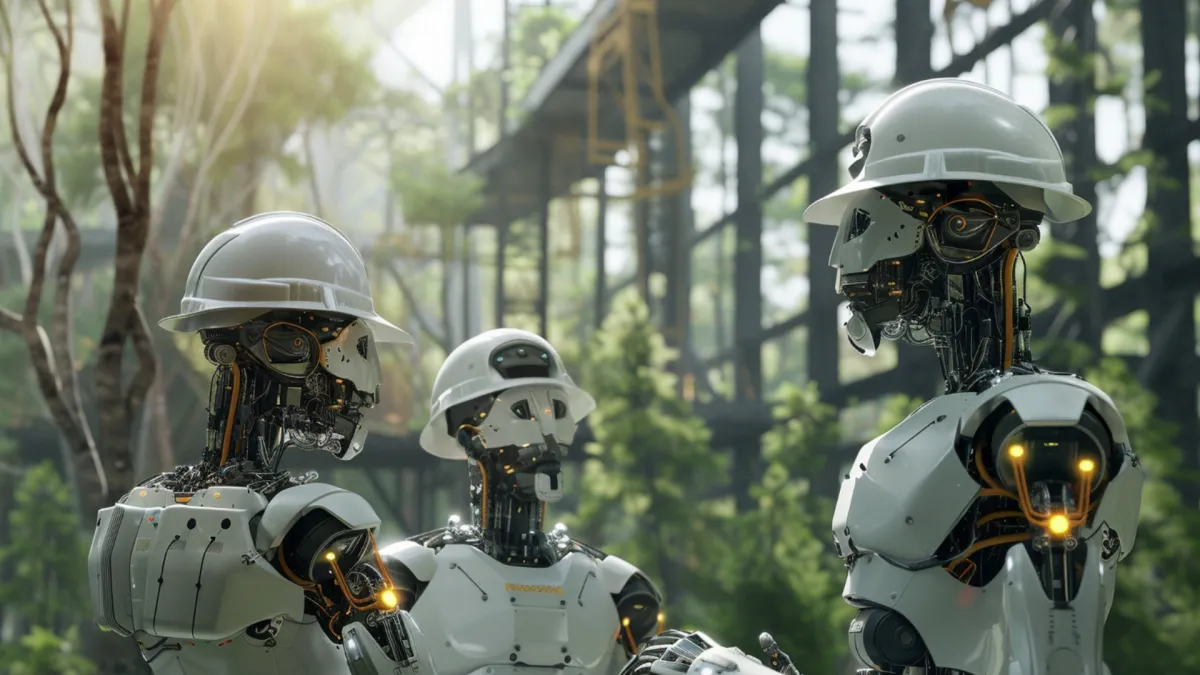
OpenMind, a software company building operating systems for humanoid and quadruped robots, released a platform where developers can package specific skills into apps that work across different robot models. Think of it like the shift from custom-built computers to the iPhone: instead of physically upgrading hardware every time you want a robot to do something new, you just download an app.
"Computers and phones come with an operating system to provide the basics, but the real magic is the ability for everyone to personalize their phones and computers through apps," said Jan Liphardt, OpenMind's founder and CEO. "Your humanoid will be no different: thousands of apps, each representing skills from nursing and math education to cleaning and home safety, will give you almost unlimited choices."
We're a new kind of news feed.
Regular news is designed to drain you. We're a non-profit built to restore you. Every story we publish is scored for impact, progress, and hope.
Start Your News DetoxThe platform runs on OM1, OpenMind's modular operating system, and already has over 1,000 developers building for it. Early apps show the range of possibility: Omni-Guardian turns a robot into a security companion that detects intruders. Nova handles daily assistance tasks — listening, seeing, moving to help. Guardian follows you around and takes selfies. There's even an app called WALL-E that monitors your digital life.
OpenMind is partnering with eight robot manufacturers including UBbtech, Agibot, Deep Robotics, and Fourier. The company expects the app library to grow rapidly as more developers and manufacturers join, similar to how smartphone app stores exploded in the early 2010s.
What makes this meaningful is the decoupling of software from hardware. Robots can now learn new tasks and improve their abilities without waiting for a physical redesign. "Robots need a skill and cognition layer that evolves faster than hardware," Liphardt noted. "The App Store is how robots become universal platforms whose skills can change over time to fit your needs."
This shift matters because it solves a real bottleneck in robotics. For years, adding new capabilities meant engineering new parts or replacing the entire system. Now, a robot that does home care today can become a security system tomorrow, or a companion next week — all through software updates. It's the same logic that turned your phone from a calling device into a camera, a map, a fitness tracker, and a thousand other things.
The early app catalog is still modest, mixing practical tasks with novelty features. But the infrastructure is there. As the developer ecosystem grows beyond 1,000 and more manufacturers join, the real potential emerges: robots that adapt to what you actually need, when you need it.