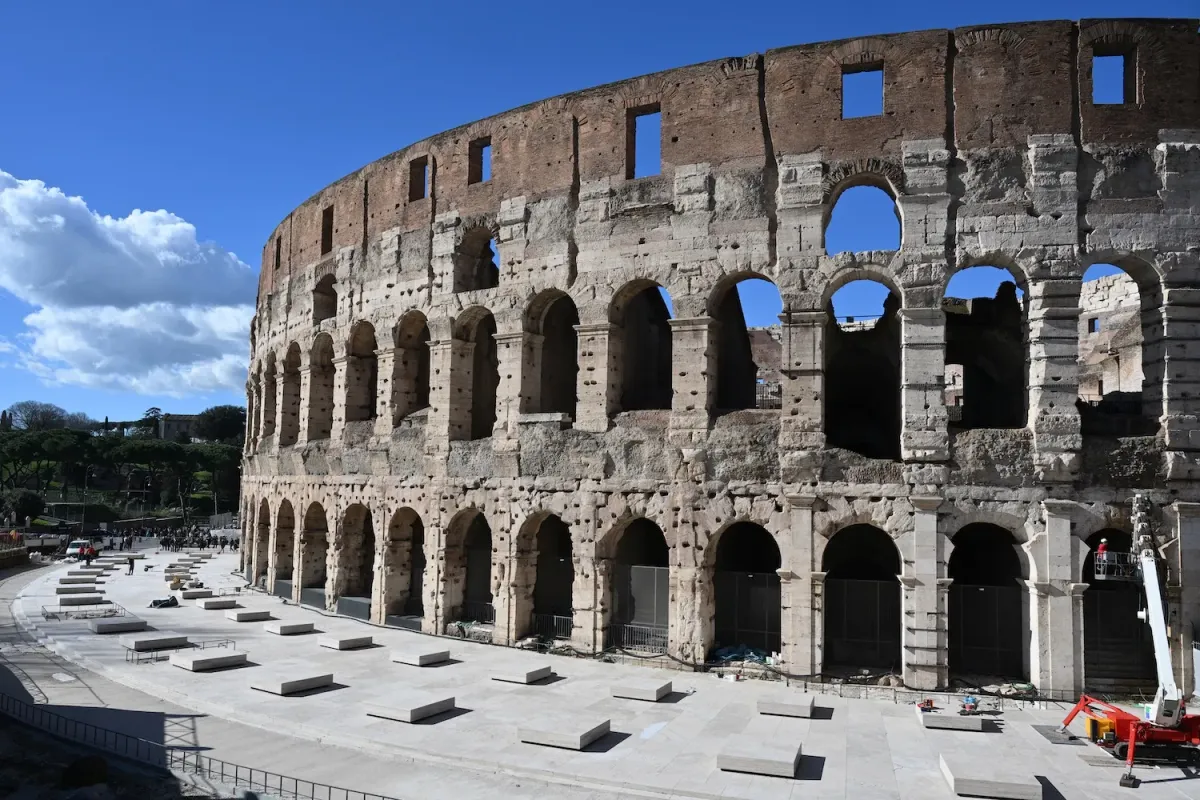
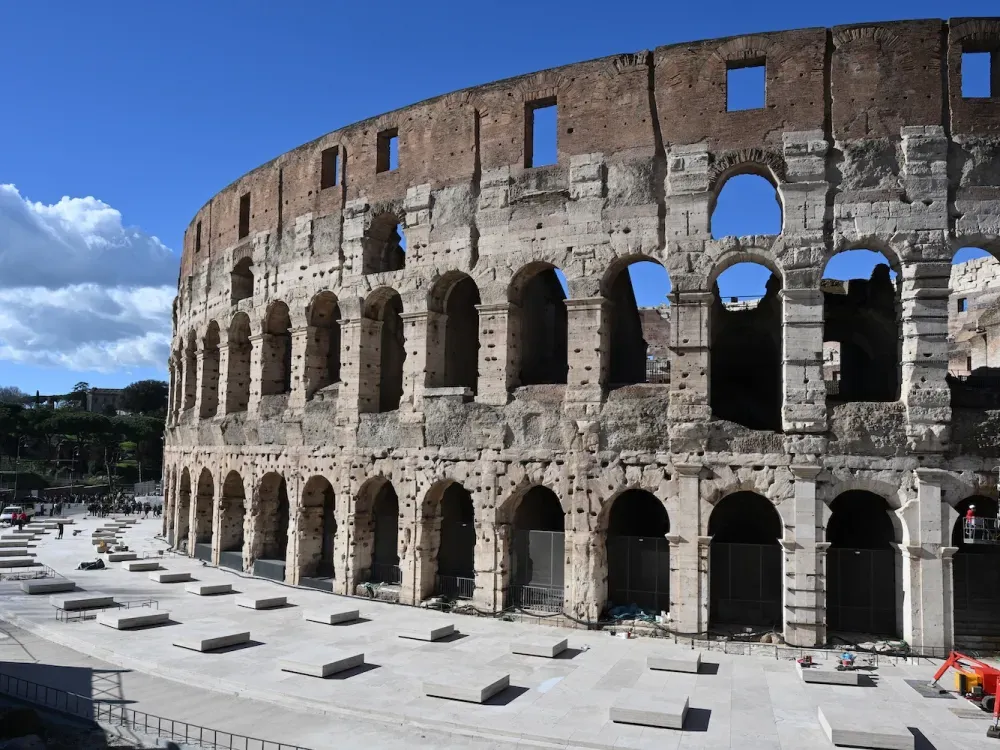
After four years of meticulous work, the southern piazza of Rome's Colosseum is officially open for business. Or, well, for tourists. Stefano Boeri Interiors spearheaded the project, essentially rebuilding the travertine-paved pedestrian area on the amphitheater's south side—right where ancient spectators once queued up, ready for a day of… entertainment.
The Original VIP Entrance
Let's be real, the Colosseum was the original stadium-slash-architectural-flex. Built between 70 and 80 CE, this four-story, 80-arched marvel could pack in 50,000 screaming Romans. It was also completely freestanding, a feat of engineering that still makes modern architects raise an eyebrow. Think retractable awnings for shade, latrines, water fountains—all the amenities, just with more gladiators.
Speaking of gladiators, the Colosseum’s main draw was, of course, the brutal spectacle. Enslaved people or prisoners of war duking it out, often to the death, against each other or wild animals. Public executions? Check. Mock naval battles, reportedly by flooding the arena? Also check. Because apparently, that's where we are now.
We're a new kind of news feed.
Regular news is designed to drain you. We're a non-profit built to restore you. Every story we publish is scored for impact, progress, and hope.
Start Your News DetoxAfter the Roman Empire decided to, you know, fall, the Colosseum had a bit of an identity crisis. It became a Christian sanctuary, then a fortress, then an earthquake in 1349 turned it into a quarry for other Roman projects, like St. Peter’s Basilica. It wasn't until the 1800s that efforts began to preserve what was left. So, much of what we see today is already a restoration of a restoration.
Back to the Future (of Architecture)
Originally, this southern facade boasted a two-story arcade with columns towering over 160 feet. Instead of trying to rebuild something that grand, the architects opted for a more subtle nod to history. They used stone plinths—essentially bases—that match the piazza's new paving, marking exactly where those colossal columns once stood.
Stefano Boeri explained that the project helps visitors grasp the monument's original scale and ground level, allowing them to get up close to the ancient walls. It's about letting the public imagine the rhythm of those long-gone walkways and arches. Which, if you think about it, is both impressive and slightly terrifying. Imagine the foot traffic.