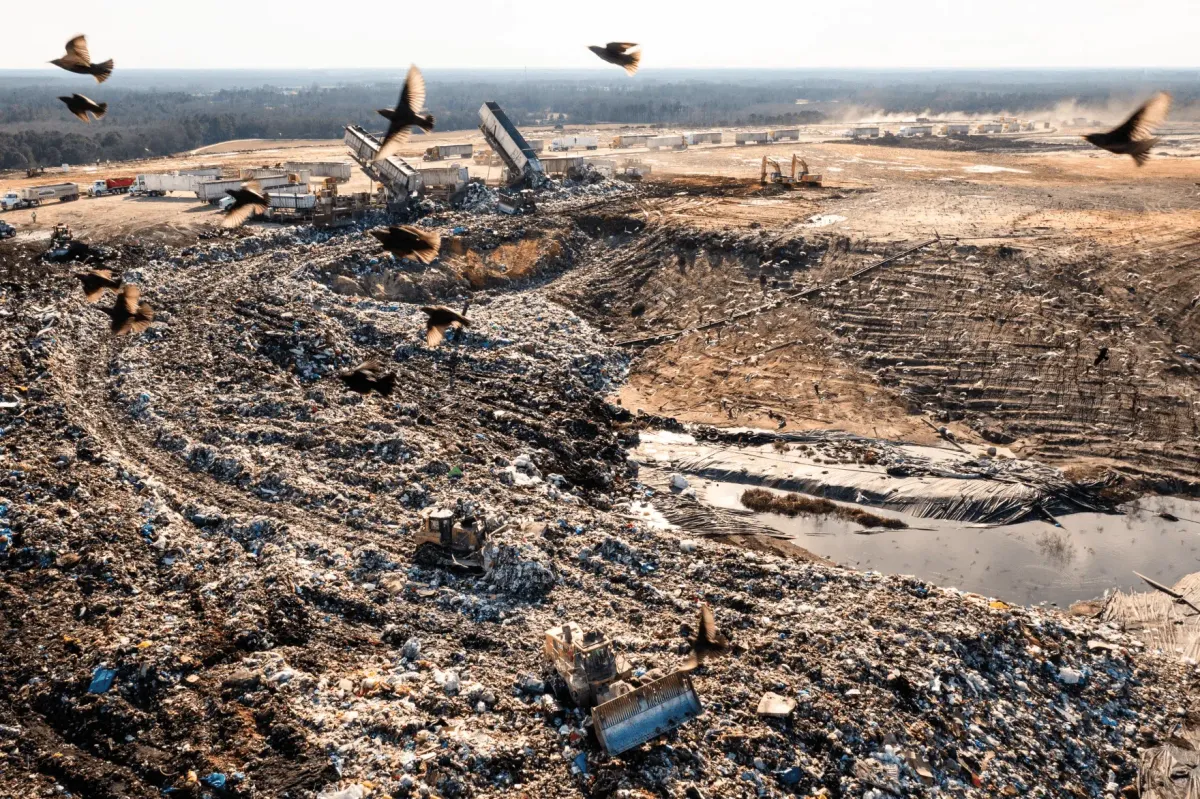
For over 50 years, Sampson County, North Carolina, has seen its landfill grow to nearly 1,300 acres. It is now the largest in the state, receiving garbage from across North Carolina. This growth has worried local residents like Sherri White-Williamson.
White-Williamson grew up in the county. She was concerned about chemicals from the landfill possibly seeping into groundwater. Many people near the landfill use well water for drinking, bathing, and watering gardens and animals.
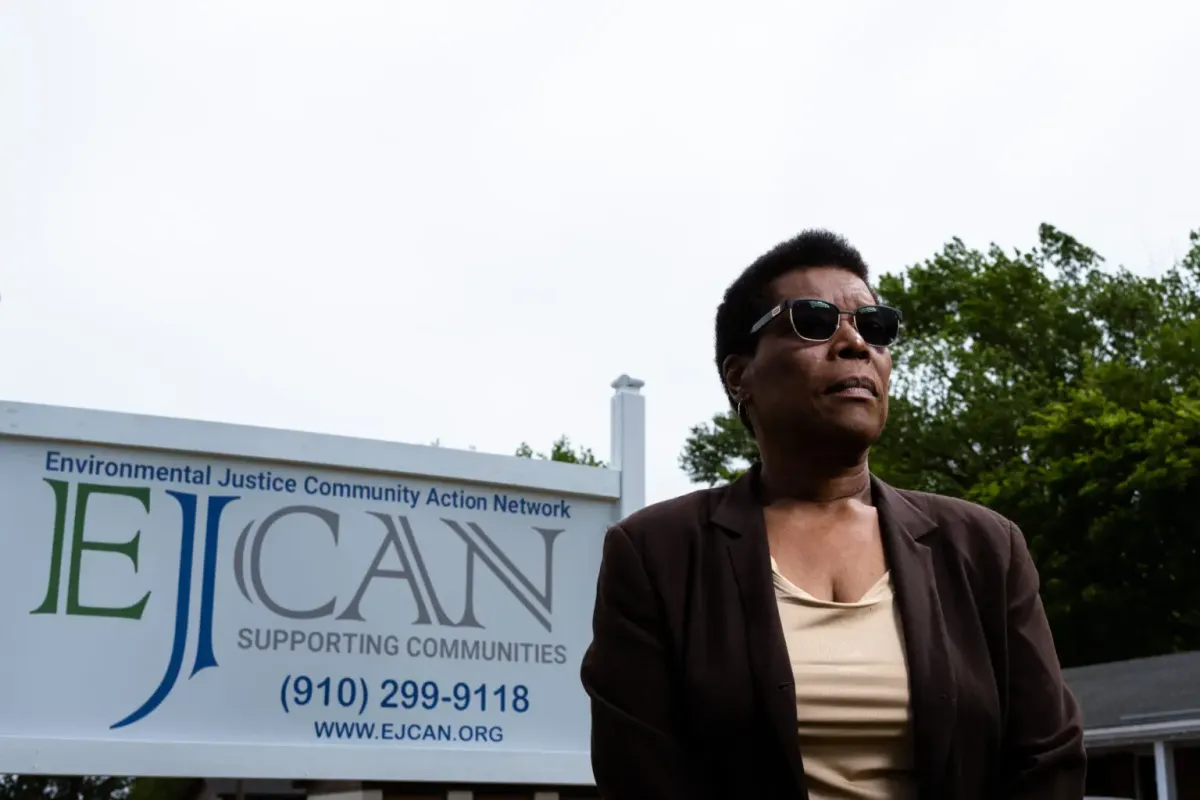
White-Williamson previously worked at the U.S. Environmental Protection Agency (EPA) in the Office of Environmental Justice. There, she focused on public outreach and connecting communities with federal agencies. She realized her own community needed similar advocacy. In 2020, she co-founded the Environmental Justice Community Action Network (EJCAN). This non-profit helps communities learn about and advocate for themselves on environmental issues.
We're a new kind of news feed.
Regular news is designed to drain you. We're a non-profit built to restore you. Every story we publish is scored for impact, progress, and hope.
Start Your News Detox
Investigating Water Contamination
Soon after EJCAN started, the group began working with residents in Snow Hill. This is a historically Black rural community near the Sampson County landfill. People there had many environmental and health concerns. A major worry was whether their water, especially private well water, was contaminated.
Over several years, EJCAN partnered with UNC Chapel Hill and Appalachian State University. They used small grants to offer free well water testing. Residents believed their illnesses were linked to living near the landfill and drinking contaminated water. However, there had been little formal research. White-Williamson noted that there had never been a health impact analysis in the area, only anecdotal evidence. The well testing was the first step to gather proof of contamination.
The test results were concerning. After four rounds of sampling, 13% of wells had PFAS and other harmful contaminants. PFAS, or per- and polyfluoroalkyl substances, are synthetic chemicals made since the 1940s. They are used in water-repellent fabrics, nonstick cookware, and firefighting foam.
PFAS are often called "forever chemicals" because they stay in the body and environment for a long time. This includes older PFAS like PFOA and PFOS, which were phased out in the 2000s. It also includes newer "novel" PFAS, developed as replacements. Scientists are now questioning if these newer chemicals are truly safer, as less is known about their long-term effects.
Courtney G. Woods, an environmental sciences professor at UNC, explained that landfills are a common source of PFAS. This is because people throw away many consumer products containing these chemicals. A 2020 report in Toxicology showed that PFAS are linked to health problems. These include reduced kidney function, metabolic syndrome, thyroid issues, and adverse pregnancy outcomes.
Early Research and Community Action
Research into Sampson County's water quality began a decade ago, thanks to Ellis Tatum, a Snow Hill resident. In 2016, Woods and her students met Tatum at an environmental justice summit. Tatum was convinced something was wrong with the water.
Tatum invited Woods and her students to work with his community. They held neighborhood focus groups. Then, Woods and a student tested for PFAS, metals, and bacteria in Bearskin Swamp, near the landfill. People suspected the landfill was polluting the water.
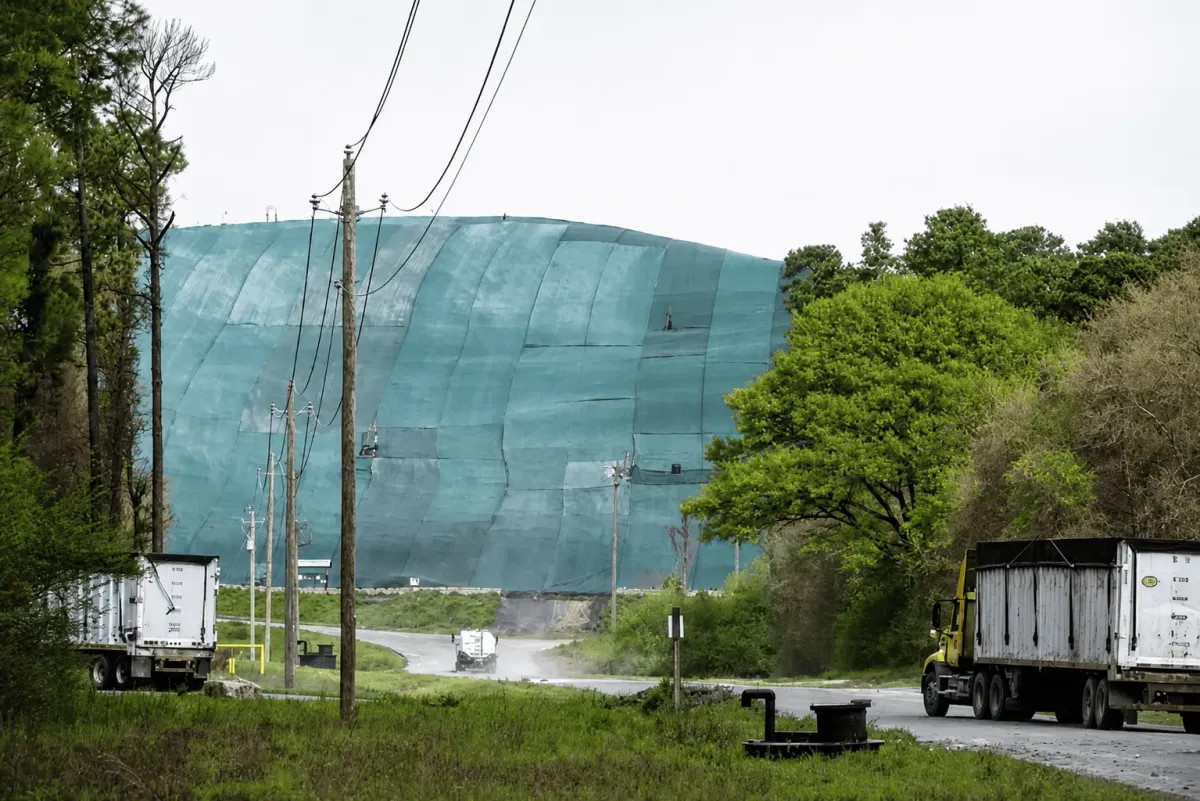
Woods' team found no significant contamination upstream of the landfill. However, downstream was different. They found high levels of both older and newer PFAS near the landfill. These included chemicals like GenX and Nafion, which some studies link to liver damage. Some of these chemicals matched those produced by Chemours, a PFAS manufacturing facility that had dumped waste in the landfill for years.
After Woods' initial findings, EJCAN worked to partner with more universities to expand water testing in Snow Hill. This collaboration was vital for moving community concerns toward scientific proof. Private PFAS testing can cost around $380, which many households in Sampson County could not afford.
In February 2021, EJCAN partnered with Appalachian State University to offer free well water testing for bacteria and metals. Professor Rebecca Witter developed a protocol to understand community perceptions of water quality. Biologist Shea Tuberty and his students collected samples door-to-door, testing for bacteria, nitrates, and heavy metals.
Later, Woods from UNC joined the team, providing PFAS testing with support from the Research Triangle Institute. They sampled about 250 homes and found PFAS in the water of over 30 families.
The labs sent results to residents and called those with concerning findings. Scientists also held a meeting for residents to ask questions. Woods said this close communication was crucial for both research and community organizing. EJCAN holds monthly community meetings, which Tuberty sometimes brings his class to attend. This helps build community trust and shows long-term investment.
State Response and Future Challenges
The test results prompted White-Williamson to contact the North Carolina Department of Environmental Quality’s Division of Waste Management. In November 2023, the department held a community meeting. Residents closest to the landfill could request private well sampling. State staff initially tested 30 wells, then expanded the effort. From October 2023 to April 2026, they collected 241 samples. About 25% (61) of these exceeded EPA drinking water standards for PFAS.
The state program also provides bottled water and home filtration systems designed to remove PFAS. So far, 87 point-of-use filter systems have been installed or authorized statewide, with 37 in Sampson County. EJCAN has also distributed over 50 Clearly Filtered water pitchers. These pitchers remove PFAS and other contaminants like lead and arsenic. EJCAN worked with the North Carolina Department of Health and Human Services to find an efficient pitcher.
EJCAN still receives requests for well water testing. Tuberty noted that thousands of samples are needed, but only hundreds have been collected. EJCAN, App State, UNC, and the Department of Health and Human Services collaborated on an EPA grant application for $1 million over three years. This grant would have allowed them to test up to 250 homes annually and provide follow-up support.
In February, they learned the grant was approved. However, in April 2025, due to federal program cuts, the grant was suspended. Three days later, they were told it would be spared. Then, in early May, the decision was reversed again. Tuberty said most of the money would have gone to community members to address the identified problems.
While smaller grants have supported the research, Tuberty emphasized that significant funding is needed to make a big impact. The researchers remain hopeful for another opportunity. EJCAN is concerned about unmonitored forever chemicals in their community. Tuberty noted that these projects are difficult because communities have been overlooked for decades.
The Environmental Justice Community Action Network (EJCAN) is a North Carolina non-profit. It works to advance environmental justice in rural communities, especially Sampson County. EJCAN supports residents facing pollution by providing scientific research, water and air monitoring, education, and advocacy. The organization also helps communities access legal and technical resources to hold polluters accountable and push for cleaner air, water, and soil.