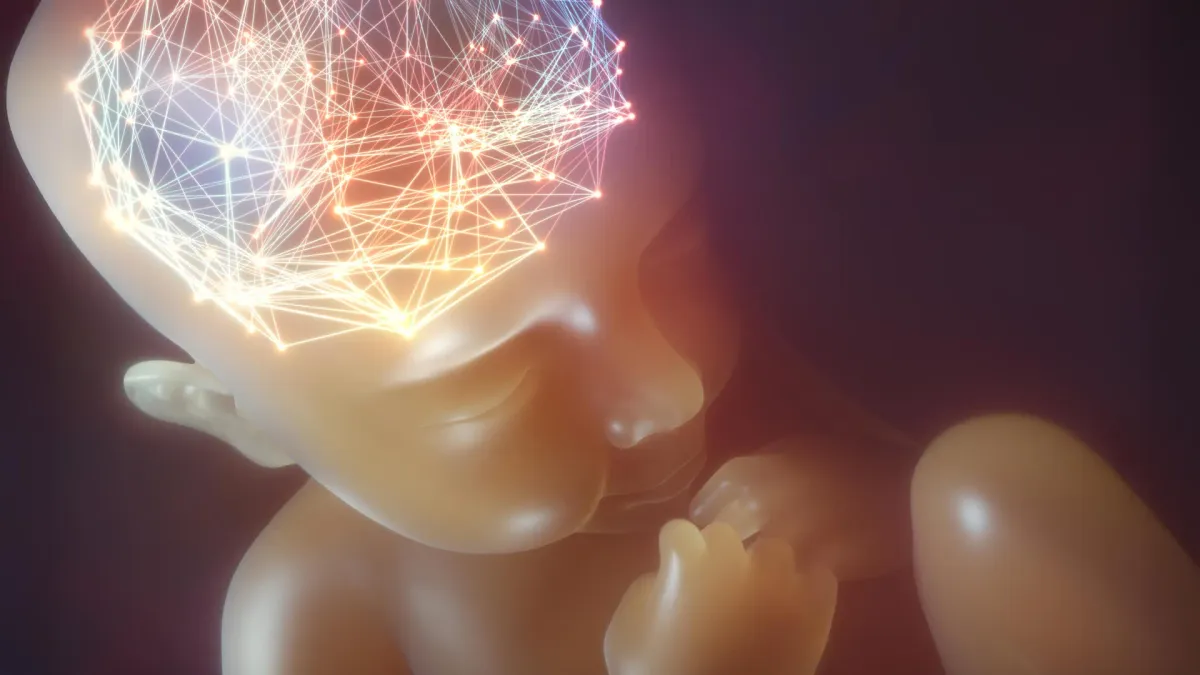
Turns out, the gut feeling you have about your baby's future might be more literal than you thought. New research suggests a wild connection between a newborn's biological blueprint, their gut bacteria, and the way their brain develops later on. We're talking about epigenetic changes at birth influencing which microscopic critters set up shop in their tiny intestines — and how that might tie into things like autism and ADHD by age three. Because apparently, even your gut has a say in your destiny.
"Certain bacteria seem to offer protection," observed Francis Ka Leung Chan, a senior author and gastroenterologist at The Chinese University of Hong Kong. Which, if you think about it, is both impressive and slightly terrifying. But mostly impressive, because it means we might one day support a child's development just by tweaking their diet or giving them some specific probiotics. Imagine that: a tiny microbial bodyguard for the brain.
The Unseen Architects of Early Life
The first few years are a mad dash for brain and immune system development. We've known that epigenetics (how your genes are expressed, not the genes themselves) and the gut microbiome (the bustling city of microbes in your belly) both play a starring role in long-term health. But how these two biological powerhouses worked together in the earliest days? That was the mystery.
We're a new kind of news feed.
Regular news is designed to drain you. We're a non-profit built to restore you. Every story we publish is scored for impact, progress, and hope.
Start Your News Detox"We wanted to see how the epigenome and microbiome interact early on," explained Hein Min Tun, a co-senior author and public health researcher. And, crucially, if that interaction could influence a child's risk for neurodevelopmental conditions like ASD and ADHD. Because, as Tun puts it, a baby's epigenetic settings at birth might set a certain risk level, but the right kind of bacteria in their gut could actually change that risk. Talk about a microbial plot twist.
To figure this out, the team became biological detectives. They analyzed DNA methylation patterns (a common epigenetic change) in umbilical cord blood from 571 infants. Then, they collected gut microbiome samples from 969 infants at two, six, and twelve months old. They even got parent microbiome samples from the third trimester, just to cover all their bases. When the kids hit three, researchers checked their neurodevelopment with a questionnaire and started connecting the dots.
Delivery Methods and Microbial Mayhem
What influences these early epigenetic patterns? The study found links to things like how the baby was delivered, how long the pregnancy lasted, whether there were older siblings, and if mom had allergies. Surprisingly, parents' gut microbiomes didn't seem to sway these birth-related epigenetic changes. It's almost as if the baby's body is saying, "Thanks for the ride, but I'll set my own internal switches."
As for the infant microbiome itself, its development was a busy intersection of factors: delivery method, antibiotic exposure (which, let's be honest, can really shake up a microbial party), older siblings, and breastfeeding. Babies born via C-section, for example, showed different DNA methylation patterns in genes tied to immune function and brain development. Which makes sense — a different entrance, a different welcome committee.
And here's where it gets really interesting: epigenetic patterns at birth actually affected how the gut microbiome evolved during infancy. Infants with higher levels of DNA methylation in certain immune-related genes tended to have less diverse gut microbiomes by their first birthday. It seems birth signals might be whispering instructions to the developing gut bacteria, guiding their growth. Because, of course, they are.
Tiny Protectors in the Gut
When the researchers finally looked at the three-year-olds, they found that signs of ASD and ADHD were linked to specific combinations of epigenetic markers and gut microbes. But here's the kicker: some bacteria seemed to offer a biological shield. Children with epigenetic patterns linked to ASD were less likely to show signs of the condition if they picked up Lachnospira pectinoschiza during infancy. And for those with ADHD-linked epigenetic patterns? Parabacteroides distasonis seemed to offer similar protection.
"The foundations for brain health are laid very early, even before birth," Tun reiterated. "However, we don't want people to think this means a child's developmental path is fixed at birth." Because, thankfully, it's not. These are complex conditions, and this is just one fascinating, tiny piece of a very large, microscopic puzzle.
The team is still following these kids, because life, like science, is a long game. The ultimate goal, according to first author and gastroenterologist Siew Chien Ng, is to develop "safe, non-intrusive early interventions." Think specific probiotics or other live biotherapeutics that could help cultivate a healthy gut microbiome and potentially lower the risk of neurodevelopmental challenges. Because sometimes, the best defense is a really good offense of tiny, helpful bacteria.