Pigeons are known for their amazing ability to find their way home over long distances. For many years, scientists have wondered how they do it. A new study suggests the answer might be in an unexpected place: the liver.
Research in Science shows that special immune cells in pigeon livers might help them sense Earth's magnetic field. This gives them an internal compass for navigation.
How Pigeons Use Magnetic Fields
These cells are called macrophages. They usually break down old red blood cells. As they do this, they collect iron. Researchers believe this iron gives the cells special properties that let them react to magnetic fields. When these cells were removed, the pigeons had trouble finding their way home.
We're a new kind of news feed.
Regular news is designed to drain you. We're a non-profit built to restore you. Every story we publish is scored for impact, progress, and hope.
Start Your News DetoxProfessor Christian Kurts, a co-senior author from the University Hospital Bonn, said they did not expect immune cells to act as magnetic field sensors. He noted that these results show a new way animals perceive magnetic fields.
Professor Martin Wikelski, another co-senior author from the Max Planck Institute of Animal Behavior, added that what seems like a "gut feeling" in bird navigation might actually have a physical basis.
Tracks of homing pigeons that were trained to navigate over 20km back to their aviaries in Southern Germany. Some pigeons were treated with clodronate to deplete macrophages. Untreated pigeons (white) navigated successfully home on sunny and overcast days. Clodronate-treated pigeons also navigated successfully home on sunny days (orange), but could not navigate home on overcast days (blue). Credit: Max Planck Institute of Animal Behavior
Scientists have known that birds use Earth's magnetic field to navigate. However, how they sense it has been a mystery. Earlier ideas suggested birds might use light-sensitive molecules in their eyes or tiny magnetic particles in their beaks. But strong proof for these ideas has been hard to find.
Finding the Magnetic Cells
The new study offers a different idea. An international team of researchers looked at several body parts, including the eyes, beak, brain, liver, and spleen. They used special techniques to measure magnetic properties in these tissues.
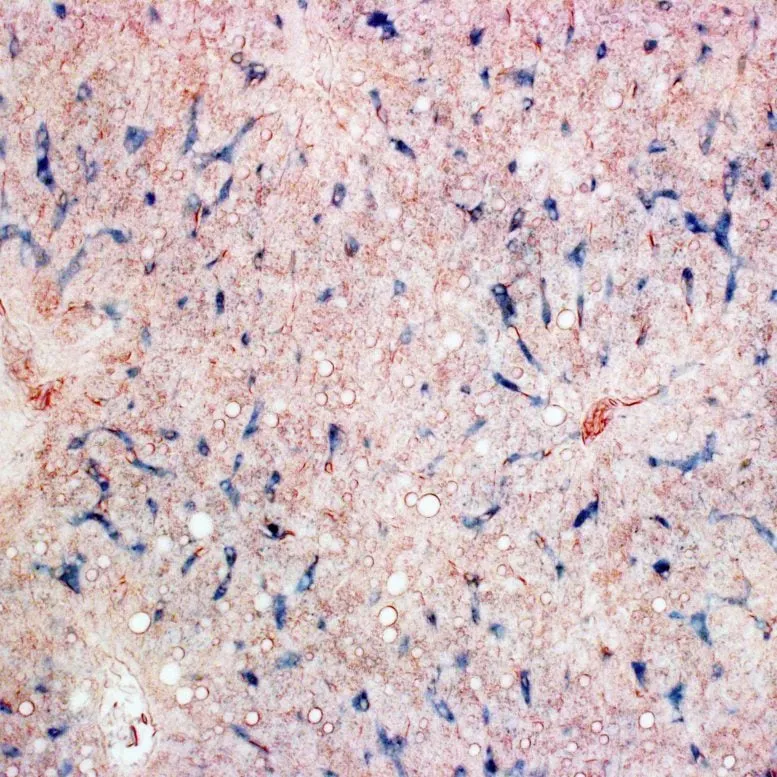 Histology of pigeon liver tissue, depicting iron-containing macrophages (blue). Credit: Lisowski et al. (2026) Science
Dr. Clivia Lisowski, the first author, said they had clues that the liver and spleen have magnetic properties because they store a lot of iron from breaking down red blood cells. The liver showed the highest iron concentration and the strongest magnetic response.
Professor Ulf Wiedwald from the University of Duisburg-Essen explained that iron crystallizes into nanoparticles, making the cells superparamagnetic and reactive to magnetic fields. Further study showed that liver macrophages were the source of this magnetic response.
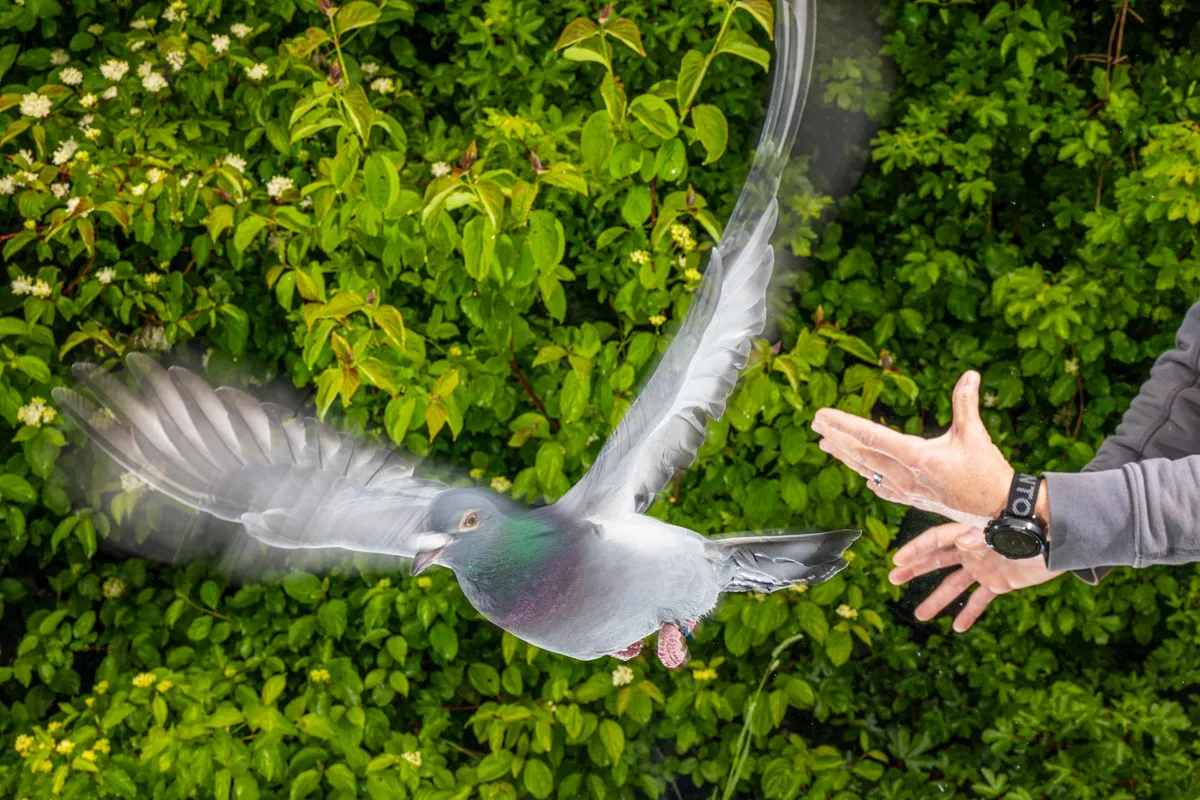
Miriam Widmann, a staff member at the Max Planck Institute of Animal Behavior, releases a homing pigeon as part of an experiment investigating navigation under overcast conditions. Credit: Christian Ziegler/ Max Planck Institute of Animal Behavior
Testing the Pigeons
To see if these cells truly help with navigation, researchers did experiments with pigeons. They trained the pigeons to fly back to their home from over 20 kilometers away.
When the liver macrophages were removed, the birds got lost on cloudy days when they couldn't see the sun. But on sunny days, they could still find their way home, likely using the sun as a guide. This suggests pigeons use several navigation systems. Magnetic sensing becomes very important when the sun is not visible.
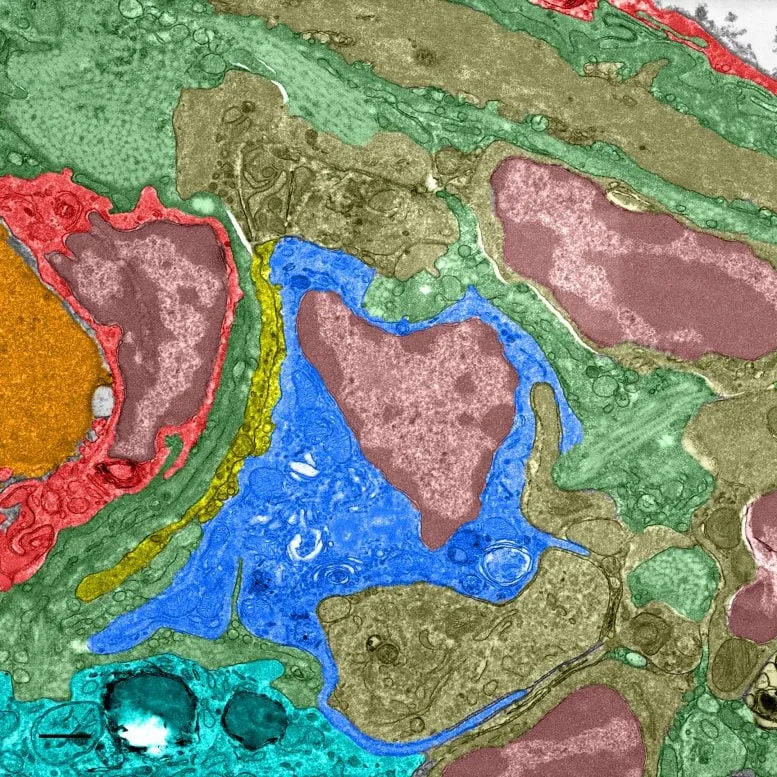 Electron microscopy image of pigeon liver tissue, with full colorization of cells: blue = hepatic macrophage, yellow = nerve fiber, bright green=connective tissue, dark red=endothelia, orange=capillary with blood fat and proteins, beige/dark pink=nuclei, dark green=fibroblas. Credit: Lisowski et al. (2026) Science
How Information Reaches the Brain
The researchers then looked at how the liver's magnetic information might get to the brain. They found that the iron-rich macrophages are close to nerve fibers. This setup could allow magnetic information to be sent to the nervous system.
Lisowski noted that these findings are the first clear proof of how Earth's magnetic field can be sensed inside the body and sent to the brain to guide movement.
The researchers believe this discovery connects several known biological processes, like iron use and communication between the immune and nervous systems. This offers a possible explanation for how animals navigate using Earth's magnetic field.
Wikelski said that if immune cells help birds sense direction, it would change how we understand navigation.
Beyond Pigeons
Many questions remain, especially about how the brain processes signals from these liver cells. This discovery might also apply to other animals. Sharks, for example, can navigate without light, suggesting similar systems might exist in other species.
Researchers say this work opens the door to exploring if animals, and even humans, react to magnetic fields in ways we don't fully understand yet.
Deep Dive & References
Homing pigeon navigation relies on superparamagnetic macrophages under overcast conditions - Science, 2026