Turns out, not all raptors were the land-shredding, Jeep-chasing terrors Hollywood made them out to be. Some, it seems, were more interested in a nice, quiet day of fishing.
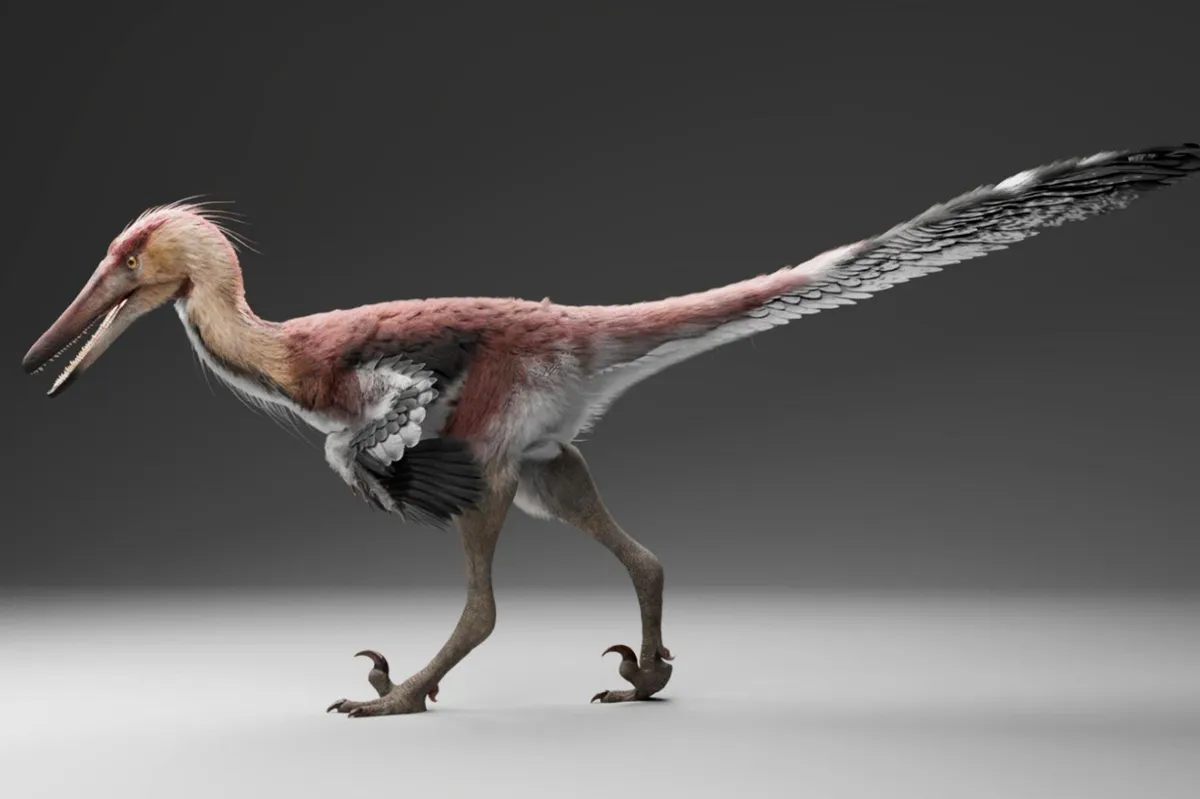
Meet Kank australis, a newly discovered dinosaur from Patagonia that's basically the prehistoric equivalent of a raptor who decided to specialize in fly-fishing. Scientists say this 70-million-year-old creature had the signature curved claw of its fearsome cousins but hunted like a heron, patiently snatching fish from rivers and wetlands. Because apparently, even back then, some just preferred a different pace of life.
The Wetland Hunter
Researchers pieced together this aquatic anomaly from fossils found in southern Argentina, including teeth, vertebrae, and toe bones. Kank australis was an unenlagiid, a group of small-to-medium-sized carnivorous dinosaurs that roamed the Late Cretaceous landscapes of South America, Antarctica, Australia, and Madagascar. Think of them as the globe-trotters of the dino world.
We're a new kind of news feed.
Regular news is designed to drain you. We're a non-profit built to restore you. Every story we publish is scored for impact, progress, and hope.
Start Your News DetoxAdult Kank likely stretched about 8 to 10 feet long, which is a respectable size for something that spent its days wading through ancient Patagonian swamps. This region, now cold and dry, was once a warm, wet paradise of rivers, streams, and ponds, teeming with fish, insects, and water lilies. Basically, a perfect all-you-can-eat buffet for a dino with a taste for seafood.
The real kicker? Its neck bones. They have specialized features for muscle attachment and protecting blood vessels, just like modern herons. This suggests Kank wasn't just near the water; it was actively working the water, using precise, flexible neck movements to snag dinner. So much for the image of every raptor being a lightning-fast land predator. Some, it seems, preferred a more refined approach.
Filling in the Gaps
This discovery isn't just a fun anecdote about a fish-loving dino; it's a crucial piece of the paleontological puzzle. For years, scientists had found unenlagiid fossils in northern Patagonia, but the southern finds were too fragmented to identify. Kank helps bridge that evolutionary gap, connecting the dots between northern Patagonia and Antarctica and showing just how widespread this family of raptor relatives truly was.
The fossils were unearthed at La Anita farm near El Calafate, Argentina. While the first Kank remains popped up in 2018, it was a neck bone found in 2024 that truly sealed the deal, confirming it was a brand-new species. Because sometimes, all it takes is one well-preserved neck bone to rewrite history.
Kank was smaller and more lightly built than some of its relatives, like the hulking 16-foot Austroraptor cabazai. Its long snout, numerous ridged teeth, and flexible neck were all perfectly adapted for a fish-heavy diet. And just to drive the point home, Kank fossils were found right alongside fish fossils. Coincidence? Probably not.
Of course, it wasn't all fish and lilies. The area also hosted frogs, turtles, lizards, and even semi-aquatic mammals like Patagorhynchus pascuali (a platypus-like creature). And let's not forget the 30-foot-long Maip macrothorax, a megaraptorid that likely saw Kank as less a fellow fisher and more a potential snack. Even in paradise, there's always a bigger fish.
The name Kank comes from the Aonikenk people, an Indigenous group in Patagonia, referring to a giant rhea whose running steps formed the constellation we know as the Southern Cross. A fitting tribute for a dinosaur found at the southernmost reaches of its known territory. Scientists are already planning more digs, hoping to unearth even more secrets from this fascinating, fish-focused raptor. Because who doesn't love a good origin story for a prehistoric oddball?