Imagine a world where you could stop vision loss before it even started. Sounds like science fiction, right? Well, scientists just took a giant leap in that direction by figuring out how to protect the very cells responsible for your ability to read this, recognize faces, and appreciate a sunset.
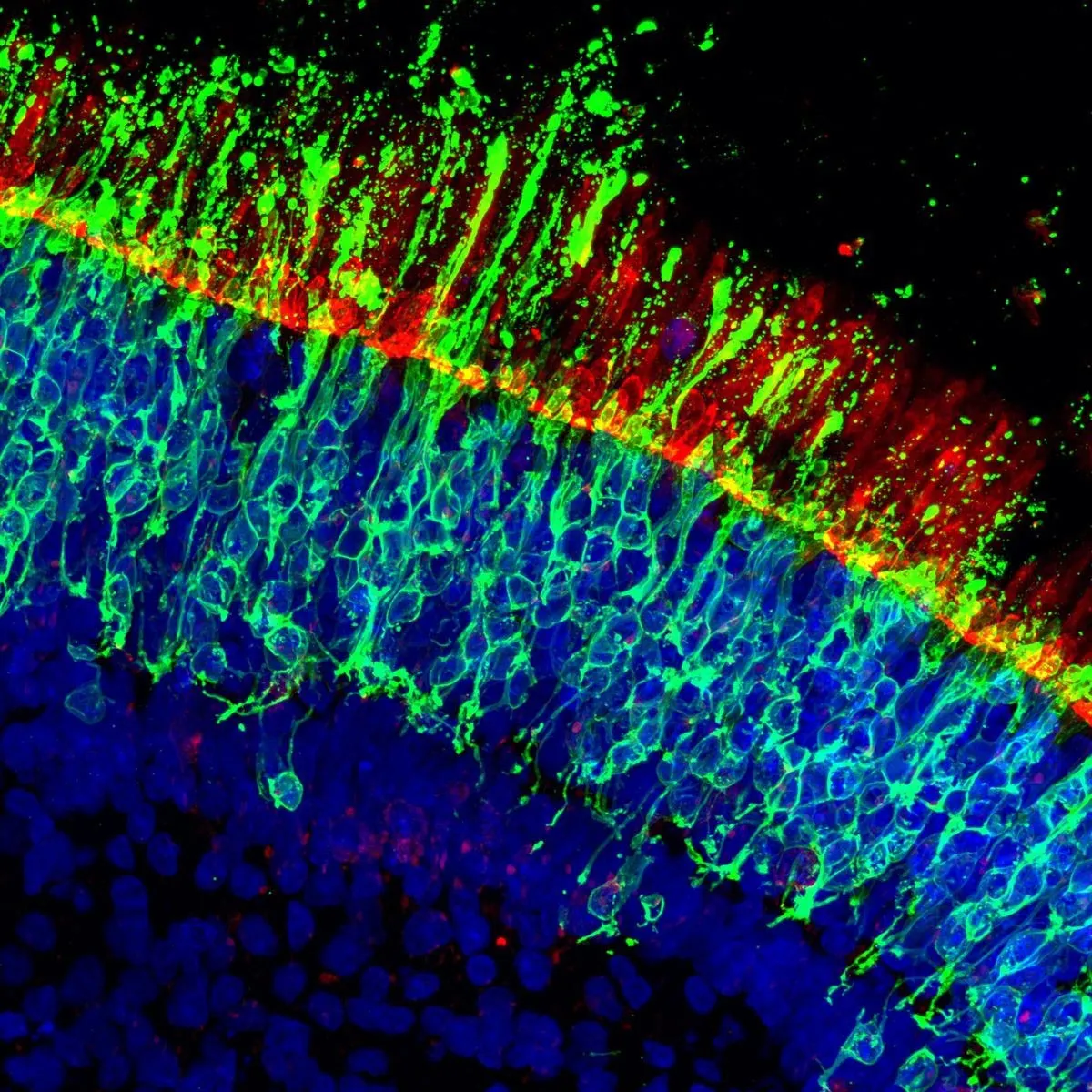
Turns out, it all comes down to your eye's cone cells. These aren't just any cells; they're the rock stars of your central vision, handling all the sharp, colorful details of daily life. When they go, so does your ability to do things like, say, read a menu. And until now, there hasn't been a good way to stop that decline.
Enter Botond Roska and his team at the Institute of Molecular and Clinical Ophthalmology Basel (IOB). They didn't just look for a needle in a haystack; they built an entire haystack of human retinal organoids (think tiny, lab-grown retinas) and then screened over 2,700 compounds on 20,000 of them. Because apparently, that's where we are now: growing mini-eyes to save our actual ones.
We're a new kind of news feed.
Regular news is designed to drain you. We're a non-profit built to restore you. Every story we publish is scored for impact, progress, and hope.
Start Your News DetoxThe Unsung Heroes of Sight
These cone cells hang out in a spot called the macula, and their health is crucial for everything from distinguishing colors to spotting your friend in a crowd. Their demise is the culprit behind many inherited eye disorders and the dreaded age-related macular degeneration. And currently, there's no approved treatment to halt their decline. Which, if you think about it, is both impressive and slightly terrifying.
The good news? This massive screening effort, led by Stefan Spirig and Alvaro Herrero Navarro, didn't just find compounds that harm cone cells (an important safety lesson, to be fair). It also uncovered several molecules that act like tiny bodyguards, protecting cones from damage. The biggest discovery? Blocking a protein called casein kinase 1 was a surprisingly effective way to save these essential cells.
The researchers didn't stop there. They marked the cone cells, put them under stress (mimicking disease conditions), and watched how different compounds performed. They found that two specific kinase inhibitors consistently kept cone cells alive longer, even under duress. This protective effect wasn't just a lab fluke; it was also confirmed in mice with retinal degeneration, suggesting it might just work for us too.
To speed things along, the team has made all their detailed data public. That means every compound tested, its target, and its effect on cone survival in human tissue is now available for other researchers to dive into. Because when it comes to saving sight, sharing is definitely caring.
This blend of cutting-edge retinal biology, organoid tech, and large-scale drug screening is more than just a scientific paper. It's a solid foundation for future treatments that could one day protect the very cells that make clear vision possible. So, the next time you marvel at a vibrant sunset, remember the tiny cone cells working overtime — and the scientists working even harder to protect them.