About one in ten people in Germany develop Long COVID after SARS-CoV-2 infection — and for them, the illness doesn't end when the virus clears. Instead, symptoms linger: crushing fatigue, brain fog, breathing problems, neurological issues. For years, researchers have been searching for why.
Now a team led by Prof. Yang Li at Germany's Centre for Individualised Medicine has found something concrete: a specific immune cell signature that appears in Long COVID patients and correlates with how severe their fatigue and breathing difficulties are.
The Single-Cell Breakthrough
The key was zooming in on individual immune cells rather than relying on broad blood tests. Two people can have identical symptoms while completely different immune cells are driving them — which is why the standard approach often misses the signal.
We're a new kind of news feed.
Regular news is designed to drain you. We're a non-profit built to restore you. Every story we publish is scored for impact, progress, and hope.
Start Your News DetoxUsing samples from patients at Hannover Medical School's biobank, Li's team examined single cells with a technique called single-cell multiomics. It's like moving from a blurry photo of a crowd to being able to see each person's face clearly. They also measured cytokines — inflammatory signaling molecules that act like biological alerts between immune cells. When these stay elevated, they hint at ongoing inflammation.
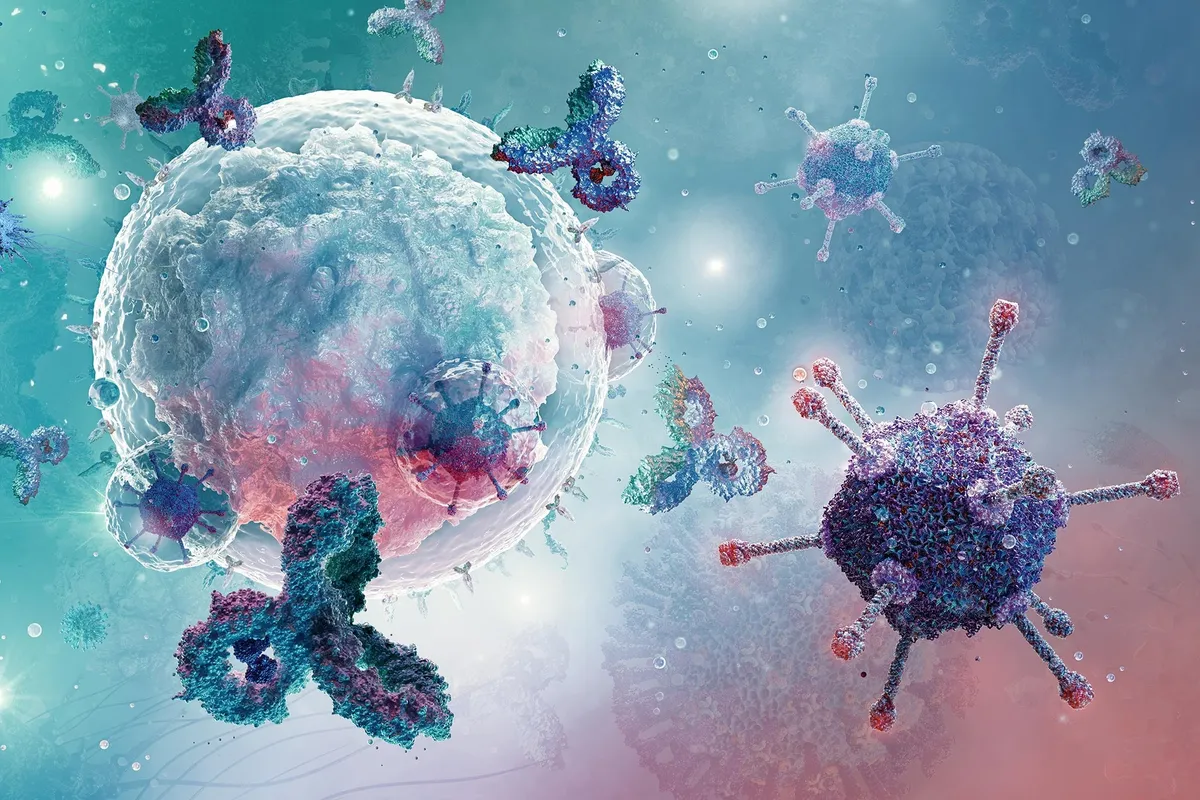
What they found was striking: a specific population of immune cells called CD14+ monocytes, which normally patrol the bloodstream as part of the body's first-line defense, had shifted into an unusual state in Long COVID patients. The researchers named this state "LC-Mo."
Connecting the Dots
LC-Mo appeared most often in people who'd had mild to moderate COVID-19 initially — not the most severe cases. But here's what matters: the presence of LC-Mo correlated directly with fatigue severity and respiratory symptoms. Patients with more of these cells also had higher cytokine levels, suggesting ongoing inflammatory activity.
"We found an important new piece of the puzzle," Li explains. "Its exact role in Long COVID still needs to be determined, but it offers exciting starting points for further research — for genetic risk factors, for individualized medicine."
The finding was published in Nature Immunology in early 2025, and it represents a shift from "Long COVID is mysteriously complex" to "here's a measurable biological marker we can now study and potentially target."
What comes next is the harder part: understanding whether LC-Mo is a cause of Long COVID symptoms or a consequence of them, and whether it might be reversible. But for patients who've spent months or years being told their symptoms are "all in their head," a concrete immune signature is its own kind of validation.