Researchers at the University of Vermont have identified a potential treatment pathway for dementia that doesn't target amyloid plaques or tau tangles — instead, it restores the blood flow itself.
The discovery centers on a simple but crucial imbalance: when a phospholipid called PIP2 drops in the brain, a protein called Piezo1 goes haywire, choking off blood circulation. When the team added PIP2 back, blood flow normalized. The findings, published in Proceedings of the National Academy of Sciences in December, suggest a new angle for treating conditions like Alzheimer's where vascular problems compound cognitive decline.
Why Brain Blood Flow Matters
Dementia affects roughly 50 million people worldwide, and the numbers keep climbing. Most research has focused on the protein tangles and plaques that accumulate in the brain — the visible culprits. But vascular problems run parallel to these changes, and they're often overlooked. Reduced blood flow means the brain gets less oxygen and fewer nutrients. It's like trying to think clearly on a plane with bad cabin pressure.
We're a new kind of news feed.
Regular news is designed to drain you. We're a non-profit built to restore you. Every story we publish is scored for impact, progress, and hope.
Start Your News DetoxThe Vermont team's work suggests the vascular piece might be more addressable than previously thought.
The Mechanism
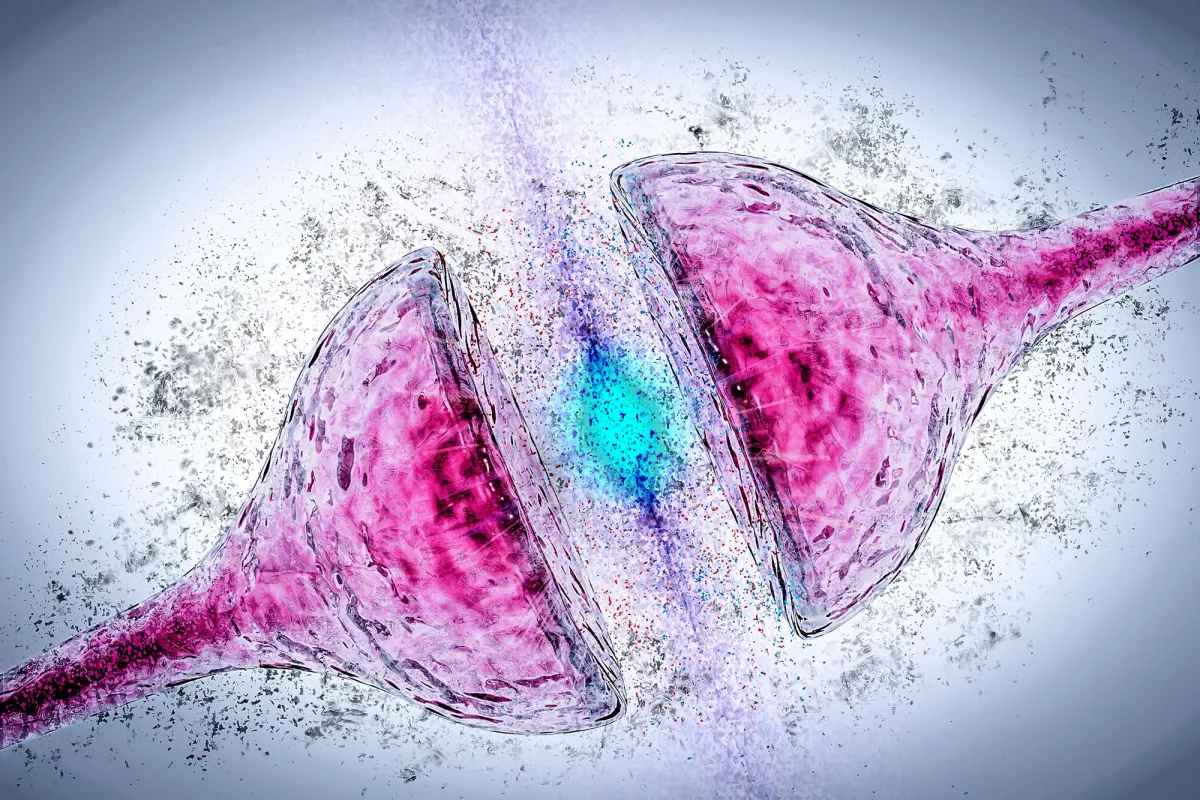
Piezo1 is a protein embedded in the membranes of cells lining blood vessels. Think of it as a pressure sensor that normally helps regulate how wide or narrow vessels get. PIP2, a lipid found in brain cell membranes, acts as a natural brake on Piezo1. When PIP2 levels fall — which happens in dementia — Piezo1 loses its restraint and becomes overactive, causing blood vessels to constrict abnormally.
In the lab, when researchers restored PIP2 levels, Piezo1 calmed down and blood flow improved. The mechanism is elegant: a single missing piece, once replaced, flips the system back toward normal.
What Comes Next
The research is still preclinical, meaning it's been tested in cells and animal models, not yet in human patients. The next phase involves understanding exactly how PIP2 and Piezo1 interact — whether PIP2 binds directly to the protein or reshapes the membrane around it in ways that prevent the channel from opening too wide. That clarity will be essential for designing a drug that either restores PIP2 or blocks Piezo1 directly.
If this pathway holds in human trials, it could offer a new treatment option for people with dementia-related vascular problems, potentially slowing decline when combined with other approaches.