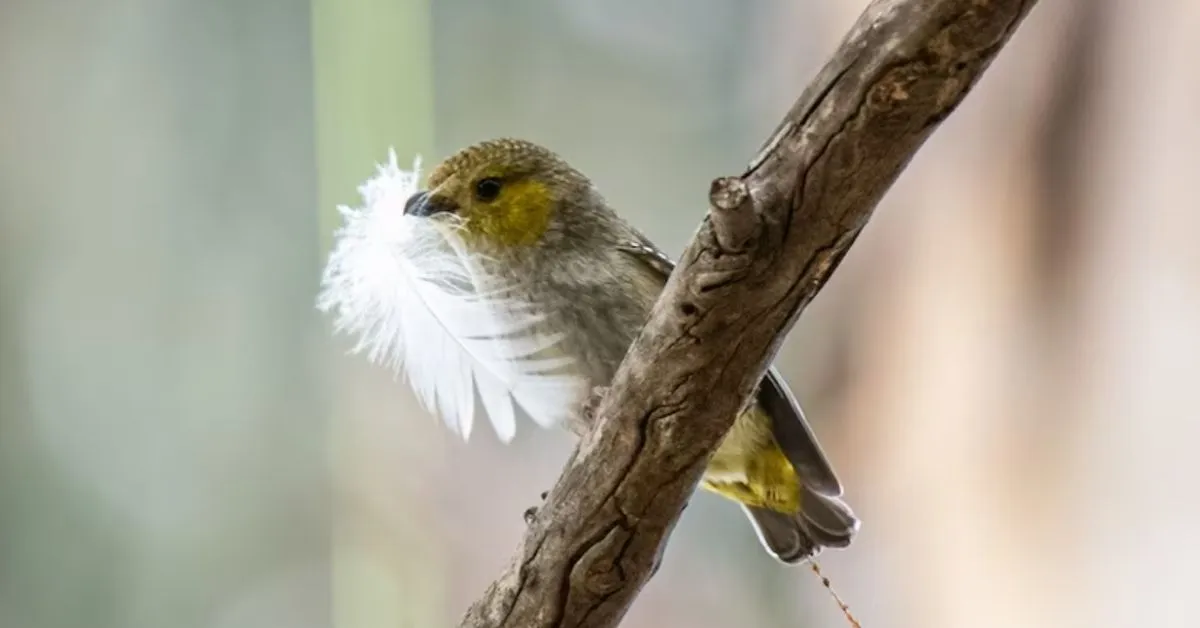
The forty-spotted pardalote is one of Australia's rarest birds—a 4-inch creature with a yellow face and olive wings that once thrived across Tasmania. By 2010, its population had collapsed by 60%, driven into a handful of island refuges by habitat loss, bushfires, and predators. But there was a threat the birds couldn't see coming: a parasitic screwworm fly that laid eggs directly in their nests, and whose maggots would burrow into and paralyze the chicks.
Dr. Fernanda Alves and her team at Australian National University's Difficult Bird Research Group had already begun restoring the white gum trees that pardalotes depend on for food—the birds use their hooked beaks to carve into bark and feed on the sugary sap. But stopping the screwworm required something more immediate. When a former PhD student sprayed nests directly with bird-safe insecticide, it worked. The problem was obvious: climbing into tree hollows to treat dozens of nests is slow, risky work.
So Alves tried something simpler. She filled specialized cages with sterilized chicken feathers that had been sprayed with insecticide, then placed them beneath the trees where pardalotes nest. The birds, naturally, collected the treated feathers to line their nests. The results were stark: chick survival rates jumped to 98%.
We're a new kind of news feed.
Regular news is designed to drain you. We're a non-profit built to restore you. Every story we publish is scored for impact, progress, and hope.
Start Your News Detox"It's a temporary way to mitigate the problem, to buy us time to learn more about the parasitic fly," Alves explained. She's right to frame it that way. This isn't a permanent fix—it's a bridge. As long as screwworms remain a threat, the feather dispensers need to stay in place. But bridges matter. They give endangered populations time to grow, and they give researchers space to understand the problem more deeply.
The forty-spotted pardalote's recovery hinges on both pieces of this puzzle: restoring the forests they need to eat, and protecting their young from a parasite that nearly wiped them out. Neither solution alone would be enough. Together, they're starting to reverse a decline that once looked irreversible.