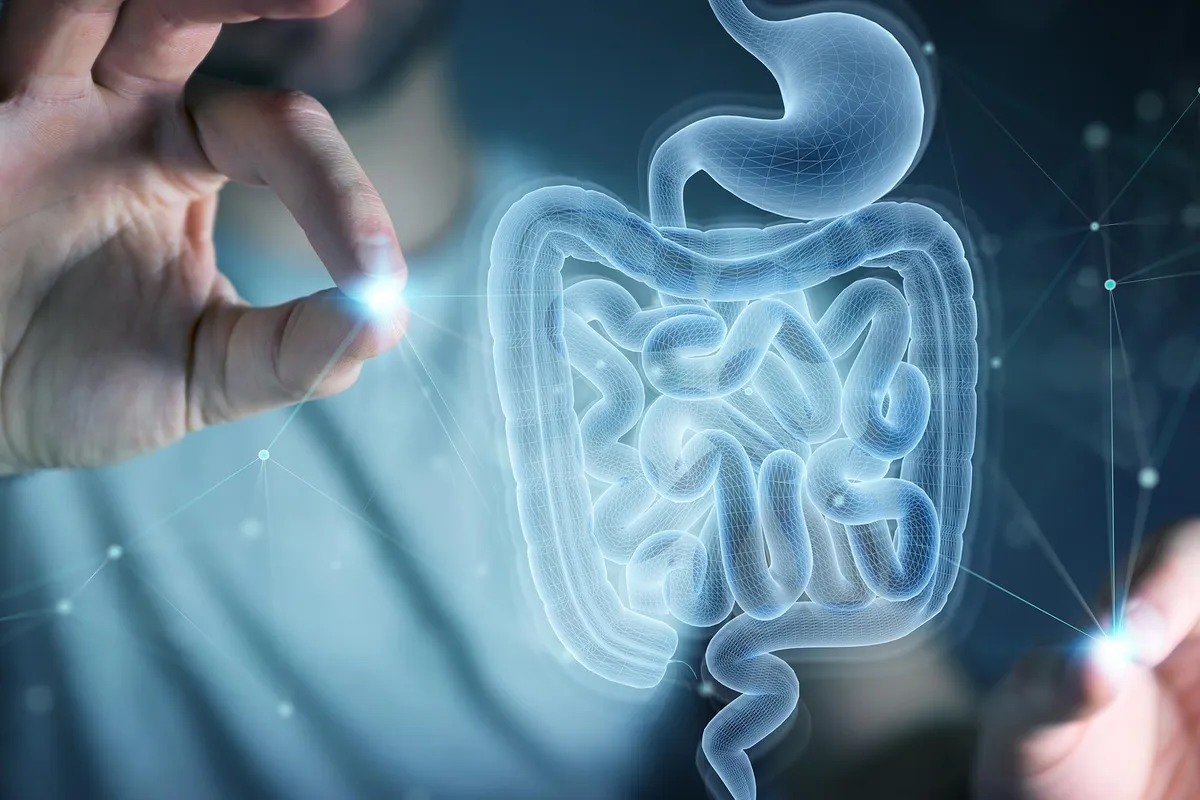
Your gut ages. And now scientists have figured out how to partially reverse it—by transplanting bacteria from younger animals into older ones.
Researchers at Cincinnati Children's and Ulm University found something wild: when they introduced microbiota from young mice into aging mice, the older animals' intestinal stem cells woke up. These cells, which normally slow down with age, started regenerating tissue again—almost as if they'd gotten younger.
The catch? After injury (whether from surgery, radiation, or just the wear of living), the older mice with young microbiota recovered significantly faster. Their guts healed like younger guts do.
We're a new kind of news feed.
Regular news is designed to drain you. We're a non-profit built to restore you. Every story we publish is scored for impact, progress, and hope.
Start Your News Detox"As we age, the constant replacement of intestinal tissue slows down, making us more susceptible to gut-related conditions," explains Hartmut Geiger, director of the Institute of Molecular Medicine at Ulm University. "Our findings show that younger microbiota can prompt older intestine to heal faster and function more like younger intestine."
Why Your Gut's Bacteria Matter More Than You Think
The mechanism is surprisingly elegant. Aging shifts the balance of helpful bacteria in your gut—and those bacteria send chemical signals that tell your intestinal stem cells how hard to work. Fewer of the right bacteria means weaker signals, which means slower healing.
When the researchers swapped in young microbiota, those signals came roaring back. The stem cells responded by producing new tissue at younger rates. It's not that the cells themselves got younger—it's that the microbial community around them changed the instructions.
"This reduced signaling causes a decline in the regenerative potential of aged intestinal stem cells," says Yi Zheng, director of the Division of Experimental Hematology and Cancer Biology at Cincinnati Children's. "However, when older microbiota were replaced with younger microbiota, the stem cells resumed producing new intestine tissue as if the cells were younger."
Before you start hunting for a probiotic supplement that promises this, pump the brakes. The bacteria used in this study aren't available in stores. They required carefully controlled communities introduced through fecal microbiota transfer—a medical procedure, not a pill.
The team is clear about what comes next: human trials, safety testing, figuring out which specific bacterial combinations actually work, and determining the right doses. This isn't a consumer product yet. It's a proof of concept that your gut's microbial community has real power over how your body ages.
Geiger and Zheng are co-founders of a startup called Mogling Bio exploring this exact territory. Their earlier work showed similar rejuvenation was possible in blood stem cells—now they're mapping the same pattern in intestinal tissue. The question isn't whether this works in mice. It's whether the same trick works in humans.