Portraiture used to mean one thing: a person, facing forward, recognizable. The National Portrait Gallery's Outwin Boochever competition has spent two decades quietly demolishing that assumption.
This year's 35 selected artists aren't painting faces in the traditional sense. They're making video installations from declassified surveillance footage. They're photographing couples wrongly accused by facial recognition algorithms. They're painting celebrations of queer chosen family in jewel tones and bold gestures. The work on display from January through August 2026 shows that portraiture has become radically open — to new subjects, new mediums, new questions about who gets seen and how.
Three visions of contemporary portraiture
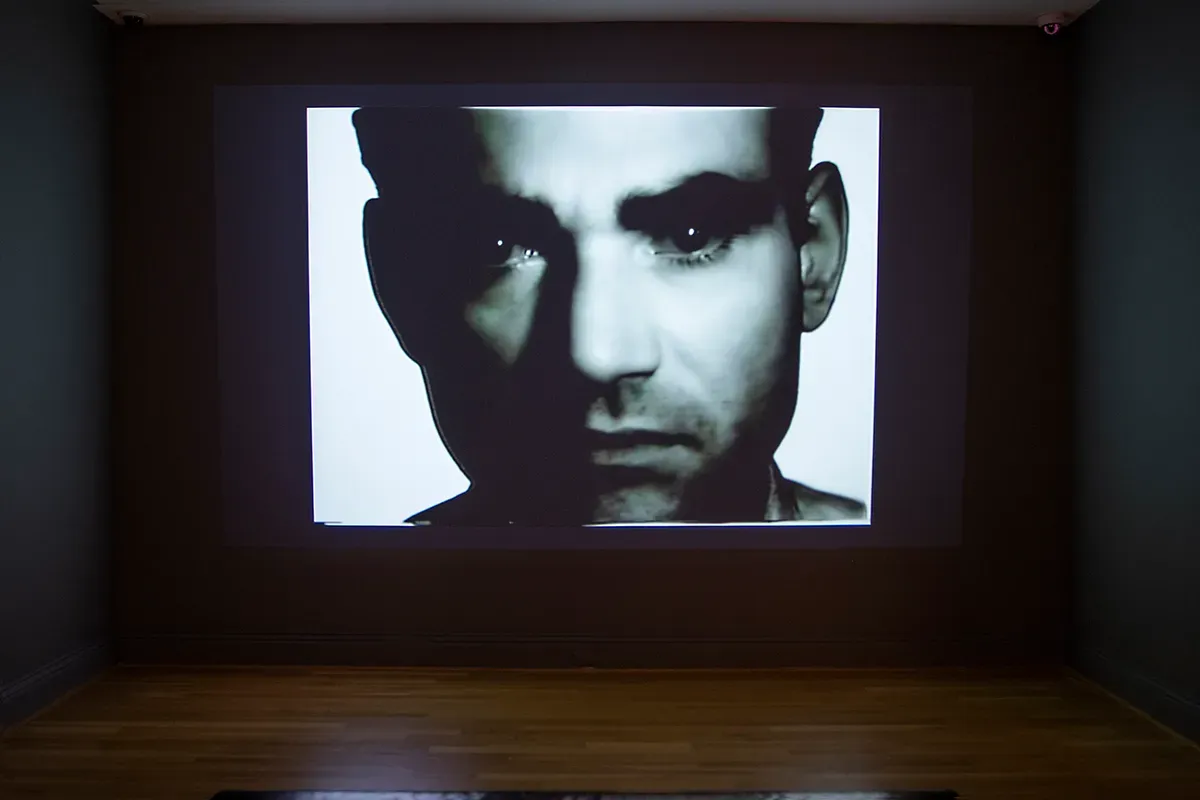
First-prize winner Kameron Neal works with thousands of hours of declassified NYPD surveillance video from 1960 to 1980. His two-screen installation Down the Barrel (of a Lens) pulls from this archive — footage of Martin Luther King Jr., protesters, ordinary New Yorkers caught on camera. The NYPD's surveillance was ruled unconstitutional in 1985, but Neal's piece doesn't just document history. It creates a disorienting present-tense experience where viewers are simultaneously watching and being watched, surveying and surveyed. "It kind of creates this discomfiting feeling," Neal says. The work draws a line to today's cellphone-camera world, where "oversharing comes at a cost that I think we might not fully understand right now."
We're a new kind of news feed.
Regular news is designed to drain you. We're a non-profit built to restore you. Every story we publish is scored for impact, progress, and hope.
Start Your News DetoxSecond-prize winner Jared Soares photographed Alonzo Sawyer and his wife, Carronne. Sawyer was falsely arrested for assaulting a bus driver — accused by an AI facial-recognition system that mistook his face for the perpetrator's. He spent time in jail before proving his innocence. When Soares met the couple, he thought about "the uniqueness of an individual face" and wanted to make an image that "suggests love, care and tenderness." The portrait is intimate and direct, a counterweight to the algorithmic violence that nearly destroyed Sawyer's life. For Soares, a person of color, the stakes felt personal: "Am I next? Is my cousin next?" Federal research has shown that many facial-recognition systems falsely identify Black and Asian faces between ten and a hundred times more frequently than white ones.
Third-prize winner David Antonio Cruz painted his lifelong friend Archel in a burst of color and joy. The two are adorned with jewelry, leaning toward each other, existing "in the same space and same world," as Cruz describes it. "Feelin' pretty, pretty, pretty" is what they'd say before going out together — a phrase that carries its own quiet defiance. Cruz is known for celebrating Black and brown queer culture and the bonds of chosen family. This painting is both deeply personal and deliberately public, claiming space in an institution's permanent collection.
What's shifting
The competition received over 3,300 entries from 49 states and U.S. territories this year — up from earlier editions. The rules have loosened too. Artists no longer need to have met their subjects in person or to portray living people. Archival materials, video, fiber art, performance — all are welcome now.
Curator Taína Caragol, one of seven jurors, emphasizes that portraiture "is an art form that is always evolving" and "incredibly capacious." The work can represent an individual, a group, a community, or even be faceless entirely. That openness is what keeps the competition fresh every three years.
The Outwin was founded in 2006 by Virginia Outwin Boochever, a museum volunteer and art collector who wanted to directly support artists. Past winners include Bo Gehring, Amy Sherald, and Hugo Crosthwaite. The first-prize winner doesn't just get $25,000 — they're commissioned to create a portrait of a living well-known individual that becomes part of the Gallery's permanent collection. For artists, that's the real prize.
The exhibition travels nationally after its run in Washington, D.C. ends in August 2026, meaning these portraits — these new definitions of what portraiture can be — will reach audiences across the country.