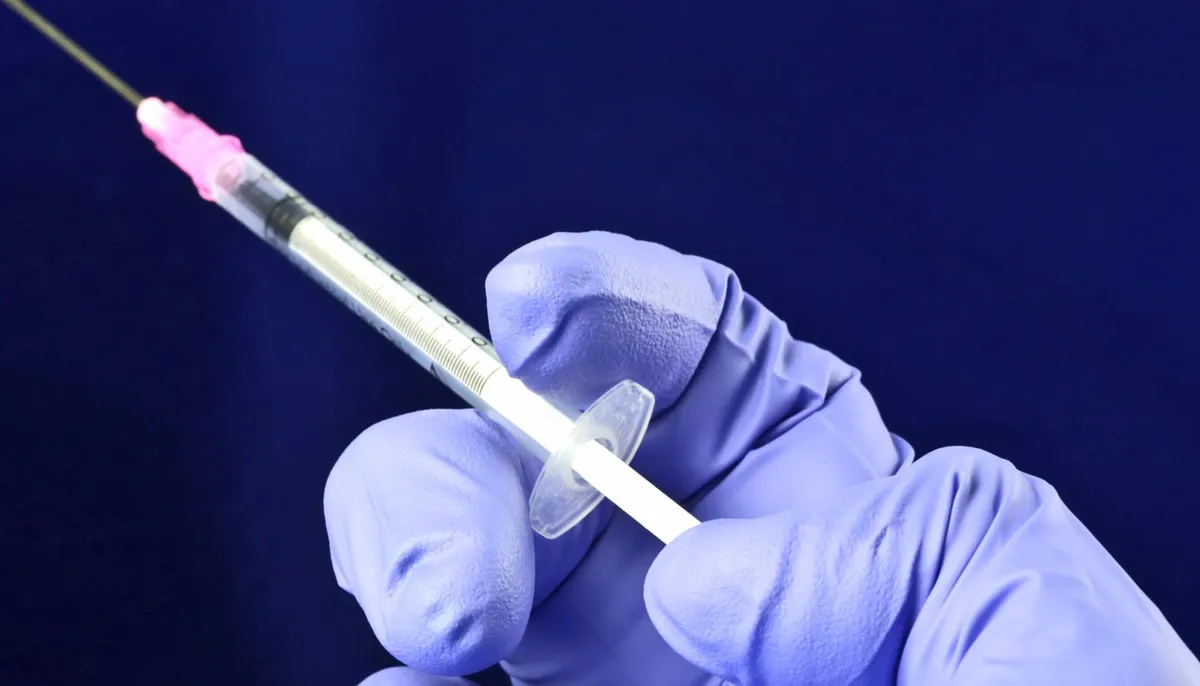
A team at Texas A&M University has created an injection that essentially turns up the volume on your heart's own repair system. After a heart attack, the heart naturally tries to heal itself by releasing a hormone called ANP. The problem: it doesn't make enough to actually make a difference. This injection changes that.
The approach is straightforward in concept but clever in execution. Doctors inject it into skeletal muscle, which then gets temporary instructions to produce extra ANP—a protective hormone that travels through the bloodstream to the heart. A study published in Science shows one dose can keep producing this healing hormone for several weeks.
"We're trying to give patients a treatment that works with the body rather than against it," says Ke Huang, assistant professor at Texas A&M's Irma Lerma Rangel College of Pharmacy and a coauthor of the study. "The idea that a single shot might offer support for weeks is very exciting."
We're a new kind of news feed.
Regular news is designed to drain you. We're a non-profit built to restore you. Every story we publish is scored for impact, progress, and hope.
Start Your News DetoxHow the Boost Works
When your heart gets damaged in an attack, it becomes stressed and strained. Your body's natural response is to release ANP to reduce that stress and limit damage. But it's like your body whispers when it needs to shout—the amount produced isn't enough to meaningfully help recovery.
The injection uses something called self-amplifying RNA, or saRNA. Think of it as temporary instructions that tell muscle cells to make more copies of themselves for a short window. Because the instructions can self-replicate briefly, a single dose creates a longer-lasting effect than older RNA treatments, which needed much larger doses to achieve the same result.
"It's essentially a boost to the heart's own defense system," Huang explains. "The body already uses ANP as a protective tool. We're just helping it produce enough to matter during a critical window of healing."
Even after surviving a heart attack, patients often face a slow decline as scar tissue builds up and healthy muscle is lost. No current therapy can fully prevent that. By flooding the heart with extra ANP during those critical early weeks, the injection aims to reduce scarring, preserve healthy tissue, improve how efficiently the heart pumps, and lower the risk of long-term complications.
This builds on earlier work from Huang's team on a microneedle patch applied directly to the heart's surface. That research identified a specific pathway involved in heart repair. This new injection approach taps into the same biological mechanism—but without requiring surgery to open the chest.
"It brings this type of therapy into a space where it could truly be used in everyday clinical care," Huang says. The shift from a therapy requiring major surgery to one delivered with a standard injection is a significant practical leap.
The team is now studying safety, timing, and dosing before human trials begin. But the simplicity of the approach is what makes the long-term potential genuinely compelling. "It's easy to imagine a treatment like this being given quickly and safely," Huang says. "That accessibility is what makes this work so compelling."
If future studies hold up, this could become a standard part of heart attack recovery within the next decade.