For millions of people, losing their sense of smell quietly reshapes daily life. Meals flatten. Familiar places feel strangely distant. The warning signals that keep us safe—smoke, gas, spoiled food—become harder to catch. Smell's deep links to memory and emotion make its absence especially disorienting, and once damaged, the system is notoriously difficult to restore.
But what if the brain didn't need to fix smell itself? What if it could learn to access that same information through a completely different sense?
Researchers at a team studying sensory loss decided to stop asking how to repair damaged olfactory systems and start asking whether the brain could reroute chemical information entirely. In a study published in Science Advances, they tested a device that does something unexpected: it translates odors into touch.
We're a new kind of news feed.
Regular news is designed to drain you. We're a non-profit built to restore you. Every story we publish is scored for impact, progress, and hope.
Start Your News DetoxHow the Device Works
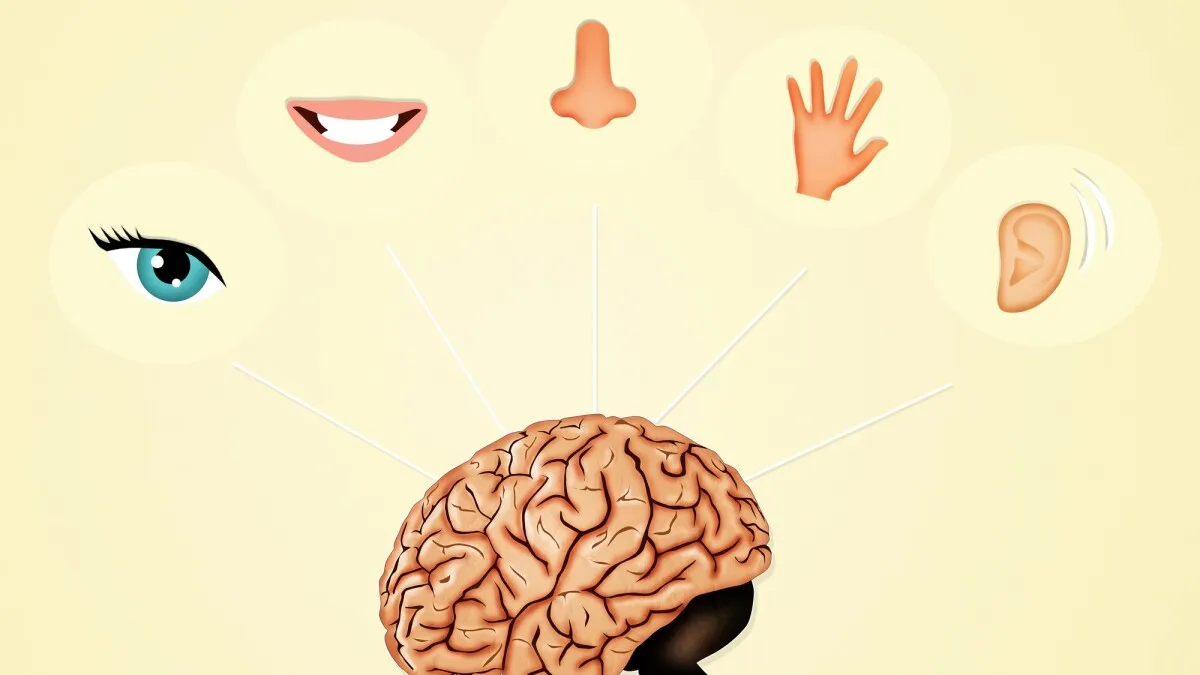
The prototype captures odors in the air using an artificial sensing system, converts them into a digital signature, and then delivers that information to the brain through the trigeminal nerve—a sensory pathway in the nasal cavity responsible for touch, temperature, and irritation. The stimulation produces a distinct physical sensation inside the nose. Users aren't smelling in the traditional sense. Instead, with training, the brain learns to associate specific stimulation patterns with particular odors. Touch stands in for chemical perception.
It's a bit like learning a new language. The brain builds a new interpretive map, one sensation at a time.
The researchers tested the idea with 65 participants, including people with normal olfaction and others with partial or complete smell loss. Most could reliably distinguish between different odors using the device. Crucially, the system worked just as well for individuals who couldn't smell as it did for those who could. That suggests the trigeminal pathway provides a stable, broadly accessible route for transmitting chemical signals—a backup system the brain already knows how to use.
The device doesn't restore the sensory richness or emotional immediacy of smell. The researchers are careful not to frame it as a replacement. But it demonstrates something new: that the brain can learn to access chemical information through touch when smell itself is no longer available.
A Shift in How We Think About Sensory Loss
More broadly, the work reflects a quiet shift in how sensory loss might be addressed. Rather than focusing solely on repairing damaged systems, it suggests that perception itself can be rebuilt by translating information across senses. For people living with anosmia, that reframing offers a different kind of possibility—not the return of smell, but a new way to engage with the chemical world through learning, adaptation, and experience.
The next phase will likely involve refining the device and testing it in real-world conditions. But for now, the research shows that the brain's ability to adapt is far more flexible than we often assume.