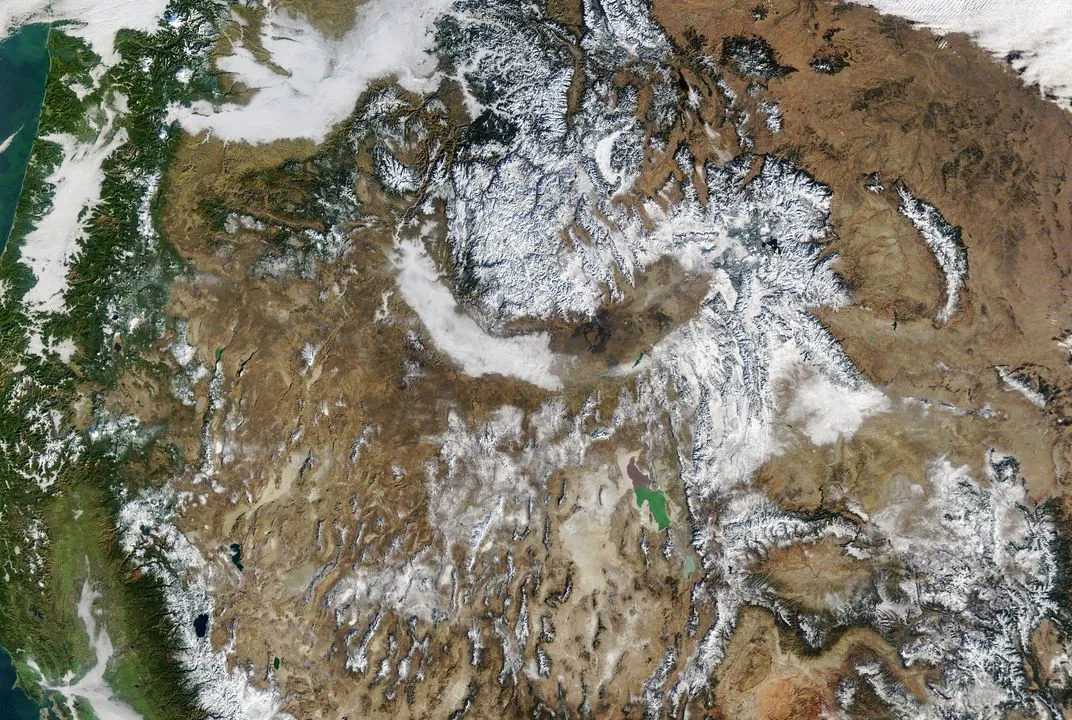
The mountains of the American West are running dry before winter has even peaked. Snow melt feeds up to 75% of the region's yearly water supply, but this January, monitoring stations across every major western watershed recorded their lowest snowpack levels in at least 20 years.
Colorado's snowpack is "the lowest on record for this point in the season," according to Peter Goble, the state's assistant climatologist. Utah faces the same crisis. Parts of California are following suit. The pattern is stark enough that NASA's Earth Observatory flagged it as a coordinated failure across the entire system.
Why this matters right now
The West is already drowning in a different kind of drought. The Colorado River basin, which supplies water to 40 million people across seven states, has been in historic decline since 2000. Now the snowpack — the region's natural water reserve — is vanishing before it can refill the system. Policymakers from those seven states met last week to hammer out a new water-sharing agreement. They left without one.
We're a new kind of news feed.
Regular news is designed to drain you. We're a non-profit built to restore you. Every story we publish is scored for impact, progress, and hope.
Start Your News DetoxWarm temperatures are part of the immediate problem. A December rainstorm that should have added to the snowpack actually melted much of what was already there. But the deeper issue is drier air. Daniel Swain, a climate scientist at UC Agriculture and Natural Resources, points out that the West has been stuck in an unusually long dry spell, so even when snow does fall, it isn't being replenished at normal rates.
McKenzie Skiles, a snow hydrologist at the University of Utah, describes what climate models predict: "The predictions are we will get less snow because the precipitation base will be rain rather than snow, and the line at which snow accumulates will keep creeping up." This isn't a one-off. Computer simulations suggest these conditions are becoming the new pattern.
The consequences ripple outward. Summer wildfire season will likely be worse. The ski industry is already feeling it — Vail Resorts reported that only 11% of its Rocky Mountain terrain was open in December, with snowfall running 60% below average for the month.
Scientists are now working to better predict snow droughts and their cascading effects. As climate change continues, these events are expected to become more frequent, not less. The West's water future depends on getting ahead of that curve.