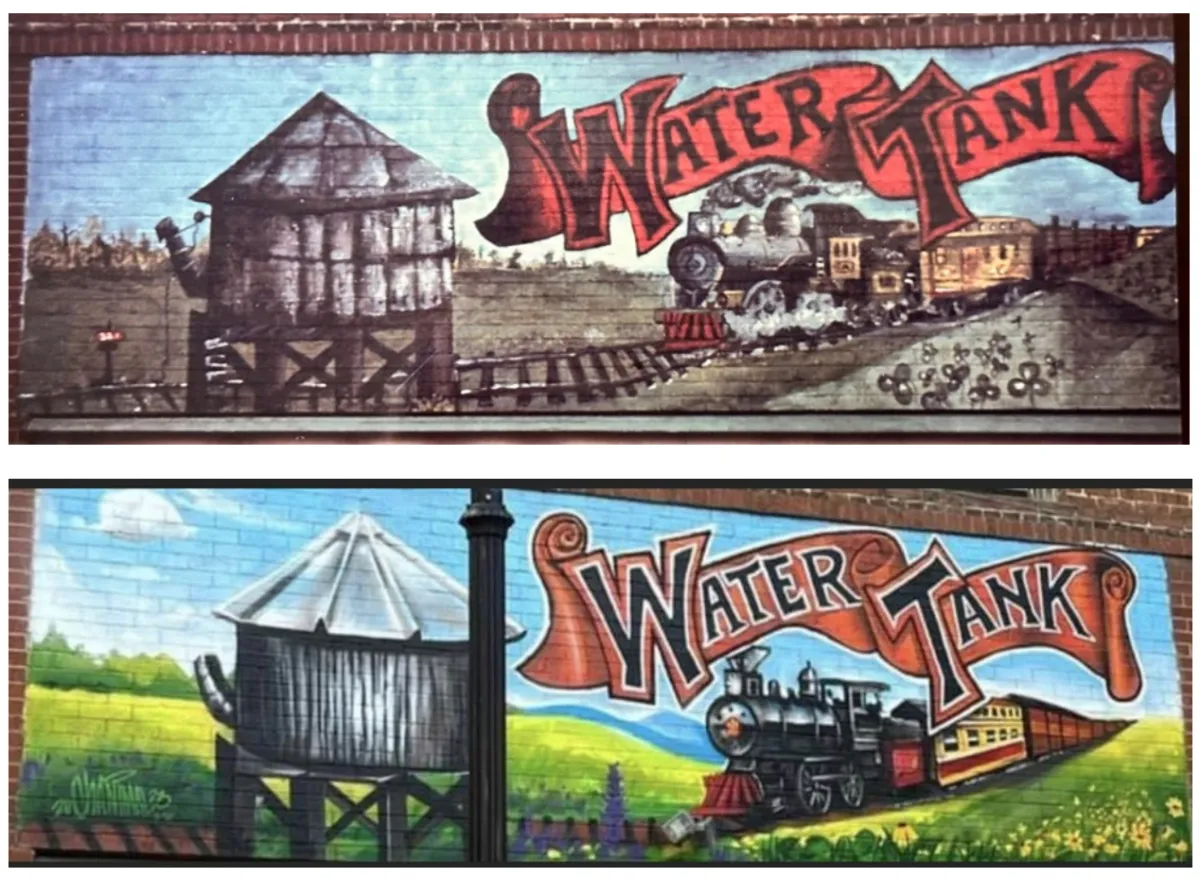
Todd Atkinson painted a mural of a train and water tank on a building in Clover, South Carolina, in the summer of 1982. He didn't copyright it then. Forty-one years later, when a new building owner hired another artist to paint over it—and sign that artist's name instead—Atkinson had grounds to fight back. A federal judge awarded him $158,400.
The case hinges on something many artists don't realize they have: the right to be credited as the creator of their work, even after they've sold or left a piece behind. This protection comes from the Visual Artists Rights Act (VARA), a federal law from 1990 that applies to public art like murals and statues. It's separate from copyright ownership—you get it the moment you create the work.
When Justin McFalls purchased the building at 111 N. Main Street and hired artist Chan Shepherd to paint over Atkinson's original mural, Shepherd didn't just cover the old image. He painted over Atkinson's name and signed his own in its place. That's false attribution, and it violated Atkinson's rights under VARA. "A lot of artists are aware of copyright generally," Atkinson's lawyer Alex Long told the Post and Courier, "but I don't think they're aware that they have these additional rights of attribution and against mutilation."
We're a new kind of news feed.
Regular news is designed to drain you. We're a non-profit built to restore you. Every story we publish is scored for impact, progress, and hope.
Start Your News DetoxThe court awarded Atkinson $150,000 in statutory damages—the maximum allowed under VARA—plus $8,400 in actual damages. Shepherd, the artist who painted over the mural, never responded to the lawsuit or filed legal counsel. McFalls and his development company settled out of court.
The ruling matters beyond this one building in South Carolina. Public art often gets painted over, demolished, or altered without the original artist's input. Most muralists work on walls they don't own, making them vulnerable to exactly this scenario. VARA gives them a legal tool—if they know it exists. Cases like Atkinson's, where a judge enforces those protections, set a precedent that might make future building owners think twice before erasing someone else's name from their own work.