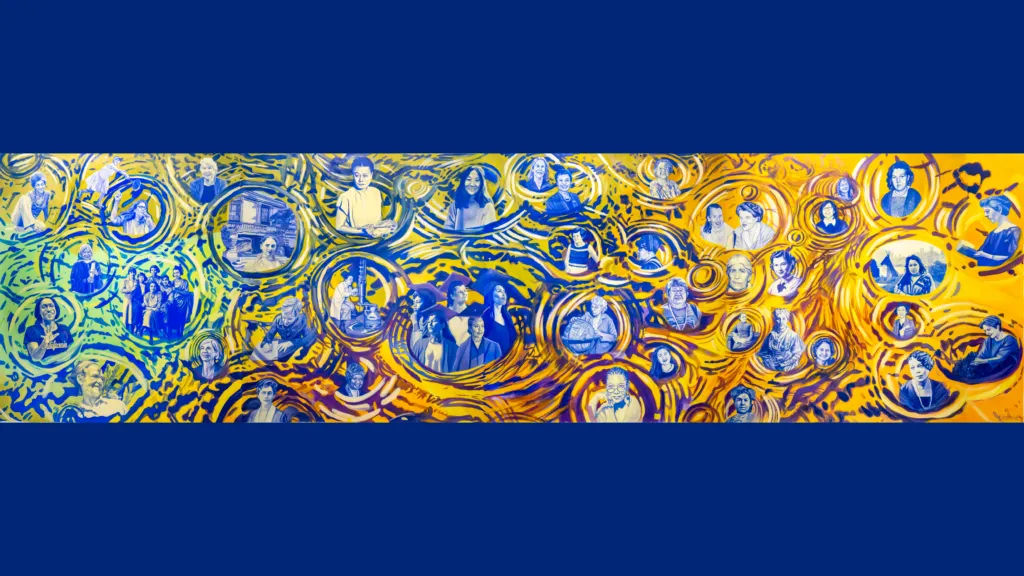
A sprawling new mural now visible in UC Berkeley's Undergraduate Academic Building features 41 women—from 19th-century architect Julia Morgan to Nobel laureate Jennifer Doudna—painted across a 5.5-by-21-foot wall in rippling yellows and purples. The painting marks 150 years since the university first admitted women on equal terms with men, a milestone that prompted campus leaders to ask a harder question: why had women's contributions remained nearly invisible in the university's public art.
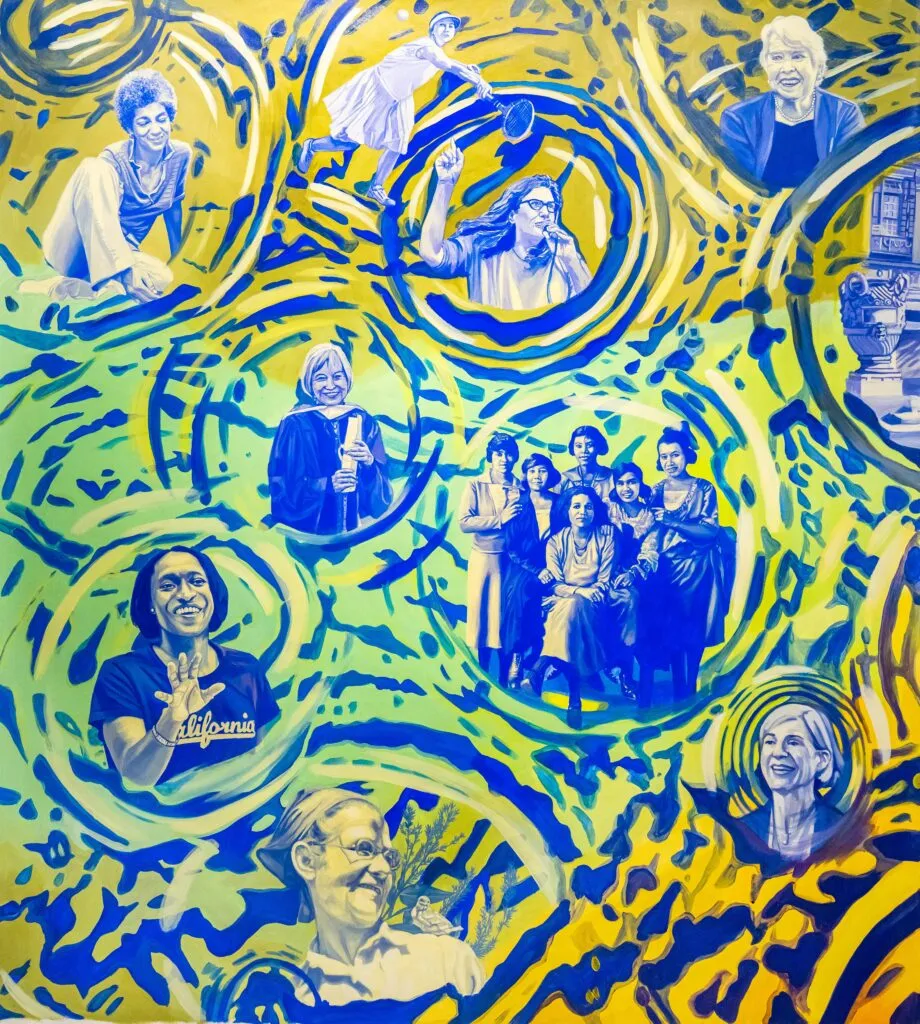
The mural sits in the entryway of a building that will see thousands of students pass through each semester. Walk past it, and you'll notice something deliberate in how the portraits are arranged. Rather than a simple timeline from left to right, the women—a physicist in her lab coat, a tennis champion mid-stride, a chancellor at a podium, a poet facing forward—seem to speak across eras. The yellow and blue hues aren't decorative; they're meant to evoke ripples of water, a visual metaphor for how influence moves through time.
The research behind the art
The project began with a straightforward fact: 2020 marked 150 years since UC regents voted to admit women to the university. A campus-wide research initiative documented that history, but the challenge became how to make it visible. When plans emerged for a new building on a parking lot west of Dwinelle Hall, administrators saw an opportunity.
We're a new kind of news feed.
Regular news is designed to drain you. We're a non-profit built to restore you. Every story we publish is scored for impact, progress, and hope.
Start Your News Detox
Marina Perez-Wong and Elaine Chu, co-founders of Twin Walls Mural Company, spent months in workshops with faculty and campus leaders, gradually understanding what made these women's work matter. They realized that depicting them in historical sequence—old to new—would miss the point entirely. "Someone from the '50s might influence me now," Perez-Wong said. "That's my present. It's not really the past."
The artists faced practical questions with deeper implications. Should Helen Wills Roark be shown with a tennis racket? Yes—mid-stride, capturing motion. Should Chien-Shiung Wu, the "First Lady of Physics," wear a lab coat? Yes. Alice Waters, founder of Chez Panisse, needed to be shown cultivating plants. The mural also includes Judith Butler and Susan Stryker, honoring Berkeley's LGBTQ+ scholars and the field of transgender studies.
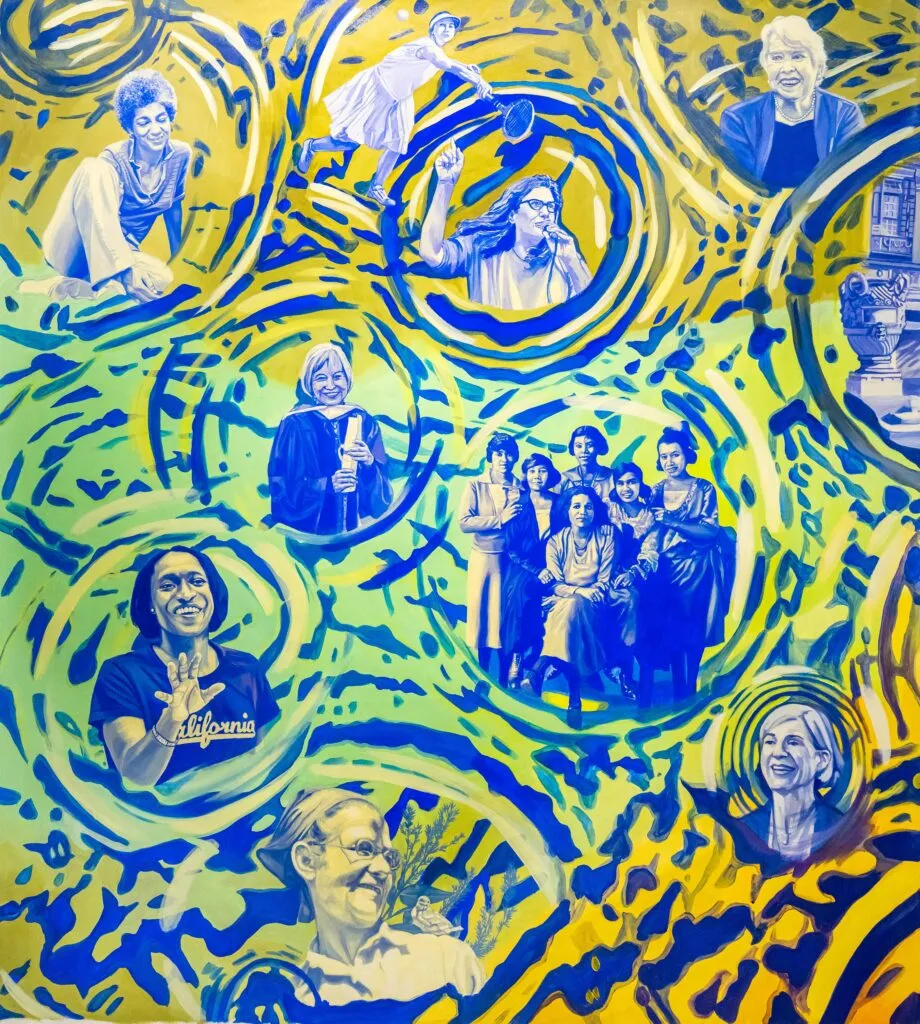
Once research was complete, painting the mural on parachute cloth in their studio took about a month. The finished work was then photographed, enlarged, and printed onto the acoustic walls of the building's 400-person auditorium.
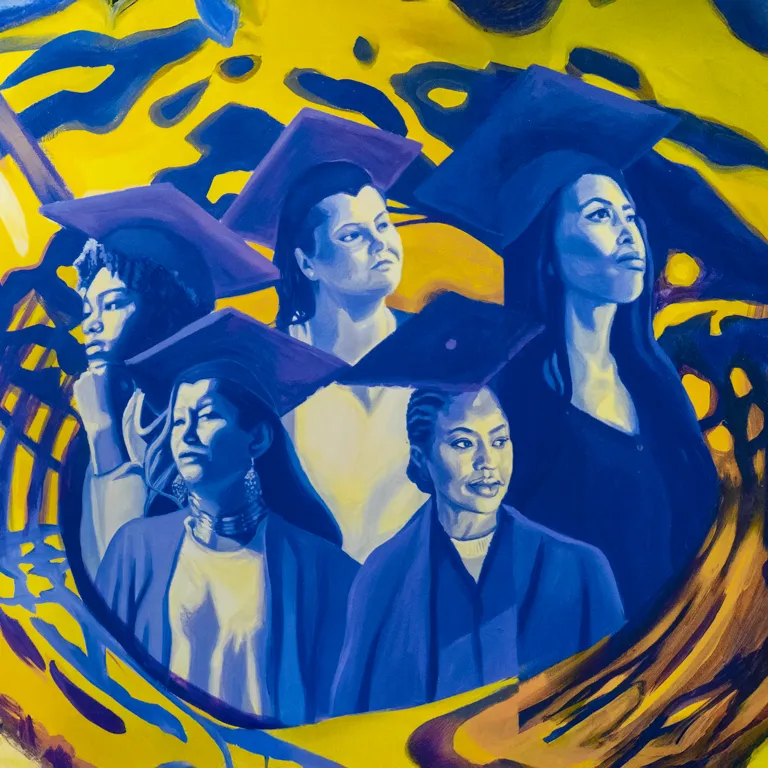
What's striking about the mural's design is its center: five composite figures representing current students, surrounded by the women who came before them. They're not meant to be specific historical figures, but rather students inspired by and connected to those legacies, "pushing that envelope even more so," as Perez-Wong described it. It's a visual argument that history isn't just about looking backward—it's about recognizing that today's students are already part of the story.
A QR code on an adjacent plaque links to biographies and annotations for each woman, turning the mural into a gateway to deeper discovery. Oliver O'Reilly, the vice provost for undergraduate education who co-led the project, hopes students will do exactly that. "My hope is that when people see the mural, they will see someone who inspires them," he said.
The building opens for classes this fall, which means thousands of students will pass this mural regularly—some noticing it immediately, others gradually. Some will scan the QR code. Some will recognize a name and search for more. That's the quiet power of public art in a university: it doesn't demand attention, but it makes inspiration available to anyone walking through a doorway.